Category: Travel Tips

  • Todra and Dades Gorges: Morocco’s Most Spectacular Canyon Adventures

    Todra and Dades Gorges: Morocco’s Most Spectacular Canyon Adventures

    Morocco is a country of dramatic landscapes, but nothing quite prepares you for the moment when the flat, sunbaked terrain of the southern pre-Sahara suddenly splits open to reveal towering canyon walls rising 300 meters on either side. The Todra and Dades Gorges, carved over millions of years by rivers flowing from the High Atlas Mountains toward the Sahara, are two of the most visually stunning natural formations in North Africa. They sit roughly 50 kilometers apart in the Draa-Tafilalet region and together offer an extraordinary combination of geological spectacle, outdoor adventure, cultural heritage, and scenic driving that rivals anything on the continent.

    These gorges are more than scenic stops on the route to the Sahara. They are destinations in their own right, offering world-class rock climbing, memorable hiking trails, traditional Berber villages clinging to canyon walls, and the legendary Road of a Thousand Kasbahs, one of the most photogenic drives in the world. Whether you are a serious outdoor adventurer or a traveler who simply appreciates extraordinary scenery, the Todra and Dades Gorges deserve a prominent place in your Morocco itinerary.

    This guide covers everything you need to plan your visit, from trail descriptions and climbing information to practical logistics and how to combine the gorges with a Sahara Desert tour.

    Understanding the Geography

    How the Gorges Were Formed

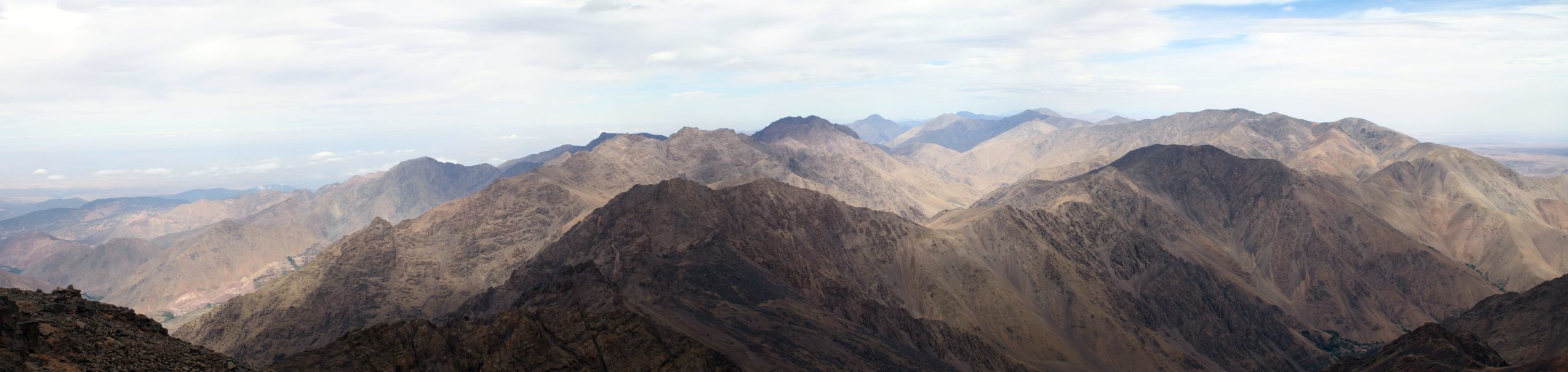
    Both the Todra and Dades Gorges were created by the erosive power of rivers cutting through the limestone and sandstone layers of the eastern High Atlas Mountains over millions of years. The Todra River and the Dades River flow south from the mountains toward the Sahara, carving progressively deeper channels through the rock as the land slowly uplifted. The result is a pair of narrow, steep-walled canyons that transition from gentle, palm-filled valleys at their mouths to dramatic vertical cliffs at their narrowest points.

    Where They Are

    Both gorges are located in the province of Tinghir, in the Draa-Tafilalet region of southeastern Morocco.

    • Todra Gorge lies approximately 15 kilometers north of the town of Tinghir, accessible via a paved road that follows the Todra River upstream into the mountains.
    • Dades Gorge begins about 5 kilometers north of the town of Boumalne Dades, roughly 50 kilometers west of Tinghir along the main N10 highway.

    The two gorges are connected by the N10 highway, which runs east-west along the southern edge of the High Atlas, making it easy to visit both in a single itinerary.

    Todra Gorge: The Main Attraction

    The Canyon

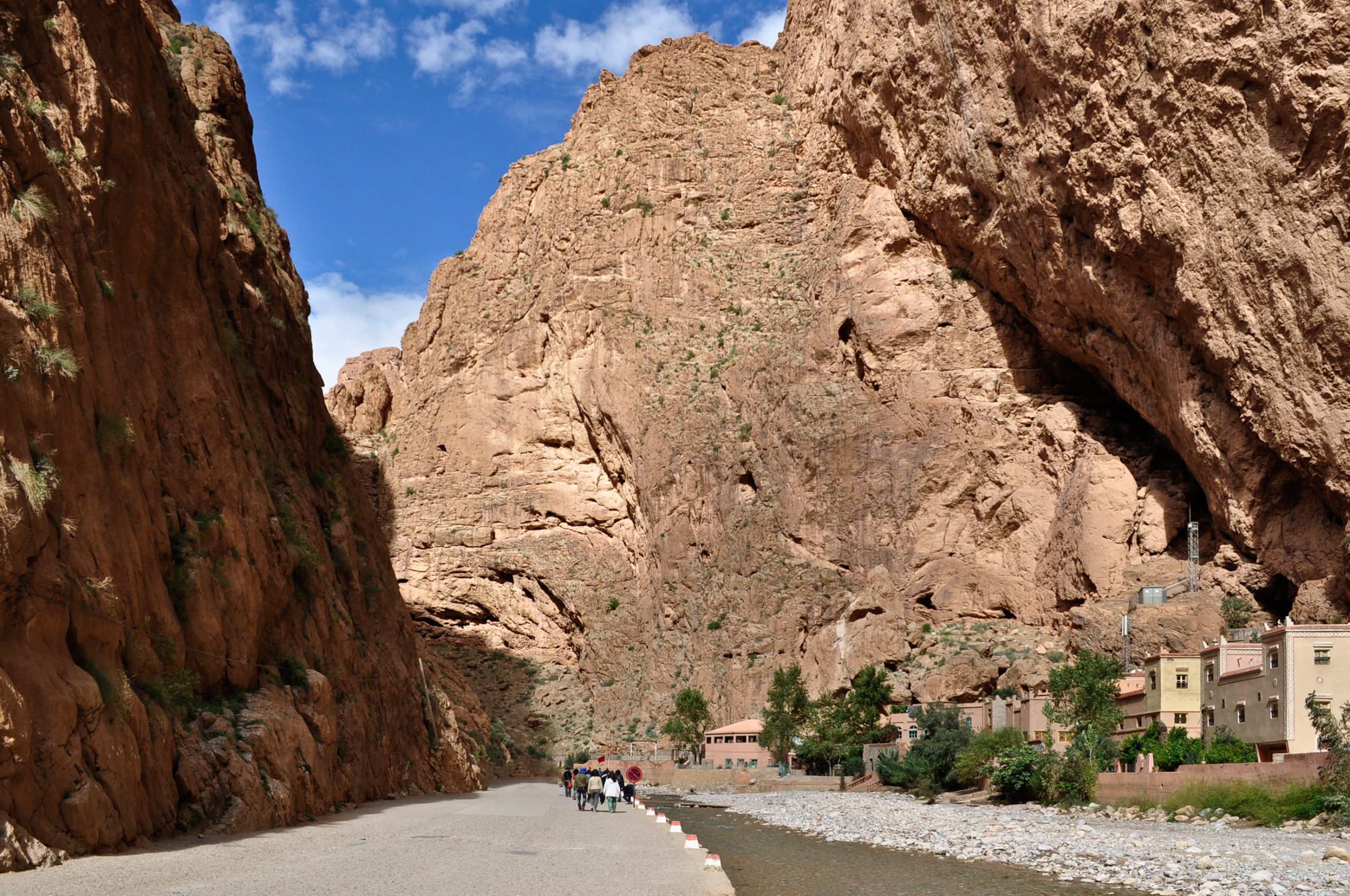
    Todra Gorge is the more famous and dramatic of the two, and for good reason. At its narrowest point, the canyon is only 10 meters wide, with smooth limestone walls rising vertically to approximately 300 meters on both sides. The effect is awe-inspiring: a narrow slot of sky visible far above, the sound of the river echoing off the walls, and a sudden drop in temperature as the shade of the canyon replaces the desert sun.

    The paved road from Tinghir follows the Todra River through a gradually narrowing valley lined with palm trees, Berber villages, and terraced gardens before reaching the dramatic narrows. The drive itself is beautiful, with red and orange rock formations, traditional kasbahs, and the contrast of green palms against the arid landscape.

    Hiking in Todra Gorge

    Todra Gorge offers several hiking options ranging from easy walks to challenging multi-day treks.

    Easy: The Canyon Walk (1 to 2 hours)

    The most popular and accessible option is simply walking through the narrowest section of the gorge. The flat, rocky path along the river bed runs for about 600 meters through the most dramatic part of the canyon. This requires no special equipment or fitness and is suitable for all ages. The path continues beyond the narrows into the upper valley, where you can extend your walk through Berber villages and agricultural terraces.

    Moderate: The Gorge Loop Trail (3 to 5 hours)

    A circuit trail climbs from the canyon floor up to the rim of the gorge, follows the plateau with panoramic views down into the canyon, and descends back to the starting point. This trail involves some scrambling and moderate elevation gain (approximately 400 meters) and requires sturdy footwear and a reasonable level of fitness. The views from the rim are spectacular and far less crowded than the canyon floor.

    Challenging: Upper Todra Valley Trek (Full Day or Multi-Day)

    For serious hikers, the Todra River valley extends deep into the High Atlas Mountains beyond the gorge. Multi-day treks can be arranged from Tinghir through traditional Berber villages like Tamtatouchte, Ait Hani, and beyond, eventually crossing mountain passes above 2,500 meters. These treks require a local guide, proper equipment, and advance planning.

    Moderate to Challenging: Todra to Dades Traverse (2 to 3 Days)

    An ambitious and rewarding option for experienced hikers is the cross-country trek connecting the upper Todra Valley to the upper Dades Valley, crossing a series of mountain ridges and passes. This remote route passes through villages rarely visited by tourists and offers a genuine immersion in Berber mountain culture. A knowledgeable local guide is essential.

    Rock Climbing in Todra Gorge

    Todra Gorge has become one of the premier rock climbing destinations in Africa and attracts climbers from around the world, particularly during the cooler months.

    The Rock

    The climbing walls are high-quality limestone, typically featuring vertical to slightly overhanging faces with a variety of holds including pockets, crimps, edges, and occasional tufas. The rock is generally solid, though some routes pass through sections that require care.

    Routes and Grades

    There are over 150 documented climbing routes in the gorge area, ranging from beginner-friendly 4a to demanding 8a+ (French grading system). The majority of routes are single-pitch sport climbs in the 5 to 7 range, well-bolted and accessible. Multi-pitch routes up to 300 meters are also available for experienced climbers.

    The most famous climbing area is the “Pilier du Couchant” (Sunset Pillar), which offers multi-pitch routes on the west-facing wall of the main gorge. Other popular sectors include “Mansour,” “Petite Gorge,” and the walls above the river in the main canyon.

    Climbing Season

    The best climbing conditions are from October through May, when temperatures in the gorge are comfortable (15 to 25 degrees Celsius during the day). Summer climbing is possible in the early morning and late afternoon, as the gorge walls provide shade for much of the day, but midday temperatures can be prohibitively hot.

    Practicalities

    Local climbing guides and equipment rental are available in Tinghir. Several guesthouses near the gorge cater specifically to climbers and can arrange guiding, equipment, and route information. If you plan to climb, bring your own harness, shoes, and chalk; while rentals exist, quality and fit can be variable.

    Dades Gorge: The Scenic Alternative

    The Canyon

    Dades Gorge is less vertically dramatic than Todra but arguably more scenic overall, with a wider valley, more varied rock formations, and a paved road that winds through the gorge offering a spectacular drive. The canyon walls display vivid layers of red, orange, pink, and cream-colored sedimentary rock, twisted and folded by geological forces into formations that look almost sculptural.

    The most photographed section of the Dades Gorge is the series of tight switchback turns on the road as it climbs from the valley floor up the canyon wall. These hairpin curves, sometimes called the “Monkey Fingers” road (after the unusual rock formations nearby), are a visual spectacle both from below and from above.

    The Monkey Fingers

    The “Monkey Fingers” (or “Pattes de Singe”) are a set of bizarre rock formations near the entrance to the gorge. Tall, thin columns of conglomerate rock have been eroded into shapes that resemble elongated fingers reaching skyward. They are best viewed from the opposite side of the valley in the morning light and are a popular photography stop.

    Hiking in Dades Gorge

    Easy: Valley Floor Walk (1 to 3 hours)

    A gentle walk along the Dades River through the lower gorge, passing through Berber villages, walnut groves, and almond orchards. The path is flat and easy, with the dramatic canyon walls providing a stunning backdrop. Spring (late March through April) is particularly beautiful when the almond and fruit trees are in bloom.

    Moderate: Canyon Rim Trail (3 to 5 hours)

    A trail from the village of Ait Oudinar climbs to the rim of the gorge, offering dramatic views down into the valley and across to the surrounding mountains. The trail is well-established but involves steady climbing and some rocky sections.

    Moderate: Nomad Canyon (Half Day)

    A side canyon accessible from the main gorge road, Nomad Canyon is a narrow slot canyon with a short, atmospheric hike through water-carved rock passages. It is less visited than the main gorge and offers a sense of discovery.

    Challenging: High Atlas Passes (Multi-Day)

    Like Todra, the upper Dades Valley provides access to the High Atlas for multi-day trekking. The terrain is wilder and less frequented than the Todra side, offering genuine remote mountain trekking through traditional Berber territories.

    The Road of a Thousand Kasbahs

    The N10 highway that connects the Dades and Todra Gorges is part of the famous “Route des Mille Kasbahs” (Road of a Thousand Kasbahs), one of Morocco’s most celebrated scenic roads. This route runs roughly east-west along the southern edge of the High Atlas, through a landscape dotted with crumbling and restored kasbahs, fortified villages (ksour), palm oasis valleys, and dramatic mountain scenery.

    What is a Kasbah?

    A kasbah is a traditional Moroccan fortified residence, typically built of pisé (rammed earth and straw) with distinctive crenellated towers and geometric decorative patterns. Kasbahs were the homes of local chieftains and wealthy families, serving as both residences and defensive strongholds. The southern Morocco landscape is densely populated with kasbahs, many in various states of preservation, from meticulously restored to poetically crumbling.

    Key Kasbahs Along the Route

    • Kasbah of Amridil (Skoura): One of the best-preserved kasbahs in Morocco, still partially inhabited by the original family, and featured on the old 50-dirham banknote.
    • Kasbah Ait Ben Haddou (further west): A UNESCO World Heritage Site and the most famous kasbah complex in Morocco, used as a filming location for numerous films and television productions.
    • Kasbahs of Kelaat M’Gouna: The “Rose Valley” area, famous for its annual rose festival in May and the kasbahs scattered through the surrounding valley.
    • Kasbahs of the Dades and Todra Valleys: Both gorge valleys are lined with kasbahs and ksour that blend into the red and orange rock, sometimes almost invisible until you are directly beside them.

    Driving the Road of a Thousand Kasbahs between the two gorges is an experience that combines natural scenery with architectural heritage and provides context for the human history of this dramatic landscape.

    Best Time to Visit the Gorges

    Spring (March to May): The Ideal Season

    Spring is widely considered the best time to visit both gorges. Daytime temperatures are comfortable at 20 to 28 degrees Celsius, the rivers are flowing with snowmelt from the High Atlas, and the valley floors are green with new growth. Almond and fruit trees bloom in late March and April, adding splashes of white and pink to the red rock landscape. Hiking and climbing conditions are excellent.

    Autumn (September to November): The Second Best

    Autumn offers similar temperatures to spring with slightly drier conditions. The light is golden and warm, excellent for photography. The rivers are lower than in spring but still flowing. Climbing season is in full swing from October onward.

    Winter (December to February): Cool but Clear

    Winter brings cool to cold temperatures (5 to 18 degrees Celsius during the day, below freezing at night at higher elevations). The gorges are quiet and uncrowded, and the clear winter light makes the rock colors particularly vivid. Snow may be visible on the High Atlas peaks above the gorges, adding drama to photographs. Climbing is possible on sunny walls.

    Summer (June to August): Hot but Manageable

    Summer temperatures can reach 40 degrees Celsius in the lower valleys, but the gorge interiors are significantly cooler due to shade and the river. Morning and late afternoon visits are most comfortable. This is the quietest tourist season, and accommodation prices are lowest.

    Practical Information

    Getting There

    From Marrakech: The drive from Marrakech to the gorges takes approximately 6 to 7 hours via the Tizi n’Tichka pass and Ouarzazate. This is a spectacular drive in itself, crossing the High Atlas at 2,260 meters and passing through the Ait Benhaddou UNESCO site.

    From Fez: The route from Fez passes through the Middle Atlas, Midelt, and the Ziz Valley before reaching the gorge region, a journey of 7 to 8 hours. Many travelers combine this with the onward journey to the Sahara.

    From Merzouga/Erg Chebbi: The gorges are 2 to 3 hours west of Merzouga, making them a natural stop on the way to or from the Sahara Desert.

    Accommodation

    Both gorges have a range of accommodation options:

    • Budget: Simple guesthouses and auberges within the gorge valleys, often family-run, offering basic but clean rooms and home-cooked Berber meals. Expect to pay 200 to 400 MAD per person including dinner and breakfast.
    • Mid-Range: Comfortable hotels and riads in Tinghir, Boumalne Dades, and within the gorge valleys, with private rooms, hot showers, and terraces overlooking the canyon.
    • Upscale: A few boutique lodges offer more refined accommodation with pools, spas, and panoramic terrace restaurants.

    Guides

    For canyon floor walks and short hikes, a guide is not strictly necessary, as the main trails are well-trodden and straightforward. However, for rim trails, multi-day treks, slot canyon exploration, and rock climbing, hiring a local guide significantly enhances both safety and the quality of the experience. Guides can be arranged through your accommodation, through your tour operator, or at the gorge entrance.

    Safety Considerations

    • Flash floods: Both gorges are subject to flash flooding, particularly in autumn and spring when rain falls in the mountains upstream. The weather in the canyon may be sunny while a storm upstream sends a wall of water through the narrows. Never camp on the canyon floor, heed local warnings, and check weather forecasts for the mountain regions, not just the gorge location.
    • Sun exposure: Despite the shade in the narrowest sections, much of the hiking in and around the gorges is exposed. Bring sun protection, water, and a hat.
    • Loose rock: Canyon walls shed rock. Avoid lingering beneath overhanging sections, and wear a helmet if climbing.
    • River crossings: In spring, the river in Todra Gorge may require wading. Bring waterproof footwear or be prepared for wet feet.

    Combining the Gorges with a Sahara Desert Tour

    The Todra and Dades Gorges sit directly on the most popular route between Marrakech (or Fez) and the Sahara Desert, making them a natural and rewarding addition to any desert itinerary. Rather than treating them as a brief roadside stop, we recommend dedicating at least one full day, ideally two, to explore the gorges properly.

    A Typical Combined Itinerary

    A well-paced itinerary combining the gorges and the Sahara might look like this:

    Day 1: Depart Marrakech, cross the High Atlas via Tizi n’Tichka, visit Ait Benhaddou, overnight in the Dades Valley or gorge.

    Day 2: Explore Dades Gorge in the morning (drive the switchbacks, visit the Monkey Fingers, short hike). Drive to Todra Gorge in the afternoon, walk through the narrows, overnight near Tinghir or in the gorge.

    Day 3: Morning in the Todra area (longer hike or free time), then drive east to Merzouga. Afternoon camel trek into the Erg Chebbi dunes, overnight in desert camp.

    Day 4: Sunrise in the dunes, return to Merzouga, then onward to your next destination.

    This pacing allows you to appreciate the gorges rather than merely driving through them and creates a satisfying narrative journey from mountains through canyons to desert.

    Duna Daurada Tours Through the Gorges

    Many of our desert tours include stops at the Todra and Dades Gorges as part of the route between Marrakech or Fez and the Sahara. Our local guides know the gorges intimately and can lead you to viewpoints, trails, and hidden corners that independent travelers often miss.

    If you want to spend extra time in the gorges for hiking, climbing, or photography, a custom tour allows you to adjust the itinerary to include as much gorge time as you want. Whether you are looking for a challenging multi-pitch climbing day or a gentle walk through a palm oasis, we can build it into your journey.

    Browse our available tours to see which itineraries include the gorges, or contact our team to discuss your interests and build the perfect route.

    Why the Gorges Matter

    The Todra and Dades Gorges are more than scenic attractions. They are windows into the geological history of Morocco, the cultural resilience of the Berber communities who have lived in these valleys for centuries, and the raw power of water and time to shape stone into art. Standing at the base of Todra’s 300-meter walls or winding through the switchbacks of the Dades road, you experience a sense of scale and natural grandeur that photographs, however stunning, cannot fully convey.

    For travelers on their way to the Sahara, the gorges provide a dramatic overture. They are the last act of verticality before the landscape opens into the horizontal infinity of the desert. The contrast between the enclosed, echoing canyons and the boundless silence of the dunes is one of the most powerful experiential transitions a Moroccan journey offers. Do not rush through them. Stop, walk, look up, and let the stone tell its story.
  • Morocco Desert Tours for Solo Female Travelers: A Complete Safety Guide

    Morocco Desert Tours for Solo Female Travelers: A Complete Safety Guide

    Morocco is one of the most visited countries in Africa, and the Sahara desert is its crown jewel experience. Every year, thousands of women travel solo through Morocco and into the desert, returning home with stories of extraordinary hospitality, stunning landscapes, and experiences that challenged and rewarded them in equal measure.

    But the internet is also full of cautionary tales, half-truths, and outdated information that can make solo female travel in Morocco seem more daunting than it is. The reality is nuanced. Morocco is neither the danger zone that alarmist blog posts suggest nor a place where you can let your guard down entirely. It is a country with its own cultural norms, and understanding those norms is the key to having a safe, enjoyable, and genuinely enriching experience.

    This guide is written specifically for women planning a Sahara desert tour on their own. It covers safety strategies, cultural etiquette, practical wardrobe advice, how to choose the right tour, and honest insights into what the experience is actually like.

    Is Morocco Safe for Solo Female Travelers?

    The short answer is yes, with preparation. Morocco welcomes millions of tourists each year, and the vast majority of solo female travelers have positive experiences. The country has invested heavily in tourism infrastructure and security, and the Moroccan hospitality tradition runs deep. People are genuinely friendly, curious, and often eager to help.

    That said, Morocco is a conservative Muslim country with different social norms around gender interaction than many Western travelers are accustomed to. Street harassment, primarily verbal, does occur in cities, especially in busy medinas and tourist areas. It is rarely dangerous but can be persistent and uncomfortable.

    The desert, paradoxically, tends to feel safer than the cities. Once you leave urban areas and enter the Sahara, you are in a sparsely populated environment where the people you encounter (guides, camp staff, nomadic families) are typically respectful, professional, and accustomed to working with international visitors, including women traveling alone.

    Crime and Personal Safety

    Violent crime against tourists in Morocco is rare. The most common concerns are petty theft (pickpocketing in crowded areas) and scams (inflated prices, fake guides, unwanted “help” that ends with a demand for payment). These are city phenomena; they essentially vanish once you are in the desert.

    For your desert tour specifically, the safety equation is straightforward: when you are with a reputable guide and a well-organized tour, you are in good hands. The desert is not a place of random encounters with strangers. Your group, your guide, your camp staff, and occasionally a nomadic family are the only people you will see.

    Choosing the Right Desert Tour

    Your choice of tour operator is the single most important safety decision you will make. A good operator ensures that guides are professional, camps are well-maintained, vehicles are reliable, and your experience is comfortable and secure.

    Group Tours vs. Private Tours

    Both group and private tours work well for solo female travelers, but each has different advantages.

    Group tours are the most popular choice for solo travelers. You join a small group of other travelers (typically 4 to 15 people), which provides built-in companionship and a sense of security. Group tours are also more affordable. The dynamic varies depending on the group composition; you might find yourself with other solo travelers, couples, families, or a mix. The social element is a major draw for many women traveling alone.

    Private tours offer complete control over your itinerary, pace, and accommodation. If you value privacy, have specific interests, or simply prefer not to coordinate with strangers, a private tour is an excellent option. Some solo female travelers choose private tours because they want to dictate exactly where they go and how long they stay. Private tours cost more, but the personalized experience and flexibility are worth it for many.

    You can browse available group and private tours to compare options, or request a custom itinerary designed around your preferences and comfort level.

    What to Look for in a Tour Operator

    When evaluating a tour operator as a solo female traveler, consider the following. Read recent reviews, specifically from other women who traveled solo. Look for comments about guide professionalism, camp quality, and overall feeling of safety. Ask the operator directly about their experience with solo female travelers, and pay attention to how they respond. A good operator takes your concerns seriously and provides specific, helpful answers rather than generic reassurances.

    Check whether the operator employs female staff, either as guides, camp managers, or support staff. While this is not a requirement, it can add comfort for some travelers. Ask about the sleeping arrangements in shared camps, specifically whether there are separate tent options or whether you will share with strangers.

    Red Flags to Watch For

    Be cautious of operators who are dismissive of safety questions, vague about itinerary details, or unwilling to provide references. Extremely cheap tours often cut corners on quality and safety. If an operator pressures you to book immediately without giving you time to research, that is a warning sign.

    Avoid informal arrangements with individuals you meet on the street, even if they seem friendly and knowledgeable. Unlicensed guides and unofficial tour operators are common in tourist areas, and while many are honest, there is no accountability if something goes wrong.

    Cultural Etiquette for Women in Morocco

    Understanding Moroccan cultural norms is not just about avoiding discomfort; it is about showing respect for the country you are visiting and connecting more authentically with the people you meet.

    Greetings and Social Interaction

    Moroccans are warm and sociable. Greetings are important and often prolonged, with inquiries about health, family, and well-being. As a woman, you may find that Moroccan men avoid direct eye contact or physical contact such as handshakes out of respect, not unfriendliness. Follow their lead: if a man offers his hand, shake it; if he places his hand on his chest instead, return the gesture.

    With women, the greeting is typically warmer and may include cheek kisses (usually two) once a relationship is established. Moroccan women are often curious about solo female travelers and may strike up conversations, offering advice, food, or invitations to tea.

    Conversation Topics

    Moroccans enjoy discussing family, food, travel, and football. Questions about your family, including whether you are married and have children, are not intrusive; they are standard conversational openers. If you prefer not to share personal details, a polite deflection works fine. Some solo female travelers find it useful to mention a partner or husband (real or fictional) as a social shortcut that reduces unwanted attention, though this is a personal choice rather than a necessity.

    Avoid criticizing Islam, the Moroccan monarchy, or local customs. These are sensitive topics. Political discussions are fine in general terms but avoid controversy.

    The Role of Hospitality

    Moroccan hospitality is legendary and genuine. If someone invites you for tea or a meal, it is almost certainly a sincere gesture. However, in tourist areas, occasional invitations come with strings attached (a visit to a shop, a tip expectation). Use your judgment. In the desert and rural areas, hospitality is almost always pure and heartfelt.

    When you accept an invitation, it is polite to bring a small gift: tea, sugar, pastries, or fruit are always welcome. Remove your shoes if your host does. Accept at least one glass of tea; refusing is considered rude.

    What to Wear: Practical and Respectful Dressing

    Clothing is one of the topics solo female travelers worry about most, and the advice is simpler than you might think: dress modestly, comfortably, and practically for the desert environment.

    General Guidelines

    Morocco is not as strict about women’s clothing as some other Muslim-majority countries, but modesty is appreciated, especially outside major tourist areas. Covering your shoulders and knees is a good baseline. Loose-fitting clothing is both culturally appropriate and more comfortable in the heat than tight garments.

    You do not need to wear a headscarf in Morocco. Some women choose to carry a scarf that they can drape over their head when visiting mosques or conservative rural areas, and this is a thoughtful gesture, but it is not required.

    Desert-Specific Clothing

    For the Sahara, your clothing needs to balance modesty with practical desert considerations. Light-colored, loose, long-sleeved tops and full-length trousers made from breathable fabric are ideal. These protect you from the sun, sand, and wind while keeping you cool and culturally appropriate.

    A large scarf or cheche is indispensable. You can wrap it as a headcover against the sun, pull it over your face during sand or wind, use it as a blanket on cool evenings, or drape it modestly around your shoulders when needed. Your guide can show you how to tie a cheche in the traditional Berber style.

    Footwear should be closed-toe for camel riding and sand walking. Sturdy sandals work around camp but not for trekking. Bring warm layers for the night, as desert temperatures drop dramatically after sunset. A fleece or warm sweater and a light jacket are essential even if daytime temperatures are high.

    What Not to Wear

    Avoid low-cut tops, shorts, miniskirts, and transparent fabrics. While you might see this in tourist areas of Marrakech, it attracts unwanted attention and is disrespectful in rural and desert communities. Bikinis and swimwear are for private pool areas at hotels only, not for public spaces.

    Practicality matters too. High heels, white clothing (it will not survive the sand), and anything you cannot move freely in should stay home.

    Dealing with Unwanted Attention

    Street harassment, primarily catcalls, comments, and persistent invitations, is the most commonly reported negative experience for women in Moroccan cities. Here is how to handle it effectively.

    In Cities

    Walk with purpose and confidence. Avoid making sustained eye contact with men who are trying to engage you, as this can be interpreted as encouragement. A firm but polite “la, shukran” (no, thank you) is usually enough to discourage persistence. If someone continues to bother you, walk toward a shop, restaurant, or any public place with other people.

    Wearing a headscarf in cities does reduce attention, though it does not eliminate it entirely. Some women find it a useful tool; others find it unnecessary. It is entirely your choice.

    Avoid walking alone in poorly lit or deserted areas at night. This is standard advice for any city worldwide but is particularly relevant in medina neighborhoods where streets can be narrow and confusing after dark.

    In the Desert

    Harassment is extremely rare in the desert context. Your guide and camp staff are professionals whose livelihood depends on providing a positive experience for all guests. If any behavior makes you uncomfortable, speak up immediately. A good guide will address the situation without hesitation.

    In the unlikely event that you feel unsafe, trust your instincts and remove yourself from the situation. Have the contact information for your tour operator saved in your phone, and do not hesitate to contact them.

    Useful Arabic Phrases

    Learning a few phrases in Darija (Moroccan Arabic) can be empowering and practical:

    • “La, shukran” — No, thank you
    • “Barak Allahu fik” — God bless you (a polite way to end an interaction)
    • “Safi” — Enough / That is enough
    • “Smahliya” — Excuse me
    • “Waqef” — Stop

    The Solo Female Desert Experience: What to Expect

    Here is an honest look at what your desert tour will actually feel like as a woman traveling alone.

    The Journey to the Desert

    Most Sahara tours depart from Marrakech, Fez, or Ouarzazate and involve a full day or more of driving through changing landscapes: the Atlas Mountains, river valleys, rocky hamada desert, and finally the sand dunes. This is typically the portion where you bond with your group (if on a shared tour) or get to know your guide (if private).

    Stops along the route include scenic viewpoints, kasbahs, and small towns where you can stretch your legs and have lunch. Your guide manages all logistics, so you can focus on enjoying the scenery.

    Arriving at Camp

    Desert camps range from basic bivouacs to luxurious glamping setups with private tents, en-suite bathrooms, and hot showers. As a solo traveler, you will typically have your own tent. In shared group tours, confirm this when booking. Most quality camps provide individual tents for solo travelers, but it is worth verifying.

    The camp experience is often the highlight of the trip. Dinner is served communally, and the social atmosphere around the fire is warm and inclusive. Berber music, storytelling, and stargazing under the Sahara sky create a setting that feels both timeless and deeply personal.

    The Camel Trek

    The classic Sahara experience is riding a camel into the dunes at sunset. Camels are gentle animals, and your guide will help you mount and dismount. The ride typically lasts 60 to 90 minutes and is comfortable at a walking pace. Some women find the initial mounting a bit ungainly (long, loose clothing helps here), but you settle into the rhythm quickly.

    If you prefer, many tours offer the option to walk alongside the camel caravan instead of riding. There is no pressure either way.

    Overnight in the Dunes

    Sleeping in the Sahara is an experience unlike anything else. The silence is profound, and the stars are overwhelming. If you are in a solo tent, you will have privacy and security. Camps are staffed throughout the night, and your guide is accessible if you need anything.

    Desert nights are cold, especially from October through March. Most camps provide thick blankets, but bringing your own thermal layer to sleep in is a good idea.

    Practical Safety Tips Specifically for Solo Women

    Beyond the general advice above, here are targeted tips that solo female travelers consistently recommend.

    Before You Go

    Register your trip with your home country’s embassy or consular service in Morocco. Share your complete itinerary, including your tour operator’s contact information, with someone you trust at home. Make digital copies of your passport, insurance documents, and tour booking confirmation, and store them in cloud storage you can access from any device.

    Download offline maps of Morocco on your phone. Cell coverage is good in cities but disappears in the desert. Having maps available offline helps you navigate independently when needed.

    Money and Valuables

    Carry your money in multiple places: some in a money belt worn under your clothing, some in your day bag, and a small emergency stash in your luggage. Leave expensive jewelry at home. A basic watch, modest earrings, and a functional phone are all you need.

    Credit cards are accepted in many tourist-oriented businesses, but cash is king in rural Morocco and essential in the desert. ATMs are widely available in cities but nonexistent in small desert towns. Withdraw what you need before heading into the Sahara.

    Accommodation Safety

    In hotels and riads, always lock your door and use the security chain or bolt. If your room does not feel secure, ask for a different one. Many solo female travelers prefer riads (traditional guesthouses) over large hotels because the smaller, family-run atmosphere feels more personal and secure.

    In the desert camp, your tent will have a zip closure. Some camps provide lockable tents. Keep your valuables with you or in a bag inside your sleeping area.

    Communication

    Purchase a Moroccan SIM card upon arrival. They are inexpensive and widely available at airports and in cities. A local phone number allows you to communicate with your tour operator, call taxis, and make emergency calls. WhatsApp is the primary communication tool in Morocco; nearly everyone uses it, including tour operators and guides.

    Consider a satellite communicator (such as Garmin inReach) if you want the ability to send messages and emergency signals from the deep desert where cell coverage does not exist.

    Health Considerations

    Pack any prescription medications you need, along with a supply of common remedies: pain relievers, anti-diarrhea medication, rehydration salts, and antihistamines. Period products may be difficult to find in small towns and the desert, so bring a sufficient supply from home or stock up in a major city.

    Tap water in Morocco is not safe to drink. Use bottled water, which is widely available and inexpensive. Desert dehydration is a real concern; drink proactively and frequently, especially during physical activities.

    Group Dynamics and Making Connections

    One of the unexpected joys of solo travel is the connections you make along the way. Sahara desert tours, with their communal meals, shared campfires, and collective awe at the landscape, are particularly conducive to forming friendships.

    On Group Tours

    Group tours naturally bring people together. As a solo traveler, you may find yourself connecting with other solo travelers (there are often several on any given tour), couples who enjoy new company, or families who welcome an extra conversational partner. The desert setting strips away the social barriers that often exist in everyday life, and conversations around the fire can be surprisingly deep and meaningful.

    With Your Guides

    Berber guides are natural storytellers with a deep love for their culture and landscape. Many solo female travelers report that conversations with their guides are among the most enriching parts of their trip. Guides are happy to share knowledge about desert plants, nomadic traditions, Berber music, and the stories behind the landscapes you pass through.

    Maintain professional boundaries and trust your instincts. The vast majority of guides are thoroughly professional, but if any interaction feels inappropriate, address it directly or report it to the tour operator.

    With Local Women

    Opportunities to meet Moroccan women are more limited in the desert than in cities, but they do arise. Visits to nomadic families often provide a chance to interact with women in their home environment. These encounters, facilitated by a culturally sensitive guide, can be deeply moving and memorable.

    In towns along the route, markets and cooperatives offer opportunities to connect with local women artisans. The activities available on our tours often include visits to women’s cooperatives, where you can see traditional crafts being made and purchase directly from the artisans.

    Inspiration and Encouragement

    Solo female travel in Morocco, and particularly in the Sahara, is one of those experiences that expands your sense of what is possible. The desert has a way of stripping away the noise and stress of daily life and replacing it with clarity, beauty, and a profound sense of peace.

    Yes, you will need to prepare. Yes, there will be moments of discomfort, whether from the heat, cultural differences, or the simple unfamiliarity of being far from home. But these moments are vastly outweighed by the rewards: watching the sun set over the dunes from the back of a camel, lying in the silence of the desert night with the Milky Way stretched above you, sharing tea and laughter with Berber nomads, and discovering your own capacity for adventure and adaptability.

    Women have been traveling through Morocco for centuries, and the tradition of welcoming them continues today. The Sahara does not discriminate; it humbles and inspires everyone equally.

    Start Planning Your Solo Desert Adventure

    Whether you prefer the companionship of a group or the freedom of a private tour, the Sahara is waiting for you. Browse our available tours to find the perfect match for your travel style, or contact us directly to discuss your needs and any concerns. Our team includes experienced travelers who understand the unique considerations of solo female travel and are happy to help you design an adventure that is safe, comfortable, and unforgettable.

    Your Sahara story starts with a single step. Make it a confident one.

  • What to Pack for a Sahara Desert Trip: The Complete Checklist

    What to Pack for a Sahara Desert Trip: The Complete Checklist

    Packing for a Sahara Desert trip is fundamentally different from packing for a typical vacation. The desert environment presents unique challenges: extreme temperature swings between day and night, relentless sun exposure, pervasive fine sand that infiltrates everything, and limited access to shops or supplies once you leave the last town behind. Getting your packing right can make the difference between a comfortable, enjoyable adventure and a trip spent wishing you had brought that one critical item.

    This comprehensive checklist is based on years of experience guiding travelers through Morocco’s Erg Chebbi dunes and the broader Sahara region. Whether you are joining a multi-day desert tour or planning a custom itinerary, this guide covers everything you need, organized by category and season, along with the common packing mistakes that catch first-time desert visitors off guard.

    Understanding the Desert Environment

    Before diving into the checklist, it helps to understand what you are packing for. The Sahara Desert near Merzouga and Erg Chebbi is characterized by:

    • Extreme temperature range: Summer days can reach 45 degrees Celsius or higher, while winter nights can drop below 5 degrees Celsius. Even in moderate seasons, a 20-degree swing between afternoon and midnight is common.
    • Intense sun exposure: The desert offers virtually no natural shade. UV radiation is strong, reflected off the sand from multiple angles, and the dry air does not filter sunlight the way humid atmospheres do.
    • Pervasive sand: Saharan sand is extraordinarily fine, almost like powder. It gets into zippers, electronics, camera lenses, shoes, and clothing seams. Planning for this is essential.
    • Low humidity: The dry air causes rapid dehydration, chapped lips, dry skin, and irritated nasal passages. Your body loses moisture faster than you realize, especially during physical activity.
    • Limited infrastructure: Once you leave towns like Merzouga or Rissani, there are no shops, pharmacies, or equipment stores. Anything you forget, you do without.

    Day Pack vs. Main Bag Strategy

    Most Sahara desert tours involve transferring from a vehicle to camel or walking for the final stretch into the dunes. Your main luggage typically stays at the base camp, riad, or vehicle, while you carry a smaller day pack into the dunes for the overnight portion.

    Main Bag (Stays at Base or Vehicle)

    Your main bag holds everything you need for the full trip, including the portions spent in towns and on the road. A soft-sided duffel bag or backpack works better than a hard-shell suitcase, as it is easier to load onto vehicles and more forgiving in tight spaces.

    Day Pack (Comes with You into the Dunes)

    A day pack of 20 to 30 liters should hold everything you need for one to two nights in the desert camp. This includes:

    • Change of clothes for sleeping
    • Warm layer for the evening
    • Toiletries and medications
    • Camera and phone
    • Headlamp
    • Water bottle
    • Sunscreen and lip balm
    • Any personal items you cannot be without

    Pack your day pack inside a large zip-lock bag or dry bag to keep sand out during the camel ride or trek.

    Clothing: What to Wear by Season

    Year-Round Desert Clothing Principles

    Regardless of when you visit, certain clothing principles apply throughout the year:

    • Loose-fitting, breathable fabrics: Tight clothing traps heat and causes chafing. Loose layers allow airflow and provide better insulation.
    • Light colors: White, beige, khaki, and light blue reflect sunlight rather than absorbing it. Avoid black or dark colors for daytime layers.
    • Long sleeves and long pants: Counterintuitive as it may seem, covering your skin protects against sunburn, sand abrasion, and insect bites far better than exposing it. Observe the local Berber and Tuareg people, who are fully covered even in the hottest months.
    • Natural fibers or moisture-wicking synthetics: Cotton breathes well but dries slowly if wet. Merino wool is excellent for temperature regulation across hot days and cool nights. Synthetic moisture-wicking fabrics work well for active portions of the trip.

    Spring (March to May) Packing

    Spring is one of the most popular times to visit the Sahara, with daytime temperatures typically between 25 and 35 degrees Celsius and nighttime lows around 10 to 18 degrees.

    • 2 to 3 lightweight long-sleeve shirts
    • 2 pairs of lightweight long pants or convertible pants
    • 1 medium-weight fleece or softshell jacket for evenings
    • 1 light scarf or shemagh (desert headscarf)
    • Comfortable walking shoes or hiking sandals with heel straps
    • 1 pair of warm socks for sleeping

    Summer (June to August) Packing

    Summer is the hottest period, with daytime temperatures regularly exceeding 40 degrees Celsius. Nights remain warm at 20 to 28 degrees.

    • 2 to 3 ultra-lightweight, loose-fitting long-sleeve shirts (linen is ideal)
    • 2 pairs of lightweight, breathable pants
    • 1 light layer for air-conditioned vehicles or unexpected cool breezes
    • Wide-brimmed hat or shemagh (essential, not optional)
    • Breathable footwear that protects against hot sand
    • Extra water capacity (more than other seasons)

    Autumn (September to November) Packing

    Autumn offers similar conditions to spring, with slightly warmer nights early in the season cooling toward November.

    • Similar to spring list
    • Add a warmer mid-layer (light down jacket or heavier fleece) for late October and November evenings
    • Wind-resistant outer layer for potential sandstorms

    Winter (December to February) Packing

    Winter brings cool to cold conditions, especially at night, when temperatures can drop below 5 degrees Celsius. Daytime is pleasantly warm at 15 to 22 degrees.

    • 2 to 3 layerable long-sleeve shirts (base layer, mid-layer capability)
    • 1 warm fleece or down jacket
    • 1 pair of warm pants or thermal leggings for sleeping
    • Warm hat and gloves for nighttime and early morning
    • Scarf or neck gaiter
    • Closed-toe shoes with warm socks
    • Sleeping bag liner (some tours provide blankets, but a personal liner adds warmth and hygiene)

    Sun Protection Essentials

    Sun protection in the Sahara is not about comfort; it is about safety. The combination of high UV index, reflective sand, high altitude, and dry air that provides no moisture barrier creates conditions where severe sunburn can occur within 30 minutes of unprotected exposure.

    Must-Pack Sun Protection Items

    • Broad-spectrum sunscreen SPF 50+: Apply generously to all exposed skin, including ears, neck, backs of hands, and tops of feet if wearing sandals. Reapply every two hours and after sweating. Bring at least 100ml per person for a three-day trip.
    • Lip balm with SPF 30+: Your lips will crack and burn quickly in the desert without protection. Bring two; they are small and easy to lose.
    • UV-blocking sunglasses: Category 3 or 4 lenses with wrap-around frames to block peripheral light and sand. The glare off the sand is intense and can cause serious eye strain. If you wear prescription glasses, consider clip-on sun lenses or prescription sunglasses.
    • Wide-brimmed hat or shemagh: A hat with at least a 7cm brim protects your face, ears, and neck. A shemagh (the traditional desert headscarf) is even better, as it also protects against sand and can be worn in multiple configurations. Your Berber guides will teach you how to wrap one.
    • Lightweight, UV-protective long-sleeve shirt: Some outdoor brands offer shirts with UPF 50+ fabric, which provides reliable sun protection even without sunscreen underneath.

    Electronics and Photography Gear

    Essential Electronics

    • Smartphone: For navigation apps, translation, photography, and communication. Download offline maps (Google Maps or Maps.me) before leaving cell coverage.
    • Power bank (10,000mAh minimum): Desert camps may not have charging facilities. A fully charged power bank ensures your phone and headlamp last the duration.
    • Headlamp with red-light mode: Far more practical than a handheld flashlight, a headlamp keeps your hands free for eating, setting up your sleeping area, or navigating the camp at night. The red-light mode preserves night vision for stargazing.
    • Universal power adapter: Morocco uses Type C and Type E electrical outlets (European two-pin). Bring an adapter if your devices use a different plug type.

    Camera Gear

    • Camera with manual controls: A DSLR, mirrorless camera, or even a high-end smartphone will capture stunning desert landscapes and night skies.
    • Wide-angle lens: For sweeping dune panoramas and Milky Way photography.
    • Tripod: Essential for astrophotography and golden-hour long exposures.
    • Extra batteries and memory cards: Cold nights drain batteries faster. Carry at least one spare battery and more storage than you think you need.
    • Lens cleaning kit: Sand will find your lens. A blower brush and microfiber cloths are essential.
    • Zip-lock bags: Store your camera in a sealed bag when not in use to protect against sand and dust. This is the single most effective protection for your gear.

    Protecting Electronics from Sand

    Sand is the enemy of electronics in the Sahara. Here are practical strategies:

    1. Seal everything in zip-lock bags when not actively using it.
    2. Never change camera lenses in the wind. Wait for calm conditions or shield your camera with your body.
    3. Keep phones in a zip-lock bag. Most touchscreens work through a thin plastic bag.
    4. Blow sand off devices before opening ports for charging.
    5. Do not place electronics directly on the sand. Use a cloth, bag, or your lap.

    Medications and Health Items

    First Aid and Health Essentials

    • Prescription medications: Bring more than enough for the entire trip, plus extra days in case of delays. Keep them in their original labeled containers.
    • Oral rehydration salts: Dehydration is the most common health issue in the desert. ORS packets dissolve in water and replace essential electrolytes far more effectively than water alone.
    • Pain relievers: Ibuprofen or paracetamol for headaches (often caused by sun exposure or mild dehydration).
    • Antihistamines: For allergic reactions to insect bites, dust, or unfamiliar foods.
    • Anti-diarrhea medication: Adjusting to new foods and water can cause stomach issues. Loperamide (Imodium) provides quick relief.
    • Blister plasters and adhesive bandages: Walking in sand, especially in new shoes, can cause blisters quickly.
    • Insect repellent: DEET-based repellent for use around oases or camps where mosquitoes may be present.
    • Eye drops: The dry, dusty air can irritate eyes significantly. Lubricating eye drops provide relief.
    • Nasal saline spray: Helps counteract the drying effect of desert air on nasal passages.
    • Moisturizer: A rich, unscented moisturizer for hands, face, and body. The desert air will dry your skin rapidly.
    • Wet wipes or biodegradable cleansing wipes: Water for washing is limited in desert camps. Wipes serve as your primary hygiene tool for hands and face.

    Personal Hygiene

    • Toothbrush and toothpaste (travel size)
    • Deodorant
    • Small hand towel (quick-dry microfiber is ideal)
    • Toilet paper or tissues: Carry a small supply in your day pack at all times. Desert camp facilities may not provide it.
    • Hand sanitizer: Essential when water for handwashing is limited.
    • Feminine hygiene products: Bring your own supply; these are not available in the desert.

    Hydration Strategy

    Staying hydrated is the most critical aspect of desert health. You will lose moisture through sweat, breathing, and simple evaporation faster than your thirst instinct can keep up. By the time you feel thirsty, you are already mildly dehydrated.

    • Reusable water bottle (1 to 1.5 liters): A durable, sealable bottle you can refill at camp. Insulated bottles keep water cooler longer in the heat.
    • Water purification tablets or filter (optional): Most tour operators provide safe drinking water, but having backup purification gives peace of mind.
    • Aim for 3 to 4 liters per day: In summer, you may need even more. Drink consistently throughout the day rather than large amounts at once.
    • Avoid alcohol and excessive caffeine: Both are diuretics that accelerate dehydration.

    Footwear

    Footwear for the Sahara requires careful thought. You will encounter soft sand, hard-packed terrain, rocky ground, and potentially hot surfaces.

    • Comfortable closed-toe walking shoes or light hiking boots: Your primary footwear for trekking and exploring. Should be well broken-in before the trip to prevent blisters.
    • Sandals with secure heel straps: Useful for around camp and for wading through shallow sand where shoes fill up. Flip-flops without heel straps are impractical in sand and should be avoided.
    • Gaiters (optional): Lightweight ankle gaiters keep sand out of your shoes during dune treks. A simple and effective solution to a persistent annoyance.
    • An extra pair of socks: Socks will accumulate sand. Having a fresh pair for sleeping is a small luxury that makes a big difference in comfort.

    What NOT to Pack

    Knowing what to leave behind is just as important as knowing what to bring. These items are commonly packed by first-time desert visitors and prove to be either useless or counterproductive.

    • Rolling suitcases: Wheels do not function on sand, gravel, or uneven terrain. Use a soft duffel or backpack.
    • Excessive clothing: You do not need a different outfit for every day. Two to three sets of versatile clothing are sufficient, and laundry can be done in towns between desert segments.
    • Hairdryers, straighteners, and bulky grooming electronics: There is no power in the desert, and these items add unnecessary weight.
    • Expensive jewelry and valuables: Leave them at home or in a hotel safe. Sand, sweat, and outdoor living are not kind to delicate items.
    • High heels or impractical shoes: This may seem obvious, but it happens more often than you might expect.
    • Heavy books: If you want reading material, use an e-reader or lightweight paperback. A single novel weighs far less than three.
    • White towels from your hotel: Bring a dark-colored quick-dry towel. Sand and desert dust will permanently stain white towels.
    • Too much water: While hydration is essential, your tour operator provides water. Carrying 10 liters in your day pack is unnecessary and exhausting. Confirm water provisions with your tour provider before packing excess.

    Packing for Specific Activities

    Camel Trekking

    If your tour includes camel trekking, pack your day bag with easy access to water, sunscreen, and your camera. Wear long pants to protect your legs from the saddle, and consider lightweight gloves to prevent rope burn from the camel lead. A small cushion or folded scarf on the saddle can improve comfort significantly on longer rides.

    Desert Camping

    For overnight stays in a desert camp, your day pack should include warm layers for the evening, a headlamp, toiletries, medications, and your camera gear for sunrise and sunset photography. If you sleep lightly, earplugs can help with unfamiliar nighttime sounds, and a sleeping bag liner adds warmth and hygiene to camp bedding.

    Sandboarding and Dune Activities

    If you plan to try sandboarding or other active dune sports, wear clothing you do not mind getting thoroughly sandy. Secure all loose items, especially phones and glasses, with lanyards or secure pockets. Goggles or wrap-around sunglasses protect against wind-blown sand during descents.

    Final Packing Checklist Summary

    Clothing

    • 2 to 3 lightweight long-sleeve shirts
    • 2 pairs lightweight long pants
    • Warm mid-layer (fleece or down jacket, season dependent)
    • Wind-resistant outer layer
    • Underwear and socks (quick-dry preferred)
    • Sleepwear / warm base layer for cold nights
    • Scarf or shemagh

    Sun Protection

    • Sunscreen SPF 50+
    • Lip balm with SPF
    • UV-blocking sunglasses
    • Wide-brimmed hat

    Footwear

    • Comfortable walking shoes (broken-in)
    • Secure sandals
    • Extra socks

    Electronics

    • Smartphone with offline maps
    • Power bank (10,000mAh+)
    • Headlamp with red-light mode
    • Camera, lenses, tripod, extra batteries
    • Universal power adapter
    • Zip-lock bags for sand protection

    Health and Hygiene

    • Prescription medications
    • Oral rehydration salts
    • Pain relievers, antihistamines, anti-diarrhea tablets
    • Insect repellent
    • Sunburn relief (aloe vera gel)
    • Eye drops and nasal saline spray
    • Moisturizer
    • Wet wipes, hand sanitizer
    • Toothbrush, toothpaste, deodorant
    • Toilet paper or tissues
    • Quick-dry towel
    • Feminine hygiene products (if needed)

    Hydration

    • Reusable water bottle (1 to 1.5 liters)
    • Water purification tablets (optional)

    Miscellaneous

    • Day pack (20 to 30 liters)
    • Earplugs
    • Sleeping bag liner (winter trips)
    • Small notebook and pen
    • Zip-lock bags (multiple sizes)
    • Small amount of cash (Moroccan dirhams) for tips and small purchases

    Plan Ahead for the Best Experience

    The key to a well-packed desert trip is planning ahead and communicating with your tour provider. Every Duna Daurada tour includes detailed pre-departure information about what is provided at camp (bedding, meals, water) and what you need to bring yourself. If you have questions about specific gear or conditions during your travel dates, our team is always happy to help. Reach out to us before your trip, and we will make sure you arrive fully prepared for your Sahara adventure.

    Use the Find Your Tour tool to explore our available departures and start planning your perfectly packed desert experience.

  • Sahara Desert Safety: Essential Tips for a Worry-Free Adventure

    Sahara Desert Safety: Essential Tips for a Worry-Free Adventure

    The Sahara Desert is a place of staggering beauty, but it is also one of the most extreme environments on Earth. Temperatures can swing from blistering heat during the day to near freezing at night. Water sources are scarce, navigation without landmarks is disorienting, and the wildlife, though rarely dangerous, demands respect. None of this should discourage you from visiting. Thousands of travelers explore the Moroccan Sahara every year without incident. The key is preparation.

    This guide covers everything you need to know about staying safe during your Sahara adventure, from managing the desert heat and keeping hydrated to dealing with scorpions, preparing for sandstorms, and understanding why a guided tour is almost always the smartest choice.

    Understanding the Desert Climate

    Before you set foot on the sand, it helps to understand what makes the Sahara such a challenging environment. The desert is not simply hot. It is a place of extremes that can catch unprepared travelers off guard.

    Temperature Extremes

    During summer months (June through August), daytime temperatures in the Moroccan Sahara regularly exceed 45 degrees Celsius (113 degrees Fahrenheit). Even in the milder touring season from October through April, midday temperatures can reach 30 to 35 degrees Celsius. The real surprise for many visitors is how cold it gets after sunset. Winter nights in the Sahara can drop below 5 degrees Celsius, and even autumn evenings often dip into the low teens.

    This dramatic temperature swing has practical implications. You need clothing that protects you from fierce sun during the day and layers that keep you warm at night. A common mistake is packing only for the heat and then shivering through the night at a desert camp.

    UV Radiation

    At the Sahara’s latitude and altitude, ultraviolet radiation is intense. The lack of cloud cover, combined with reflection off the sand, means you are exposed to UV rays from above and below. Sunburn can happen remarkably fast, even on overcast days. This is not a place to rely on a quick application of sunscreen in the morning and forget about it.

    Humidity and Dryness

    The Sahara is one of the driest places on Earth. Relative humidity regularly drops below 25 percent and can fall to single digits. This extreme dryness accelerates dehydration because you may not realize how much moisture you are losing through perspiration. Sweat evaporates almost instantly, giving you a false sense of comfort while your body steadily loses water.

    Heat Safety and Sun Protection

    Heat-related illness is the single most common health concern for Sahara travelers. Fortunately, it is also one of the most preventable.

    Timing Your Activities

    The most effective heat safety strategy is simply avoiding the worst of it. Experienced desert guides plan activities around the sun’s schedule. Camel treks and dune walks typically happen in the early morning or late afternoon, when temperatures are manageable and the light is beautiful for photography. Midday hours, roughly from 11 a.m. to 3 p.m., are reserved for resting in the shade.

    When you book a guided Sahara tour, your itinerary will already reflect this rhythm. Guides who know the desert understand that pushing through the heat of the day is not just uncomfortable but genuinely risky.

    Clothing Choices

    Desert clothing should cover your skin while keeping you cool. This might seem contradictory, but loose-fitting, light-colored, long-sleeved garments actually keep you cooler than shorts and tank tops. They block direct sunlight, reduce UV exposure, and slow moisture loss from your skin.

    Essential clothing items include a wide-brimmed hat or a tagelmust (the traditional Tuareg head wrap, which your guide can show you how to wear), sunglasses with UV protection, lightweight long trousers, a long-sleeved shirt in breathable fabric, and closed-toe shoes or boots for walking on hot sand and rocky terrain.

    A cheche or scarf is indispensable. It protects your neck, can be wrapped around your face during wind, and doubles as a dust mask during sandstorms.

    Sunscreen and Skin Care

    Apply broad-spectrum SPF 50 sunscreen at least 30 minutes before sun exposure and reapply every two hours. Pay special attention to often-forgotten areas such as the tops of your ears, the back of your neck, your hands, and your lips (use an SPF lip balm). Bring more sunscreen than you think you need. The combination of sweat, sand, and wind wears it off faster than you expect.

    After a day in the desert, your skin will be dry. A good moisturizer helps prevent cracking, especially on your hands and lips.

    Hydration: The Most Critical Safety Factor

    Dehydration is the number one risk in the desert, and it can escalate from mild discomfort to a medical emergency faster than most people realize.

    How Much Water You Need

    In the Sahara heat, your body can lose up to 1.5 liters of water per hour during physical activity. Even at rest in the shade, you will lose significantly more fluid than you would in a temperate climate. A good baseline is to drink at least 4 to 6 liters of water per day in the desert, and more if you are active.

    Do not wait until you feel thirsty. Thirst is a lagging indicator. By the time you feel it, you are already mildly dehydrated. Instead, drink small amounts frequently throughout the day. A useful strategy is to take a few sips every 15 to 20 minutes.

    Electrolyte Balance

    Water alone is not enough. When you sweat, you lose electrolytes, primarily sodium, potassium, and magnesium. Drinking large amounts of plain water without replacing electrolytes can lead to hyponatremia, a potentially dangerous condition where blood sodium levels drop too low.

    Pack oral rehydration salts or electrolyte tablets. These are lightweight, inexpensive, and can make a significant difference to how you feel. Alternatively, Moroccan mint tea, which is served with sugar and often a pinch of salt, is a surprisingly effective rehydration drink. Your guide will likely offer it throughout the trip.

    Recognizing Dehydration

    Early signs of dehydration include dark urine, headache, fatigue, dizziness, and reduced urine output. More advanced symptoms include confusion, rapid heartbeat, dry mouth, and cessation of sweating. If you or someone in your group stops sweating in the desert heat, this is a serious warning sign that requires immediate attention: move to shade, drink fluids with electrolytes, and cool the body with wet cloths.

    Wildlife Awareness: Scorpions, Snakes, and Insects

    The Sahara is not teeming with dangerous creatures, but a few residents deserve your respect and awareness.

    Scorpions

    Scorpions are the desert wildlife concern that travelers ask about most. Morocco is home to several scorpion species, including the fat-tailed scorpion (Androctonus mauritanicus), which carries medically significant venom. The good news is that scorpion encounters are rare when you follow basic precautions.

    Always shake out your shoes before putting them on in the morning. This is the single most important habit to develop in the desert. Scorpions are nocturnal and seek shelter in dark, enclosed spaces during the day, and your shoes are an inviting hiding spot. Also shake out clothing and check your sleeping bag before climbing in.

    Avoid walking barefoot at night, even inside your camp. Wear shoes or sturdy sandals if you need to move around after dark. If you see a scorpion, keep your distance and inform your guide. Do not attempt to handle or kill it.

    Snakes

    The Sahara hosts several snake species, including the horned viper and the sand boa. Encounters are uncommon because desert snakes are generally shy and avoid human activity. They are most active at dawn and dusk.

    Watch where you step, especially around rocky outcrops and near bushes. Never reach into crevices or under rocks without looking first. If you see a snake, back away calmly. Snakes in the Sahara almost never pursue humans; they want to avoid you as much as you want to avoid them.

    Insects and Spiders

    Mosquitoes are rare in the deep desert but can be present near oases. Flies can be persistent during warmer months. A lightweight insect repellent provides comfort. Camel spiders, which look intimidating but are not actually dangerous to humans, occasionally appear in camps. They are fast-moving and can startle you, but they are not venomous and do not attack people.

    Sandstorm Preparation

    Sandstorms, ranging from mild dusty breezes to intense visibility-reducing events, are a reality of desert travel. They are most common in spring (March through May) but can occur at any time.

    What a Sandstorm Feels Like

    Minor sandstorms feel like standing in a strong, gritty wind. Sand gets everywhere: in your eyes, ears, nose, and any exposed skin. Severe sandstorms can reduce visibility to a few meters and create a disorienting whiteout effect. The sound of wind-driven sand is surprisingly loud.

    How to Stay Safe

    If a sandstorm catches you in the open, the most important thing is to protect your airways and eyes. Wrap your cheche or scarf around your nose and mouth. Put on your sunglasses or goggles. Turn your back to the wind if possible, and crouch or sit down to reduce your profile.

    Do not try to walk or drive during a severe sandstorm. Visibility is too poor and the risk of getting lost is real. If you are with a guide, follow their instructions. Experienced desert guides can read the sky and often anticipate sandstorms before they arrive, giving you time to prepare.

    Keep your electronics, especially cameras and phones, sealed inside zip-lock bags or a protective case during storms. Fine desert sand can destroy lenses and clog ports.

    After the Storm

    Once the storm passes, check your gear and shake out sand before it works its way into zippers and mechanisms. Rinse your eyes with clean water if they feel gritty. Drink extra water because sandstorms increase dehydration.

    Solo Travel vs. Guided Tours

    This is one of the most important safety decisions you will make regarding the Sahara.

    The Case for Guided Tours

    The Sahara is not a place for casual solo exploration. Even experienced desert travelers rarely venture into the dunes without a knowledgeable guide. The terrain is featureless, GPS signals can be unreliable, and the consequences of getting lost are severe. There are no trail markers, no cell signal in most areas, and no rescue services waiting around the corner.

    A reputable guided tour provides safety through expertise. Your guide knows the terrain, understands weather patterns, carries communication equipment, and can handle medical situations. They know where water sources are, which routes are safe for camels and vehicles, and how to navigate if visibility drops.

    When you explore available Sahara experiences, you will find that guided tours range from shared group excursions to fully private adventures, so there is an option that fits every preference and budget. You can also request a custom itinerary tailored to your specific needs, including any health or mobility considerations.

    If You Insist on Independence

    If you have desert experience and wish to explore independently, at minimum inform someone reliable of your planned route and expected return time. Carry a satellite communicator (such as a Garmin inReach or SPOT device), bring at least twice the water you think you need, and stay on established tracks. Never drive off-road into unfamiliar dune fields alone.

    First Aid Essentials for the Desert

    A well-stocked first aid kit is an essential piece of desert gear. Guided tours carry medical supplies, but having your own personal kit ensures you have what you need immediately.

    What to Pack

    Your desert first aid kit should include blister plasters and moleskin (foot blisters are common when walking in sand), adhesive bandages and wound closure strips, antiseptic wipes and antibiotic ointment, oral rehydration salts, pain relievers such as ibuprofen and paracetamol, antihistamine tablets for insect stings or allergic reactions, tweezers for splinters or thorns, a small flashlight or headlamp, any personal prescription medications in their original packaging, and a card listing your blood type, allergies, and emergency contacts.

    Heat Exhaustion and Heat Stroke

    Know the difference between heat exhaustion and heat stroke, because the response to each is different. Heat exhaustion presents with heavy sweating, weakness, cool and clammy skin, nausea, and a fast but weak pulse. Move the person to shade, apply cool cloths, and have them sip water with electrolytes. Most people recover with rest and rehydration.

    Heat stroke is a medical emergency. The person stops sweating, their skin is hot and dry, they may be confused or unconscious, and their body temperature rises dangerously. Cool the person aggressively with wet cloths, fan them, and seek medical evacuation. Heat stroke can be fatal without treatment.

    Bites and Stings

    If someone is stung by a scorpion, remain calm. Most scorpion stings in Morocco, while painful, are not life-threatening for healthy adults. Clean the sting site, apply a cold compress if available, take pain relief, and monitor for severe symptoms such as difficulty breathing, muscle spasms, or unusual heart rate. Seek medical attention when possible, and if you can safely photograph the scorpion, it helps medical staff identify the species.

    For snake bites, keep the affected limb immobilized and below heart level. Do not cut the wound, apply a tourniquet, or try to suck out venom. These outdated first aid measures do more harm than good. Keep the person calm and seek medical help as quickly as possible.

    Navigating the Desert Safely

    Even with a guide, understanding basic desert navigation principles adds a layer of confidence to your trip.

    Natural Navigation Cues

    Berber guides have navigated the Sahara for centuries using natural cues. The sun’s position gives a general sense of direction throughout the day. At night, the North Star (Polaris) provides a reliable northward reference. Wind patterns in the Erg Chebbi region tend to be consistent, and experienced guides use the orientation of dune ridges as directional markers.

    Sand dunes are not random. They form patterns shaped by prevailing winds, and these patterns remain relatively consistent over time. Your guide reads these patterns the way you read a road map.

    Modern Tools

    If you carry a GPS device or smartphone with offline maps (download them before you leave cell coverage), keep it as a backup rather than a primary navigation tool. Batteries drain quickly in extreme heat and cold, and touchscreens can become unresponsive in sand and sun. A physical compass remains reliable regardless of battery life or temperature.

    Traveling with Medical Conditions

    If you have a pre-existing medical condition, the desert is not off-limits, but extra planning is necessary.

    Travelers with diabetes need to monitor blood sugar more frequently in the heat and should carry medications in an insulated pouch. Heart conditions require caution with extreme heat; discuss your plans with your doctor before booking. Asthma sufferers should carry their inhaler accessible at all times, as sand and dust can trigger episodes.

    When you get in touch with us to plan your trip, share any medical concerns with your tour operator. A good operator adjusts the itinerary to accommodate your needs, whether that means shorter trekking distances, vehicle support, or camps with easier access.

    Children and Family Safety in the Desert

    Families with children can absolutely enjoy the Sahara, but kids are more vulnerable to heat and dehydration than adults. Their smaller body mass means they heat up faster and need proportionally more fluids.

    Keep children covered with lightweight clothing and hats. Apply sunscreen frequently and generously. Ensure they drink regularly, even if they say they are not thirsty. Shorter camel rides and more frequent shade breaks make the experience enjoyable rather than exhausting.

    Many family-friendly tours include vehicle support so that younger children can ride in air-conditioned comfort when the heat or distance becomes too much. Check the available tour options to find itineraries designed with families in mind.

    Communication and Emergency Planning

    Connectivity

    Cell phone coverage ends shortly after you leave the paved roads heading into the Erg Chebbi dunes. Do not rely on your phone for communication or navigation once you are in the desert. Some luxury camps offer limited Wi-Fi via satellite, but it is slow and unreliable.

    Professional tour operators carry satellite phones or satellite communicators for emergencies. Before your trip, confirm that your operator has a reliable means of contacting emergency services from remote locations.

    Emergency Contacts

    Share your itinerary and expected return date with someone at home. Provide them with the contact details of your tour operator. In the unlikely event that something goes wrong, this information allows authorities to narrow the search area quickly.

    The nearest medical facilities to the Erg Chebbi region are in Errachidia, roughly 120 kilometers away. For serious emergencies, evacuation to Marrakech or Casablanca may be necessary. Travel insurance that includes medical evacuation is strongly recommended for any Sahara trip.

    Respecting the Environment

    Safety in the desert is not only about protecting yourself. It is also about protecting the fragile ecosystem you are visiting.

    Stay on established paths to avoid disturbing desert vegetation, which stabilizes sand and provides habitat for wildlife. Carry all waste out of the desert, including biodegradable items that take far longer to decompose in arid conditions than in temperate environments. Avoid collecting rocks, fossils, or plants as souvenirs.

    Use biodegradable toiletries. Chemical sunscreens and soaps can contaminate the limited water sources that desert wildlife depends on.

    Final Thoughts on Sahara Safety

    The Sahara is a place that rewards preparation and respect. The risks are real but manageable, and the experience of watching the sun set over endless dunes, sleeping under a sky overflowing with stars, and sharing tea with Berber nomads is worth every ounce of planning.

    Choose a reputable guide, pack sensibly, stay hydrated, protect yourself from the sun, and approach the desert with humility. Do these things, and your Sahara adventure will be everything you dreamed of and more.

    Ready to plan your safe and unforgettable desert experience? Explore our Sahara tours or contact us to discuss your needs with our experienced team.

  • Sahara Desert Photography: Tips for Capturing Stunning Dune Shots

    Sahara Desert Photography: Tips for Capturing Stunning Dune Shots

    The Sahara Desert is one of the most photogenic landscapes on earth. The endless sweep of golden dunes, the interplay of light and shadow across sinuous crests, the vast night sky blazing with stars, and the timeless scenes of camel caravans silhouetted against fiery sunsets create opportunities for images that are genuinely extraordinary. Yet the desert also presents unique challenges that can frustrate unprepared photographers. Harsh light, extreme contrast, blowing sand, and the sheer scale of the landscape all demand a thoughtful approach.

    Whether you are shooting with a professional DSLR, a mirrorless camera, or simply your smartphone, the principles of great desert photography remain the same. This guide covers everything you need to know to capture stunning images during your Sahara adventure, from technical camera settings and composition strategies to practical advice on protecting your gear and making the most of the desert’s magical light.

    Understanding Desert Light: The Key to Everything

    Light is the single most important factor in desert photography, and the Sahara offers some of the most dramatic lighting conditions you will encounter anywhere. Understanding how light behaves in the desert and timing your shooting around the best conditions will make a greater difference to your images than any piece of equipment.

    The Golden Hours: Sunrise and Sunset

    The golden hours, roughly the first and last hour of sunlight each day, are when the desert reveals its full beauty. During these periods, the low-angle sunlight rakes across the dune surfaces at oblique angles, casting long shadows that emphasize the flowing shapes and textures of the sand. The light itself takes on warm golden and amber tones that make the dunes seem to glow from within.

    Sunrise in the Sahara is particularly special. The air is cool and still, the sand is unmarked by footprints, and the transition from the blue-grey pre-dawn light to the first golden rays creates a rapidly changing palette that offers new compositions every few minutes. Most desert camps organize guided sunrise excursions to the top of nearby dunes, and this is time you should absolutely prioritize for photography.

    Sunset is equally magnificent but with a different character. The light is warmer, the shadows are longer, and the sky often develops vivid bands of orange, pink, and purple as the sun drops below the horizon. The period just after sunset, known as the blue hour, provides a cool, even light that is beautiful for wide landscape shots and portraits.

    Midday Challenges

    The middle of the day, roughly from 10 a.m. to 3 p.m., presents the most challenging conditions for desert photography. The sun is high and harsh, shadows are short and unflattering, and the intense light washes out the subtle textures and colors of the sand. The heat shimmer that rises from the ground can also cause distortion in distant subjects.

    This does not mean you should put your camera away entirely during midday. The high contrast of midday light can work well for abstract compositions, close-up details of sand patterns, and black-and-white photography where you want strong graphic shapes. It is also a good time for photographing the interior of tents and camp scenes, where the filtered light creates interesting patterns.

    Overcast and Hazy Conditions

    While rare in the Sahara, overcast skies and hazy conditions do occur, particularly in spring when wind-blown dust can create a soft, diffused light. This light is excellent for portraits, as it eliminates harsh shadows on faces, and for capturing the subtle color gradients of the dune surfaces.

    Composition Techniques for Desert Landscapes

    The Sahara’s vastness can be both inspiring and overwhelming from a compositional standpoint. The endless repetition of dunes and sand can make it difficult to create images with a clear focal point and a sense of depth. Here are the most effective composition strategies for desert landscapes.

    Leading Lines and S-Curves

    Dune ridges are natural leading lines that draw the eye through the frame. The sinuous S-curves formed by wind-shaped crests are among the most elegant compositions available in the desert. Position yourself so that a dune ridge enters the frame from a corner and curves toward the center or opposite corner, creating a flowing path for the viewer’s eye to follow.

    The sharp shadow lines that form along dune crests during golden hour are particularly effective as leading lines. Look for positions where light and shadow create parallel or converging lines that add depth and structure to your composition.

    Scale and Human Elements

    One of the biggest challenges in desert photography is conveying the immense scale of the landscape. A photograph of dunes without any reference point can look like a close-up of a sand ripple or a vast landscape; the viewer has no way to tell. Including a human figure, a camel caravan, or even a set of footprints immediately establishes scale and transforms the image.

    A small human figure on a distant dune ridge, for example, creates a powerful sense of the desert’s enormity. A camel caravan crossing the middle ground adds both scale and narrative. Footprints leading away from the camera into the distance create depth and invite the viewer into the scene.

    When shooting with people in the frame, pay attention to their placement. Positioning a figure at the intersection of thirds, on a ridge line, or silhouetted against the sky creates the strongest visual impact.

    Minimalist Compositions

    The desert naturally lends itself to minimalist photography. Look for compositions that reduce the scene to its essential elements: a single dune crest against a clear sky, a lone tree or shrub against smooth sand, or the simple geometry of light and shadow on a dune face.

    Negative space is your ally in the desert. Allowing large areas of sand or sky to dominate the frame creates a sense of openness and solitude that captures the essence of the Saharan experience. These stripped-back compositions often produce the most powerful and memorable images.

    Texture and Detail Shots

    Do not overlook the small-scale wonders of the desert. The wind creates intricate patterns in the sand that change constantly, ripples, waves, and crescent-shaped ridges that are fascinating at close range. Desert plants, insects, and animal tracks all provide compelling subjects for detail photography.

    For texture shots, get low and use a narrow aperture (f/11 to f/16) to ensure sharpness across the frame. Side lighting from the golden hours emphasizes these patterns most effectively, with the tiny shadows cast by each sand grain creating a three-dimensional quality.

    Camera Settings for Desert Photography

    Exposure and Metering

    Desert scenes can fool camera metering systems because of the high reflectivity of sand. Your camera’s meter will tend to underexpose desert scenes, trying to render the bright sand as a middle grey. The result is images that look dull and lifeless.

    The simplest correction is to add positive exposure compensation, typically between +0.7 and +1.3 stops, depending on conditions. Check your histogram regularly; the sand tones should fall in the right third of the histogram without clipping the highlights. Spot metering or center-weighted metering can also help, as they are less influenced by large areas of bright sand at the edges of the frame.

    For sunrise and sunset shots where the sky is much brighter than the foreground, consider using graduated neutral density filters or bracketing your exposures for later blending in post-processing.

    White Balance

    Auto white balance often performs well in the desert, but for the most accurate and consistent results, consider setting your white balance manually. A Daylight or Sunny preset works well for midday shooting, while a Cloudy or Shade preset can enhance the warm tones of golden hour light. If you shoot in RAW format (which is strongly recommended), you can adjust white balance precisely during post-processing.

    Aperture and Depth of Field

    For sweeping landscape shots, use a narrow aperture between f/8 and f/16 to ensure sharpness from foreground to background. Focus approximately one-third of the way into the scene for optimal depth of field, or use hyperfocal focusing if your lens supports it.

    For portraits and subject-focused shots, a wider aperture (f/2.8 to f/5.6) will separate your subject from the background with a pleasing blur. The smooth, uniform sand of the desert makes an excellent background for portraits at wide apertures.

    Shutter Speed Considerations

    In bright desert conditions, shutter speed is rarely a concern for landscape photography, as there is plenty of light available. However, if you are photographing blowing sand, a fast shutter speed of 1/1000 second or higher will freeze the individual grains in motion, while a slower speed of 1/30 to 1/125 second will create a sense of movement and energy.

    For camel caravan shots, a shutter speed of 1/250 to 1/500 second will typically freeze the movement while still looking natural. For creative motion blur effects, experiment with slower speeds and a steady tripod.

    Night Sky and Astrophotography in the Sahara

    The Sahara offers some of the best conditions for night sky photography anywhere in the world. With virtually no light pollution, the night sky reveals the Milky Way, countless stars, and deep-sky objects with remarkable clarity. Capturing this requires specific techniques and some additional equipment.

    Essential Gear for Night Photography

    A sturdy tripod is absolutely essential for night sky photography. You will be using long exposures of 15 to 30 seconds, and any camera movement will result in blurred stars. A remote shutter release or your camera’s built-in timer will help avoid shake when triggering the shutter.

    A fast wide-angle lens is ideal. A focal length between 14mm and 24mm (on a full-frame sensor) with a maximum aperture of f/2.8 or wider will gather the most light and capture the widest expanse of sky. Kit lenses with maximum apertures of f/3.5 or f/4 can still produce good results but will require higher ISO settings.

    Camera Settings for Star Photography

    For sharp star images without visible trailing, use the 500 rule: divide 500 by your focal length to determine the maximum exposure time in seconds before stars begin to streak. For example, with a 20mm lens, the maximum exposure is 25 seconds.

    Set your lens to its widest aperture (f/2.8 or wider if possible) and your ISO to between 1600 and 6400, depending on your camera’s noise performance. Focus manually on a bright star using live view at maximum magnification, as autofocus will struggle in the dark.

    Shoot in RAW format to retain maximum detail and flexibility in post-processing. The Milky Way core is visible in the Sahara sky from approximately March through October, with the best visibility between May and September when it arcs high overhead.

    Composing Night Sky Images

    The most compelling night sky photographs include an interesting foreground element that anchors the image and provides context. In the desert, this might be a dune silhouette, a camp tent with warm interior light, a camel resting on the sand, or the figure of a person gazing upward.

    Position the Milky Way as a strong diagonal element in your frame, ideally arcing from one corner toward the opposite side. Including the horizon creates a sense of place, while shooting straight up captures the densest star fields.

    Star Trails

    For a different approach, long-exposure star trail photographs capture the rotation of the earth as circular streaks of light across the sky. These require exposures of 30 minutes to several hours, achieved either through a single very long exposure or by stacking many shorter exposures in post-processing. The stacking method is preferred as it reduces noise and allows for more flexibility.

    Point your camera toward Polaris (the North Star) to capture circular trails centered on the celestial pole, or aim south for trails that arc across the frame in parallel curves.

    Phone Photography: Making the Most of Your Smartphone

    Not every traveler carries a dedicated camera, and modern smartphones are capable of producing excellent desert images with the right technique. Here are tips specifically for smartphone photographers.

    Maximizing Phone Camera Performance

    Use your phone’s HDR mode for landscape shots. This feature captures multiple exposures and combines them, helping to manage the extreme contrast between bright sand and darker sky or shadow areas. Most modern phones handle HDR processing very effectively.

    Clean your lens before every session. Desert sand and dust accumulate on phone lenses quickly and can cause hazy, low-contrast images. A microfiber cloth kept in a pocket is essential.

    Use the exposure lock feature (available on most phones by long-pressing on the screen) to control exposure in tricky lighting conditions. Tap on the bright sand to expose for highlights, or tap on shadows to reveal detail in darker areas.

    Night Mode on Phones

    Modern smartphone night modes have improved dramatically and can capture surprisingly good images of the night sky. While they will not match a dedicated camera with a fast lens, they can record the brighter stars and the general shape of the Milky Way. Use a phone tripod or prop your phone against a stable surface to keep it steady during the multi-second exposure that night mode requires.

    Panorama Mode

    The desert’s vast horizons are ideal for panoramic images. Use your phone’s panorama mode to capture sweeping views that convey the scale and openness of the landscape. Move slowly and steadily for the best results, and keep the horizon level throughout the sweep.

    Protecting Your Gear in the Desert

    Sand is the enemy of cameras and lenses. Fine Saharan sand can infiltrate zoom mechanisms, clog focus rings, and scratch lens surfaces if you are not careful. Taking precautions to protect your equipment will save you from expensive repairs.

    Sand Protection Strategies

    When you are not actively shooting, keep your camera in a sealed bag. A simple ziplock bag works in a pinch, but a dedicated camera rain cover or a padded camera bag with tight closures is better. Never change lenses in windy conditions; the brief moment when the sensor is exposed is enough for sand to enter and cause damage.

    Bring lens cleaning supplies including a blower brush (the most important tool for removing sand without scratching), lens tissues, and a microfiber cloth. A UV or clear protective filter on your lens provides an inexpensive layer of protection for the front element.

    Battery and Memory Management

    Heat accelerates battery drain, and cold desert nights can reduce battery capacity significantly. Carry at least two fully charged batteries and keep spares in an inside pocket close to your body to maintain their temperature. Memory cards are inexpensive; bring more than you think you need and shoot generously.

    Making the Most of Your Desert Photography Experience

    The best desert photographs come from patience, preparation, and a willingness to wake up early and stay out late. Here are final tips for maximizing your photographic results during a Sahara trip.

    Plan your compositions in advance by scouting locations during the afternoon when the light is less favorable. Identify the dune ridges, curves, and subjects you want to photograph, then return during golden hour when the light transforms the scene.

    Embrace the changing conditions. No two sunrises or sunsets in the desert are the same, and unexpected weather events like dust haze, high-altitude clouds, or sudden wind can create dramatically different and often more interesting images than clear-sky conditions.

    Take your time. The impulse to snap quickly and move on is strong, especially when the light is changing rapidly, but the best images come from careful observation and deliberate composition. Spend time looking at the scene with your eyes before you raise the camera.

    When you book a desert tour with Duna Daurada, our guides are happy to help you find the best photography locations and can adjust the itinerary to accommodate sunrise and sunset shooting sessions. For dedicated photographers, we can create custom itineraries that prioritize photographic opportunities, including extended time in the dunes, visits to photogenic locations, and timing around optimal lighting conditions.

    Bringing Your Images to Life: Post-Processing Tips

    Even the best in-camera images benefit from thoughtful post-processing. For desert photographs, a few key adjustments can transform a good image into a great one.

    Increase the warmth slightly to enhance the golden tones of the sand. Boost clarity or texture to emphasize the fine patterns and ripples in the dune surfaces. Adjust the shadows and highlights to recover detail in both bright sand and darker shadow areas. A subtle vignette can draw the eye toward the center of the frame and away from the edges.

    For night sky images, increase the contrast and clarity to make stars pop against the dark sky. Adjusting the white balance toward cooler tones can enhance the blue and purple hues of the Milky Way. Noise reduction is usually necessary for high-ISO night shots, but be careful not to over-smooth the image at the expense of star detail.

    Your Desert Portfolio Awaits

    The Sahara Desert is a place that demands to be photographed. Its beauty is so extraordinary, so unlike anything in our daily experience, that the camera becomes an essential tool for processing and preserving what we see. Whether you return home with a collection of professional-grade landscape images or a phone full of snapshots that capture the feeling of being there, your Sahara photographs will be among the most treasured images you ever take.

    Explore our desert experiences and start planning a trip that gives you the time, access, and guidance to capture the Sahara at its most magnificent. The golden dunes, the infinite stars, and the timeless beauty of the desert are waiting for your lens.

  • Hiking the Atlas Mountains: Trails, Tips, and Hidden Villages

    Hiking the Atlas Mountains: Trails, Tips, and Hidden Villages

    The Atlas Mountains form the dramatic spine of Morocco, stretching over 2,500 kilometers from the Atlantic coast in the southwest to the Mediterranean shores of Tunisia in the northeast. Within Morocco, the range divides the fertile coastal plains from the arid pre-Saharan landscapes, creating a world of deep valleys, terraced hillsides, snow-dusted peaks, and ancient villages that feel untouched by the modern age.

    For hikers and trekkers, the Atlas Mountains represent one of the most rewarding destinations in North Africa. The trails here offer everything from gentle half-day walks through walnut groves and along irrigation channels to multi-day summit attempts on Jebel Toubkal, the highest peak in North Africa at 4,167 meters. And unlike many of the world’s premier mountain destinations, the Atlas remains refreshingly uncrowded, affordable, and rich with cultural encounters that are as memorable as the landscapes.

    This guide covers the essential information you need to plan a hiking trip in the Atlas Mountains, from trail selection and difficulty levels to practical logistics and the possibility of combining your mountain adventure with a Sahara desert experience.

    Understanding the Atlas Mountain Ranges

    Morocco’s Atlas Mountains are actually composed of three distinct ranges, each with its own character and trekking opportunities.

    The High Atlas

    The High Atlas is the most dramatic and popular range for trekking. It runs roughly east to west through central Morocco, with peaks exceeding 4,000 meters and deep valleys carved by rivers and centuries of snowmelt. The region around Imlil, about 90 minutes south of Marrakech, serves as the gateway to Jebel Toubkal and is the most developed area for trekking infrastructure, with established trails, mountain refuges, and experienced local guides.

    Beyond the Toubkal massif, the High Atlas offers vast tracts of less-visited terrain. The Mgoun Massif, centered on Jebel Mgoun at 4,071 meters, provides outstanding multi-day trekking through the Valley of the Roses and the remote Ait Bouguemez Valley, often called the “Happy Valley.” The Siroua Massif, a volcanic formation bridging the High Atlas and Anti-Atlas, offers surreal landscapes and some of the most isolated trekking in Morocco.

    The Middle Atlas

    The Middle Atlas is a gentler, greener range located between Fez and the High Atlas. Its cedar forests, lakes, and rolling hills create a landscape that feels more European than African. Hiking here is generally less strenuous than in the High Atlas and is well suited to those seeking relaxed nature walks, birdwatching, and cultural encounters with the local Amazigh communities.

    The town of Ifrane, sometimes called the “Switzerland of Morocco,” serves as a good base for exploring the Middle Atlas. The cedar forests near Azrou are home to Barbary macaques, the only primate species native to North Africa.

    The Anti-Atlas

    South of the High Atlas, the Anti-Atlas is the oldest of the three ranges and the least visited by trekkers. Its arid, rocky landscapes are strikingly different from the lush valleys of the High Atlas, with dramatic granite formations, ancient granaries, and palm-filled oases. Trekking in the Anti-Atlas is adventurous and remote, best suited to experienced hikers comfortable with minimal infrastructure.

    The Top Trails and Treks

    Jebel Toubkal Summit Trek

    The ascent of Jebel Toubkal is the most popular trek in Morocco and one of the most accessible high-altitude summit experiences in the world. At 4,167 meters, Toubkal is the highest peak in North Africa, yet it requires no technical climbing skills and can be completed by anyone with reasonable fitness and determination.

    The standard route begins in the village of Imlil at roughly 1,740 meters and follows a well-marked trail through the village of Aroumd and up the Mizane Valley to the Toubkal Refuge at 3,207 meters. Most trekkers spend the night at the refuge before making the final summit push early the following morning. The ascent from the refuge to the summit takes approximately three to four hours and involves steep, rocky terrain with some scrambling near the top.

    The views from the summit are extraordinary, encompassing the entire High Atlas range, the Saharan fringes to the south, and on clear days, the distant Atlantic coast. The total trek takes two days and one night for the standard itinerary, though a three-day version that includes additional acclimatization time and side trips is recommended for those less accustomed to altitude.

    Difficulty: Moderate to challenging. No technical skills required, but good fitness and comfort with steep, rocky terrain is essential. Altitude can affect some trekkers above 3,500 meters.

    Best season: April to June and September to November. Summer is very hot at lower elevations, and winter brings snow and ice to the upper sections, requiring crampons and ice axes.

    Ait Bouguemez Valley Circuit

    The Ait Bouguemez Valley, nestled deep in the central High Atlas, is one of the most beautiful and culturally rich trekking destinations in Morocco. Known as the Happy Valley, it is a patchwork of terraced fields, traditional earthen villages, and towering peaks that feels genuinely remote despite being accessible by road from Marrakech.

    A typical circuit of the valley takes four to six days and visits multiple Berber villages, crossing high passes of up to 3,200 meters and passing through landscapes that shift from cultivated valley floors to high-altitude pastures and rocky ridgelines. The trekking infrastructure here is less developed than around Toubkal, which adds to the sense of adventure but also means that hiring a local guide is essential.

    Difficulty: Moderate. The daily distances are manageable, but the cumulative elevation gain and the altitude of the passes require good fitness.

    Best season: May to October. The valley is snowbound in winter, and some passes may remain closed until late spring.

    Mgoun Traverse

    The traverse of Jebel Mgoun at 4,071 meters is one of the premier multi-day treks in the Atlas. The route typically takes five to seven days and crosses some of the most spectacular and remote terrain in the range, including the dramatic Mgoun Gorge, high-altitude plateaus, and traditional villages with limited contact with the outside world.

    This trek is more demanding than the Toubkal ascent, both in terms of daily distances and the sustained altitude. Nights are spent in tents or in simple village guesthouses, and the route requires careful navigation, making a knowledgeable guide essential.

    Difficulty: Challenging. Long days, sustained altitude, and remote terrain make this a trek for experienced hikers.

    Best season: June to September, when the high passes are clear of snow.

    Imlil to Setti Fatma Day Hike

    For those seeking a shorter, less demanding option, the trail from Imlil over the Tizi n’Tamatert pass to the Ourika Valley and the village of Setti Fatma is an excellent day hike or overnight trek. The trail crosses a 2,279-meter pass with views of Toubkal and descends through terraced villages and walnut orchards into the lush Ourika Valley.

    Setti Fatma is known for its seven waterfalls, the lower ones accessible by a short but steep hike from the village. The entire route offers a wonderful cross-section of High Atlas landscapes and village life.

    Difficulty: Easy to moderate. Suitable for most fitness levels with a reasonable pace.

    Best season: March to November.

    Hidden Berber Villages: The Cultural Heart of the Atlas

    One of the most rewarding aspects of hiking in the Atlas Mountains is the opportunity to visit Berber villages that have maintained their traditional way of life for centuries. These villages, built from local stone and earth and clinging to steep hillsides above terraced fields, offer a glimpse into a way of life that is deeply connected to the mountain environment.

    Village Life and Hospitality

    Berber communities in the Atlas are renowned for their hospitality. It is common for trekkers passing through villages to be invited for tea, and in many areas, families open their homes as simple guesthouses, offering a mattress on the floor, home-cooked meals, and genuine warmth. These encounters are among the most meaningful experiences that the Atlas has to offer.

    Village economies are based on agriculture, with terraced fields of barley, wheat, and vegetables irrigated by ancient channel systems called seguias. Walnut, almond, and apple trees line the valleys, and livestock grazing on the high pastures is an important seasonal activity.

    Notable Villages to Visit

    Imlil serves as the primary gateway to Toubkal and has developed a modest infrastructure of guesthouses and cafes while retaining its traditional character. The views of the surrounding peaks from the village are stunning.

    Aroumd, a 45-minute walk above Imlil, is a beautifully preserved village with traditional Berber architecture and panoramic views. It is the last village before the Toubkal Refuge and a lovely place to spend a night.

    Ait Bouguemez villages throughout the Happy Valley maintain an exceptionally traditional way of life. The village of Tabant serves as the valley’s main center, while smaller settlements like Agouti and Ifrane offer even more authentic experiences.

    Tighza and Megdaz, in the Mgoun region, are remote villages where traditional granaries (agadirs) are still in use and daily life follows centuries-old rhythms.

    Practical Tips for Atlas Mountain Hiking

    Hiring a Guide

    While some trails in the Atlas can be hiked independently, hiring a local guide is strongly recommended for most routes. Guides provide invaluable knowledge of trail conditions, weather patterns, and local culture. They also support the local economy and can facilitate meaningful interactions with village communities that would be difficult for independent trekkers.

    For summit attempts on Toubkal and multi-day treks like the Mgoun traverse, a guide is effectively essential. Routes can be poorly marked, weather changes rapidly at altitude, and the remoteness of some areas means that self-sufficiency in navigation is critical.

    Licensed mountain guides in Morocco hold official credentials from the Centre de Formation aux Metiers de Montagne (CFAMM) in Tabant. When booking a guide, verify their credentials and discuss the itinerary, pace, and logistics in advance.

    What to Pack

    Packing for an Atlas trek depends on the season, altitude, and duration, but some essentials apply across all conditions. Sturdy hiking boots with ankle support are non-negotiable on the rocky terrain. Layered clothing is essential, as temperatures can vary dramatically between valley floors and mountain passes, even within a single day. A warm fleece or down jacket, a waterproof shell, sun protection (hat, sunscreen, sunglasses), and a headlamp should be in every trekker’s pack.

    For multi-day treks, a sleeping bag rated to at least minus 5 degrees Celsius is advisable for nights at higher elevations, even in summer. Mountain refuges provide mattresses but not bedding. Trekking poles are helpful on the steep, loose-rock descents that characterize many Atlas trails.

    Altitude Considerations

    While the Atlas Mountains are not as high as the Himalayas or Andes, altitude sickness can still affect trekkers on routes above 3,000 meters, particularly those who ascend quickly from sea level. Symptoms include headache, nausea, fatigue, and shortness of breath.

    The best prevention is gradual acclimatization. If you are planning a Toubkal summit, consider spending an extra day at the refuge or adding a lower-altitude warm-up hike before your ascent. Stay well hydrated, avoid alcohol at altitude, and descend immediately if symptoms worsen.

    Accommodation on the Trail

    Accommodation options in the Atlas range from mountain refuges and village guesthouses to wild camping. The CAF (Club Alpin Francais) refuge below Toubkal is the most well-known, offering dormitory bunks, basic meals, and a communal atmosphere. Village guesthouses (gites) provide a more cultural experience, with home-cooked meals and the chance to interact with local families.

    For those who prefer more comfort, several lodges and ecolodges in the Imlil area and throughout the Ait Bouguemez Valley offer private rooms, hot showers, and quality meals while maintaining a connection to the local environment and culture.

    Combining Atlas Trekking with a Sahara Desert Tour

    One of the great advantages of Morocco’s geography is that the Atlas Mountains and the Sahara Desert are closely connected, making it entirely feasible to combine a mountain trek with a desert camping experience in a single trip.

    The most natural combination starts with a trek in the High Atlas, perhaps a two-day Toubkal ascent or a multi-day walk in the Ait Bouguemez Valley, followed by a journey south through the spectacular Dades and Todra Gorges to the Sahara dunes of Erg Chebbi near Merzouga.

    This combination offers an extraordinary diversity of landscapes and experiences within a single week or ten days. You move from snow-capped peaks and green valleys to dramatic gorges and canyons, and finally to the golden dunes of the Sahara, experiencing the full range of Moroccan geography and culture along the way.

    At Duna Daurada, we specialize in creating itineraries that seamlessly combine Atlas trekking with Sahara desert adventures. Browse our available tours to find a trip that includes both mountains and desert, or contact us to design a custom itinerary that matches your fitness level, interests, and available time.

    When to Go: Seasonal Planning

    The ideal time for Atlas Mountain hiking depends on your target altitude and the specific trek you have in mind.

    Spring (March to May) brings wildflowers, flowing rivers, and comfortable temperatures at lower elevations. Higher passes may still hold snow in March and early April. This is an excellent time for valley walks and lower-altitude treks.

    Summer (June to August) is the peak season for high-altitude trekking, with clear passes and long days. Valley floors can be extremely hot, so plan to start early and rest during the heat of the day. The Toubkal summit is most accessible during this period.

    Autumn (September to November) offers stable weather, warm days, cool nights, and the golden colors of walnut and poplar trees in the valleys. This is many experienced trekkers’ favorite season, combining comfortable conditions with fewer crowds.

    Winter (December to February) transforms the High Atlas into a snow-covered landscape. Winter trekking is possible but requires appropriate equipment and experience. The Toubkal summit becomes a genuine mountaineering objective with crampons and ice axes needed. Lower valleys remain accessible and offer a beautifully quiet experience.

    Getting Started: Planning Your Atlas Adventure

    The Atlas Mountains are remarkably accessible. Imlil, the main trekking hub, is just a 90-minute drive from Marrakech, making it possible to begin a trek on the same day you arrive in Morocco. For multi-day treks in more remote areas, a transfer of three to four hours from Marrakech may be required.

    The easiest way to plan an Atlas trekking experience is through a tour operator who can arrange guides, transportation, accommodation, and meals. This is particularly valuable for multi-day treks where logistics become more complex and local knowledge makes a significant difference to the quality of the experience.

    Explore our range of activities that include Atlas Mountain experiences, or use our tour finder to discover trips that combine mountain trekking with other Moroccan adventures. Whether you are a seasoned trekker seeking a challenging summit or a casual hiker looking for a cultural walk through beautiful villages, the Atlas Mountains have a trail waiting for you.

    The mountains are calling. All you need to do is lace up your boots and answer.

  • Luxury Desert Camping in Morocco: Glamping Under the Saharan Stars

    Luxury Desert Camping in Morocco: Glamping Under the Saharan Stars

    There is something profoundly transformative about spending a night in the Sahara Desert. The silence is total. The sky overhead is an ocean of stars so dense it feels close enough to touch. And when you add the comfort of a beautifully appointed luxury tent, traditional Moroccan cuisine served by candlelight, and the warm hospitality of Berber guides, the experience becomes nothing short of extraordinary.

    Luxury desert camping in Morocco has evolved dramatically over the past decade. What was once a rugged adventure reserved for the hardiest travelers has blossomed into one of the most sought-after travel experiences in North Africa. Today, glamping in the Sahara offers the perfect balance between raw natural beauty and refined comfort, making the desert accessible to every kind of traveler.

    Whether you are planning your first trip to Morocco or looking to upgrade from a basic desert bivouac, this guide will walk you through everything you need to know about luxury desert camping in the Sahara.

    Understanding Desert Camp Categories in Morocco

    Not all desert camps are created equal. Understanding the differences between camp types is essential for choosing the right experience for your trip. Camps in the Moroccan Sahara generally fall into three categories, each offering a distinct level of comfort and immersion.

    Basic Bivouac Camps

    Basic bivouacs are the most traditional and affordable option for spending a night in the desert. These camps typically feature simple Berber-style tents made from heavy canvas or camel hair, with mattresses laid directly on the ground and shared bathroom facilities. Lighting is usually provided by gas lanterns or basic solar-powered lights.

    While basic camps lack the refinements of their upscale counterparts, they offer an authentic and stripped-back experience that many travelers find deeply rewarding. The simplicity allows you to focus entirely on the desert environment. These camps are ideal for budget-conscious travelers, backpackers, and those who value authenticity over amenities.

    Mid-Range Comfort Camps

    Mid-range camps bridge the gap between basic bivouacs and full luxury experiences. You can expect proper beds with clean linens, private or semi-private toilet and shower facilities, carpeted tent floors, and reliable lighting. Many mid-range camps also include a communal dining area and a dedicated space for evening entertainment such as drum circles and traditional music.

    These camps represent excellent value for travelers who want a comfortable night without the premium price tag of a luxury camp. They are a popular choice for families and small groups.

    Luxury Glamping Camps

    At the top of the spectrum are luxury glamping camps, and this is where the Sahara truly surprises. The best luxury desert camps in Morocco rival boutique hotels in their attention to detail and quality of service. Think king-sized beds with premium mattresses, en-suite bathrooms with hot showers and flushing toilets, plush Moroccan rugs, ornate lanterns, and tasteful decor that blends traditional Berber aesthetics with modern elegance.

    Many luxury camps also feature swimming pools, spa services, private terraces, and dedicated dining areas where multi-course meals are served under the stars. Some even offer air conditioning or heating, depending on the season.

    What to Expect at a Luxury Sahara Camp

    Arriving at a luxury desert camp is an experience in itself. Most guests reach the camp by camel caravan from the edge of the dunes, a journey of roughly 45 minutes to an hour that serves as a beautiful transition from the modern world into the timeless landscape of the Sahara. Some camps also offer 4×4 transfers for those who prefer a quicker arrival.

    The Welcome Experience

    Upon arrival, you will typically be greeted with traditional Moroccan mint tea and dates, a gesture of hospitality that has deep roots in Berber culture. Camp staff will show you to your tent, explain the evening schedule, and ensure you have everything you need. Many luxury camps assign a personal attendant to each tent or group, ensuring attentive service throughout your stay.

    Tent Interiors and Amenities

    A well-appointed luxury tent in the Sahara feels like stepping into a different world. The interiors are spacious, often exceeding 30 square meters, with high ceilings that allow for comfortable standing room. Furnishings typically include a proper bed frame with a high-quality mattress, side tables with lanterns, a seating area with floor cushions or chairs, and a writing desk.

    The en-suite bathroom is one of the defining features of luxury camping. Expect a proper shower with hot water (heated by solar or gas systems), a flush toilet, a washbasin with mirror, and quality toiletries. Some camps go even further with rain showers, bathrobes, and locally sourced argan oil products.

    Electricity and Connectivity

    Most luxury camps provide electricity through solar panels or generators, ensuring that you can charge your devices and enjoy lighting throughout the evening. However, Wi-Fi is generally limited or absent, and this is by design. The desert is a place to disconnect, and the best camps encourage guests to embrace the digital detox.

    Dining in the Desert: A Culinary Journey

    One of the unexpected highlights of luxury desert camping in Morocco is the food. Desert cuisine is a celebration of Moroccan culinary tradition, and the best camps employ skilled chefs who prepare multi-course meals using fresh ingredients transported daily from nearby towns.

    Dinner Under the Stars

    The centerpiece of the evening is dinner, typically served outdoors around a communal table or in a dedicated dining tent. A classic luxury camp dinner might include a selection of Moroccan salads and appetizers, followed by a slow-cooked tagine or mechoui (roasted lamb), accompanied by freshly baked bread, and finished with a dessert of seasonal fruit, Moroccan pastries, or crème caramel.

    The presentation is part of the experience. Tables are set with care, candles flicker in ornate lanterns, and the backdrop is nothing less than the Saharan sky. Many camps also accommodate dietary requirements, including vegetarian, vegan, and gluten-free options, with advance notice.

    Breakfast at Dawn

    Waking in the desert is a sensory experience. The light changes rapidly, painting the dunes in shades of gold and amber. Breakfast is typically a spread of Moroccan pancakes (msemen and baghrir), fresh bread, local honey, olive oil, cheese, eggs, fresh juice, and of course mint tea and coffee. Some camps serve breakfast on a dune terrace, allowing guests to watch the sunrise while they eat.

    Stargazing: The Crown Jewel of Desert Camping

    If there is one single reason to spend a night in the Sahara, it is the stars. The Moroccan desert, particularly the Erg Chebbi region near Merzouga, offers some of the darkest skies in the world. With virtually zero light pollution, the night sky reveals itself in a way that is simply impossible to see from any urban environment.

    What You Will See

    On a clear night in the Sahara, you can see the Milky Way stretching from horizon to horizon in vivid detail. Constellations that appear faint in cities blaze with clarity. Shooting stars are frequent, and during meteor showers, the display can be extraordinary.

    Many luxury camps enhance the stargazing experience by providing telescopes, star maps, and knowledgeable guides who can point out constellations, planets, and deep-sky objects. Some camps offer dedicated astronomy sessions led by trained guides, making this a genuinely educational experience as well as a visual one.

    Best Times for Stargazing

    The best stargazing conditions in the Sahara occur during new moon phases, when the sky is at its darkest. The months from September through May generally offer the clearest skies, with October through March being particularly excellent due to lower humidity and cooler temperatures that reduce atmospheric distortion.

    If stargazing is a priority for your trip, consider timing your visit around a new moon and explore our available desert tours to find the perfect departure date.

    Best Seasons for Luxury Desert Camping

    The Sahara Desert experiences extreme temperature variations between seasons, and choosing the right time to visit is crucial for a comfortable glamping experience.

    Peak Season: October to April

    The most popular time for luxury desert camping runs from October through April. Daytime temperatures during this period range from a pleasant 20 to 28 degrees Celsius, while nights can drop to between 5 and 10 degrees. The cooler evenings make sleeping comfortable and enhance the stargazing experience. This is also the period when most luxury camps are fully operational with their complete range of amenities and services.

    Shoulder Seasons: May and September

    May and September offer a middle ground. Temperatures are warmer but still manageable, especially in the early morning and evening. These months can be excellent for travelers who want to avoid the peak season crowds while still enjoying good conditions. Prices are often more favorable during these months as well.

    Summer: June to August

    Summer in the Sahara brings extreme heat, with daytime temperatures regularly exceeding 45 degrees Celsius. Most luxury camps either close or operate on reduced schedules during this period. While summer sunsets and sunrises can be spectacular, the heat makes daytime activities challenging, and even nighttime temperatures can remain uncomfortably warm.

    Activities at Luxury Desert Camps

    A luxury desert camping experience extends well beyond the tent. The best camps offer a range of activities designed to help guests explore and connect with the desert environment.

    Camel Trekking

    No desert visit is complete without a camel ride. Whether it is a short sunset trek to the top of the nearest dune or a longer expedition deeper into the erg, camel trekking remains one of the defining experiences of a Sahara visit. Luxury camps typically offer well-maintained saddles and experienced camel handlers, ensuring comfort and safety.

    Sandboarding and Dune Exploration

    For the more adventurous, sandboarding down the steep faces of Erg Chebbi’s dunes provides an adrenaline rush unlike any other. Guided dune walks are also popular, offering opportunities to learn about desert ecology, spot wildlife tracks, and appreciate the incredible scale of the dune formations.

    Music and Cultural Evenings

    Most luxury camps host evening entertainment that includes traditional Berber music, drum circles, and sometimes dance performances. These sessions are typically held around a campfire after dinner and provide a wonderful glimpse into the rich musical heritage of the Saharan Berber communities.

    Sunrise Experiences

    Watching the sun rise over the Sahara is a bucket-list moment. Many camps offer guided sunrise hikes to the top of nearby dunes, where guests can watch the desert transform in the early morning light. The way shadows shift across the dune crests and the sky cycles through shades of pink, gold, and amber is unforgettable.

    How to Choose the Right Luxury Camp

    With dozens of desert camps operating in Morocco, choosing the right one can feel overwhelming. Here are the key factors to consider when making your decision.

    Location Within the Dunes

    The best luxury camps are situated deep within the dune fields, away from roads and other camps. A camp that requires a longer camel ride or 4×4 transfer to reach will generally offer a more immersive and private experience. Camps at the edge of the dunes are more accessible but may lack the sense of total desert isolation.

    Group Size and Privacy

    Some camps cater to large groups with 20 or more tents, while others maintain a boutique atmosphere with fewer than 10. If privacy and exclusivity are important to you, look for smaller camps or those that offer private camp setups for couples and small groups.

    Sustainability Practices

    The desert is a fragile ecosystem, and responsible camps take measures to minimize their environmental impact. Look for camps that use solar power, practice water conservation, manage waste responsibly, and employ local staff from nearby communities. Supporting sustainable operations helps ensure that the Sahara remains pristine for future visitors.

    Included Services and Transfers

    When comparing prices, pay close attention to what is included. A higher-priced camp that includes transfers, meals, camel trekking, and activities may offer better overall value than a cheaper camp with extensive add-on costs. The best luxury camps offer all-inclusive packages that cover everything from pickup to drop-off.

    Planning Your Luxury Desert Camping Trip

    The easiest way to experience luxury desert camping in Morocco is through a well-organized tour that handles all logistics, from transportation and accommodation to meals and activities. This allows you to focus entirely on enjoying the experience without worrying about the details.

    At Duna Daurada, we specialize in crafting unforgettable Sahara experiences tailored to your preferences. Whether you want a romantic two-night glamping escape, a family adventure with cultural immersion, or a photography-focused expedition, we can design the perfect itinerary for you.

    Browse our curated desert tours to find an experience that matches your vision, or contact us to design a custom luxury camping trip built around your specific interests and schedule.

    Final Thoughts

    Luxury desert camping in Morocco is more than just a place to sleep. It is a complete sensory experience that combines the raw beauty of the Sahara with the warmth of Moroccan hospitality and the comfort of thoughtful, high-quality accommodation. From the moment you mount your camel at the edge of the dunes to the morning you watch the sun rise over a sea of golden sand, every element is designed to create memories that last a lifetime.

    The Sahara has a way of putting everything into perspective. The vastness of the landscape, the silence of the night, and the brilliance of the stars remind us of something essential about the natural world and our place within it. And when you experience all of this from the comfort of a beautifully appointed luxury tent, with a glass of mint tea in hand and the sound of distant Berber drums drifting across the sand, you understand why this is one of the most extraordinary travel experiences on earth.

    Start planning your Sahara adventure today and discover why luxury desert camping in Morocco is an experience that transforms every traveler who undertakes it.

  • Best Time to Visit the Moroccan Sahara: A Month-by-Month Guide

    Best Time to Visit the Moroccan Sahara: A Month-by-Month Guide

    One of the most common questions we hear from travelers planning a Sahara desert tour is simple: when should I go? The answer depends on what matters most to you. Do you want the mildest temperatures? The fewest crowds? The lowest prices? Or perhaps you want to time your visit around a cultural festival or a celestial event?

    The Moroccan Sahara is a year-round destination, but each season brings a dramatically different experience. Summer days can be scorching, winter nights can be surprisingly cold, and the shoulder seasons offer a sweet spot that many seasoned travelers swear by.

    This month-by-month guide breaks down everything you need to know so you can choose the perfect time for your desert adventure.

    Understanding the Sahara’s Climate

    Before diving into the monthly breakdown, it helps to understand the basic climate patterns of the Moroccan Sahara, particularly around Merzouga and Erg Chebbi, the most visited desert region.

    The Sahara has an arid desert climate with extreme temperature swings between day and night. This diurnal variation can be as much as 20 to 25 degrees Celsius in a single day. Rainfall is rare, averaging only about 50 to 100 millimeters per year, most of which falls between October and March in brief, intense bursts.

    Humidity is generally very low, which means that even hot temperatures feel more tolerable than they would in a tropical climate. However, the dry air also accelerates dehydration, making water intake critically important regardless of the season.

    Wind patterns vary throughout the year. Spring brings the sirocco (locally called chergui), a hot, dry wind from the southeast that can carry sand and reduce visibility. These sandstorms are usually short-lived but can affect travel plans.

    Peak Season: October to April

    The peak tourist season for the Moroccan Sahara runs from October through April. During these months, daytime temperatures are pleasant, ranging from the mid-teens to the low thirties (Celsius), and the nights are cool to cold. This is when the majority of tours operate, the widest range of accommodation is available, and the desert is at its most accessible.

    If you are visiting during peak season, we recommend booking your desert tour in advance, as popular dates fill up quickly.

    Month-by-Month Breakdown

    January

    Average High: 18-20 C | Average Low: 2-5 C | Crowds: Moderate | Prices: Mid-range

    January is one of the coldest months in the Sahara, but that should not discourage you. Daytime temperatures are pleasantly warm under clear skies, perfect for camel trekking and dune exploration. However, nights can drop to near freezing, and you will need serious warm layers for sleeping in the desert.

    Pros: Clear skies, excellent visibility for stargazing, comfortable daytime temperatures for hiking, fewer tourists than the autumn peak.

    Cons: Very cold nights require warm sleeping gear, shorter daylight hours, occasional rain showers that can make pistes (dirt roads) temporarily impassable.

    Best for: Stargazers, photographers seeking dramatic winter light, travelers who enjoy brisk conditions.

    What to pack: Warm jacket, thermal base layers, wool hat and gloves for evenings, layers for daytime.

    February

    Average High: 20-22 C | Average Low: 4-7 C | Crowds: Moderate | Prices: Mid-range

    February marks the beginning of a gradual warming trend. Days become noticeably milder, and the almond trees in the valleys leading to the desert begin to bloom, creating a beautiful contrast of pink blossoms against red earth.

    Pros: Warming temperatures, beautiful valley scenery on the approach, good conditions for multi-day treks, fewer crowds than October or November.

    Cons: Nights are still cold, occasional wind can pick up sand, slight possibility of rain.

    Best for: Active travelers who want to combine desert and mountain experiences, couples seeking a quieter romantic getaway.

    March

    Average High: 24-26 C | Average Low: 8-11 C | Crowds: Moderate to High | Prices: Mid to High

    March is the start of what many consider the ideal window for visiting the Sahara. Temperatures are warm but not hot, nights are cool but manageable, and the landscape can show traces of green from winter rains. This is also when some desert wildflowers make brief, spectacular appearances.

    Pros: Near-perfect daytime temperatures, beautiful light for photography, increasing daylight hours, possible wildflower blooms.

    Cons: Spring winds begin, possibility of sandstorms (usually brief), prices start to climb, busier than winter months.

    Best for: First-time visitors, photographers, families with children.

    April

    Average High: 28-31 C | Average Low: 12-15 C | Crowds: High | Prices: High

    April is one of the most popular months for Sahara desert tours, and for good reason. The weather is reliably warm and sunny, nights are comfortable, and the longer days give you more time for exploration. Easter holidays bring a surge of European visitors, so booking early is important.

    Pros: Excellent weather, long days, reliable sunshine, comfortable nights for camping, wide range of tours available.

    Cons: Peak tourist crowds, higher prices, early signs of increasing heat toward month’s end, spring winds still possible.

    Best for: Travelers who want the best overall conditions and do not mind sharing the dunes with other groups.

    Use our tour finder to check availability for April departures.

    May

    Average High: 33-36 C | Average Low: 17-20 C | Crowds: Moderate | Prices: Mid-range (dropping)

    May is a transitional month. The first half often maintains the lovely conditions of April, while the second half starts to show the approaching summer heat. This makes early May an excellent time for budget-conscious travelers who want good weather without peak-season prices.

    Pros: Crowds thin out significantly, prices drop, early May still has comfortable temperatures, longer daylight hours of the year.

    Cons: Heat builds noticeably toward the end of the month, midday can be too hot for comfortable hiking, increased UV exposure.

    Best for: Budget travelers, those who handle heat well, travelers seeking fewer crowds.

    June

    Average High: 38-42 C | Average Low: 22-25 C | Crowds: Low | Prices: Low

    June marks the beginning of the hot season. Daytime temperatures regularly exceed 40 degrees Celsius, and the sand surface can become too hot to walk on barefoot. Most tours adjust their schedules, with activities concentrated in the early morning and late afternoon.

    Pros: Very few tourists, lowest prices of the year, spectacular sunrises and sunsets, local life continues as normal.

    Cons: Extreme heat limits daytime activities, physically demanding, some tours and camps may reduce operations, risk of heat-related illness if unprepared.

    Best for: Heat-tolerant travelers on a tight budget, those seeking total solitude.

    July

    Average High: 42-46 C | Average Low: 25-28 C | Crowds: Very Low | Prices: Lowest

    July is the hottest month in the Sahara. Temperatures can reach the mid-forties, and the sand surface temperature can exceed 70 degrees Celsius. This is the most challenging time to visit, and most operators significantly reduce their offerings.

    Pros: Absolute solitude, rock-bottom prices, unique experience of the desert at its most extreme.

    Cons: Dangerously hot, very limited tour options, most luxury camps close, physical risk from heat exposure, sand too hot for comfortable barefoot walking.

    Best for: Experienced desert travelers with proper preparation, those with a specific reason to visit in summer.

    August

    Average High: 40-44 C | Average Low: 24-27 C | Crowds: Low | Prices: Low

    August remains very hot, though slightly less extreme than July in most years. Interestingly, this is also the month when occasional summer thunderstorms can roll through, bringing brief but dramatic rainfall. These rare desert rains can transform the landscape overnight, filling dry riverbeds and coaxing dormant vegetation to life.

    Pros: Chance of dramatic summer storms, slightly less extreme than July, low prices, solitude.

    Cons: Still very hot, unpredictable weather can disrupt plans, limited operator availability.

    Best for: Adventurous travelers who want a raw, unpolished desert experience.

    September

    Average High: 35-38 C | Average Low: 20-23 C | Crowds: Low to Moderate | Prices: Low to Mid

    September is the beginning of the recovery from summer heat. Temperatures gradually become more manageable, especially in the second half of the month. This is an excellent time for travelers who want warm conditions without the extreme heat of summer, combined with the low-season pricing that persists into early autumn.

    Pros: Temperatures dropping toward comfortable range, still low-season pricing in early September, crowds have not yet arrived, beautiful golden light.

    Cons: First half can still be quite hot, some operators still in reduced summer mode, occasional late-summer storms.

    Best for: Budget-savvy travelers who want to beat the autumn rush, photographers seeking warm golden light.

    October

    Average High: 28-31 C | Average Low: 14-17 C | Crowds: High | Prices: High

    October is widely considered one of the two best months to visit the Sahara (along with April). The summer heat has broken, nights are cool and pleasant, and the desert takes on a particularly vivid golden color in the autumn light. This is when the tourist season kicks into high gear.

    Pros: Ideal temperatures, beautiful light, all tours and camps fully operational, comfortable camping conditions, perfect for all activity types.

    Cons: Peak crowds, highest prices, popular dates book out well in advance.

    Best for: Anyone who wants the best possible conditions and is willing to pay peak-season prices.

    Browse our full selection of autumn desert tours to secure your preferred dates.

    November

    Average High: 22-25 C | Average Low: 8-11 C | Crowds: High | Prices: High

    November continues the excellent conditions of October, with slightly cooler temperatures. The days are warm and sunny, the nights are crisp and clear, and the desert atmosphere has a particular clarity that photographers love. This is also when some cultural events and local festivals take place.

    Pros: Excellent weather, clear skies for stargazing, rich cultural calendar, comfortable for all activity types.

    Cons: Nights getting cold, peak-season crowds and pricing, shorter daylight hours than autumn.

    Best for: Culture-focused travelers, stargazers, those combining desert with city visits.

    December

    Average High: 18-20 C | Average Low: 3-6 C | Crowds: Moderate to High | Prices: High (holiday surcharge)

    December brings the coldest temperatures and the holiday season. Christmas and New Year’s Eve in the Sahara is a magical and increasingly popular experience. Many camps offer special holiday programs with festive dinners, Berber music performances, and midnight celebrations under the stars.

    Pros: Magical holiday atmosphere, excellent stargazing conditions, unique New Year’s experience, dramatic winter light.

    Cons: Cold nights (near or below freezing), holiday surcharges on accommodations and tours, shorter days.

    Best for: Holiday travelers, couples seeking a unique Christmas or New Year’s Eve, winter stargazers.

    Special Events and Festivals

    Timing your visit around a local event can add an unforgettable dimension to your desert trip.

    Gnawa Music Festival (Essaouira)

    Held in June, this world-renowned music festival celebrates the Gnawa musical tradition with roots in sub-Saharan Africa. While it takes place on the coast in Essaouira, many travelers combine it with a desert trip before or after.

    Date Festival (Erfoud)

    In October, the town of Erfoud, located near Merzouga, hosts an annual date harvest festival. It is a wonderful opportunity to experience local agriculture, taste dozens of date varieties, and witness traditional celebrations.

    Moussem Festivals

    Throughout the year, various moussem (religious festivals) take place across the region. These community gatherings feature music, dance, horse riding, and communal feasting. Dates vary by year and are often announced locally.

    Ask us about upcoming events when you contact our team, and we can help you align your tour with local celebrations.

    Astronomical Events Worth Planning Around

    The Sahara’s dark skies make it one of the world’s premier stargazing destinations. Planning your visit around astronomical events can elevate your experience.

    • Meteor showers: The Perseids (August) and Geminids (December) are particularly spectacular from the desert.
    • Lunar cycles: Visit during a new moon for the darkest skies and best stargazing. A full moon illuminates the dunes beautifully but washes out fainter stars.
    • Planet alignments: These vary by year but can create remarkable viewing opportunities in the Sahara’s clear skies.

    Check our activities page for stargazing experiences and astronomy-focused desert nights.

    Our Recommendation

    If we had to pick one time window, we would say mid-October to mid-November offers the best overall combination of weather, atmosphere, and value. Temperatures are ideal for all activities, the light is beautiful, the skies are clear, and the desert is in its most photogenic state.

    However, the “best” time truly depends on your priorities. Budget travelers should look at May or September. Those seeking solitude will find it in the summer months. Winter visitors will enjoy dramatic skies and brisk desert air. And holiday travelers will find magic in the December desert.

    Whatever time you choose, the Sahara will leave its mark on you. Ready to find the perfect tour for your preferred dates? Use our tour finder or reach out to build a custom itinerary around your ideal travel window.

    The dunes are waiting, and they look stunning in every season.