Category: Desert Guide

  • 10 Fascinating Animals You Can Spot During a Sahara Desert Tour in Morocco

    10 Fascinating Animals You Can Spot During a Sahara Desert Tour in Morocco

    When most travelers picture the Sahara Desert, they imagine endless golden dunes and vast emptiness. But the Moroccan Sahara is teeming with life. Over millions of years, a remarkable cast of animals has evolved to thrive in extreme heat, scarce water, and shifting sands.

    During our desert tours from Merzouga into the Erg Chebbi dunes, our guests are often surprised by the wildlife they encounter. Here are 10 fascinating animals you might spot on your next Sahara adventure with Duna Daurada.

    1. The Dromedary Camel — The Ship of the Desert

    Dromedary

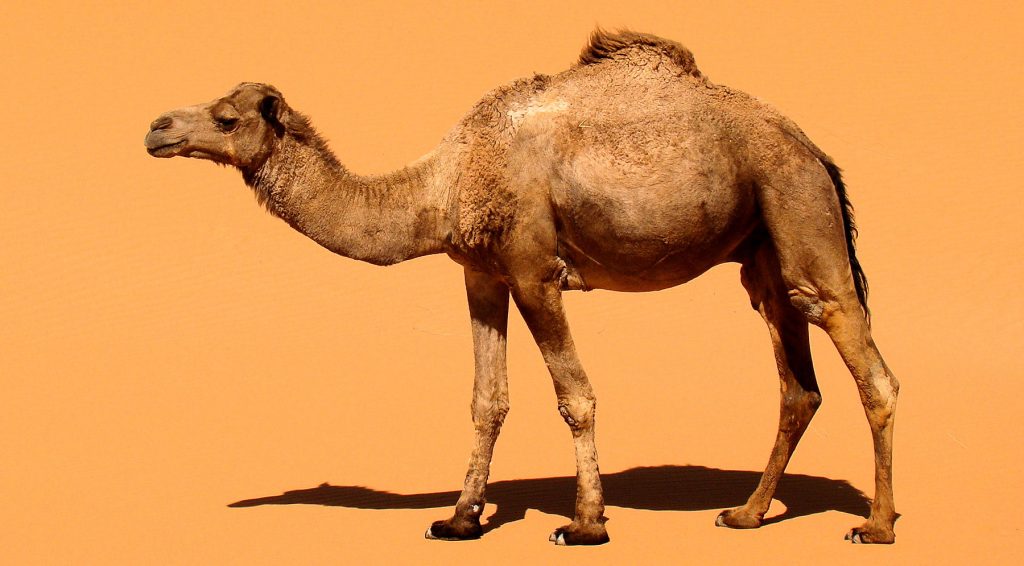
    No Sahara experience is complete without meeting the dromedary, the single-humped camel that has been the backbone of desert travel for thousands of years. These incredible animals can drink up to 100 liters of water in just 10 minutes and survive for weeks without drinking at all. Their wide, padded feet act like natural snowshoes on the sand, preventing them from sinking into the dunes.

    The dromedary has been domesticated for roughly 4,000 years, and its role in Saharan trade routes connecting sub-Saharan Africa to the Mediterranean coast shaped the history of an entire continent. Today, these gentle giants remain central to Berber culture and desert tourism alike. Locals treat their camels as family members, knowing each animal by name and temperament.

    On our camel trekking experiences, you will ride these gentle giants across the Erg Chebbi dunes at sunset — an experience that connects you directly to centuries of Saharan tradition.

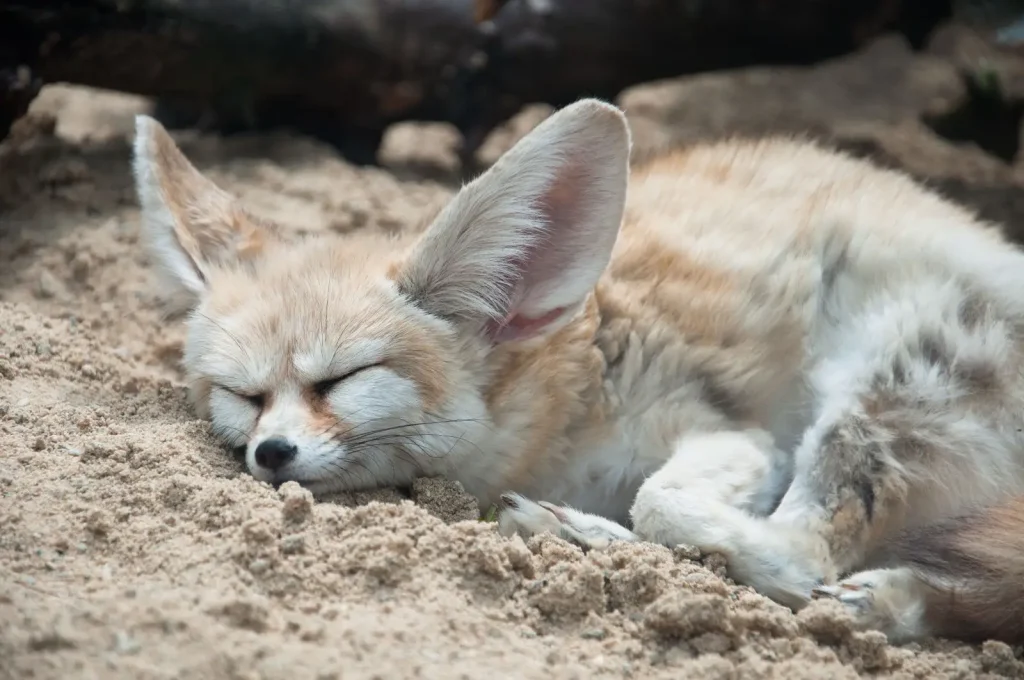
    2. The Fennec Fox — The Sahara’s Most Adorable Resident

    The fennec fox is the smallest fox species in the world, but its enormous ears — which can grow up to 15 centimeters — make it unmistakable. These oversized ears serve a dual purpose: they dissipate heat and provide exceptional hearing to detect prey moving underground. Their thick, cream-colored fur insulates them from both the scorching daytime heat and the freezing desert nights.

    Fennec foxes live in small family groups and dig elaborate burrow systems in the sand that can extend up to 10 meters in length. They are omnivores, feeding on insects, small rodents, birds, eggs, and even roots and fruits when available. Their kidneys are specially adapted to restrict water loss, allowing them to go extended periods without drinking.

    Fennec foxes are nocturnal, so your best chance of spotting one is during an overnight bivouac camp in the dunes. Listen for their distinctive high-pitched barks after dark — they are more common around Merzouga than many visitors realize.

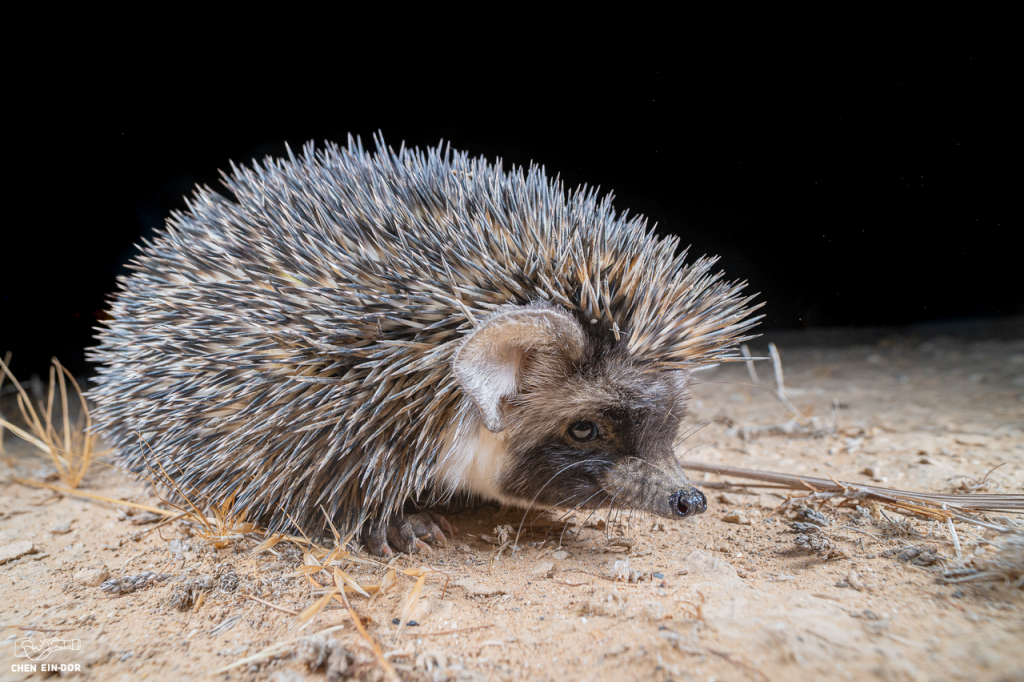
    3. The Desert Hedgehog — A Tiny Survivor


    The desert hedgehog is one of the smallest hedgehog species and is perfectly adapted to arid life. It can survive long periods without food or water by entering a state of torpor when resources are scarce. These shy creatures forage at night for insects, scorpions, and small snakes. Remarkably, they appear to be partially resistant to certain snake and scorpion venoms, making them effective predators of creatures that most other animals avoid entirely.

    Their spines provide excellent defense, and when threatened they curl into a tight ball that even determined predators struggle to breach. During the cooler months from October to March, desert hedgehogs are at their most active, and spring tours offer the best chances of finding their tiny tracks in the sand around the oasis areas near Merzouga.

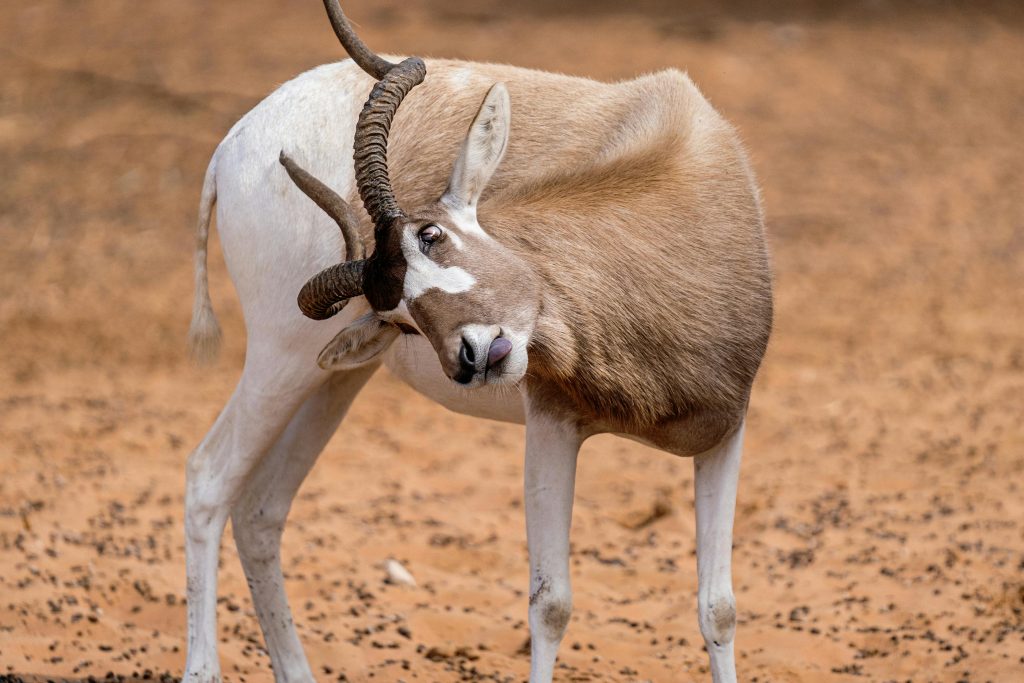
    4. The Addax — The Ghost of the Dunes

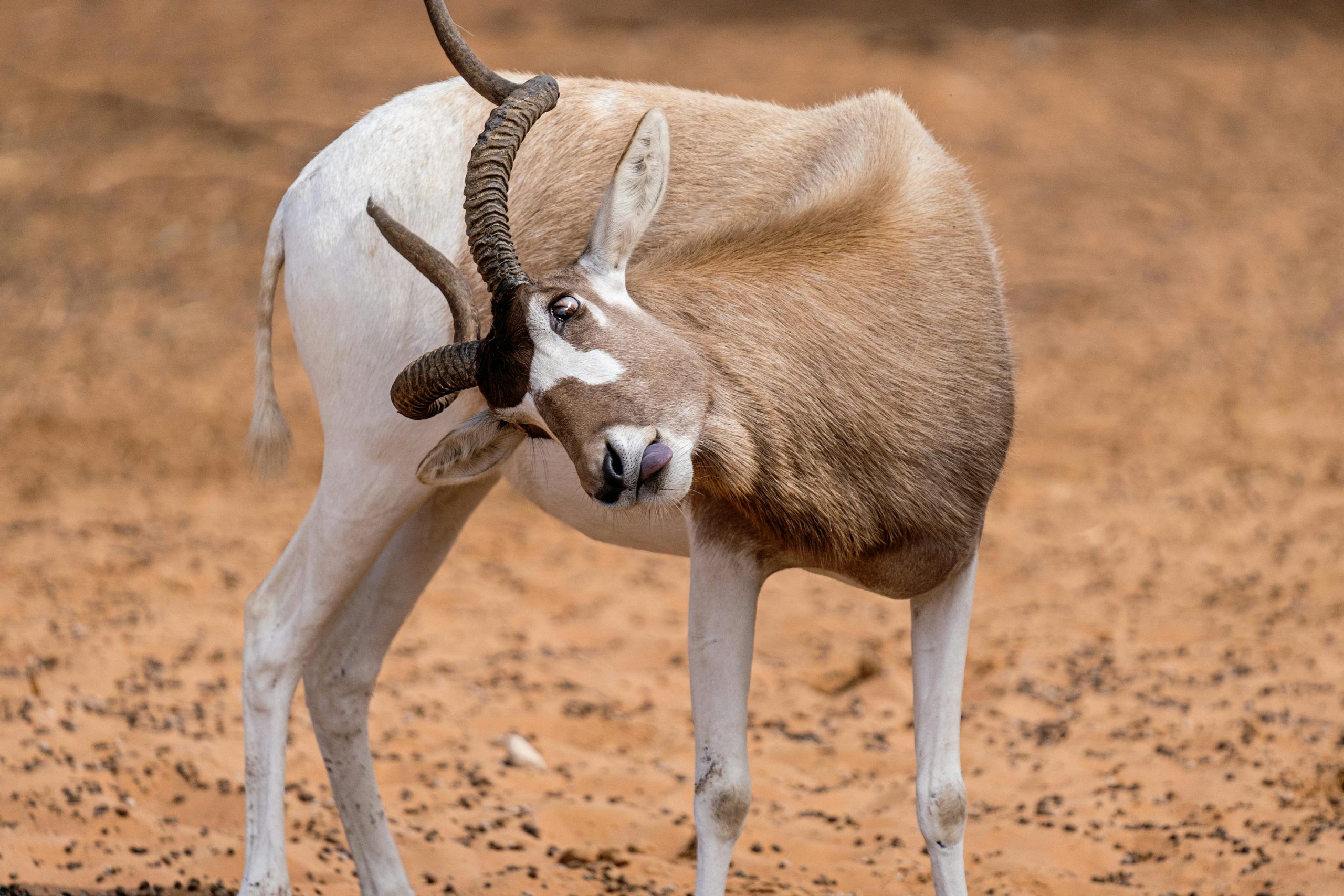
    The addax is a critically endangered antelope that was once widespread across the entire Sahara. Its pale coat reflects sunlight and its wide, flat hooves are perfectly designed for walking on sand. The addax can go nearly its entire life without drinking water, obtaining moisture from the grasses and plants it eats. Its body temperature can fluctuate by several degrees to reduce water loss through sweating — an adaptation shared by very few mammals on Earth.

    Sadly, decades of overhunting and habitat loss have reduced the wild addax population to fewer than 100 individuals. While sightings in the wild are extremely rare today, conservation programs across North Africa are working to breed and reintroduce these magnificent animals. Morocco has been involved in captive breeding programs, and there is hope that one day the addax will roam the Saharan dunes in greater numbers once again.

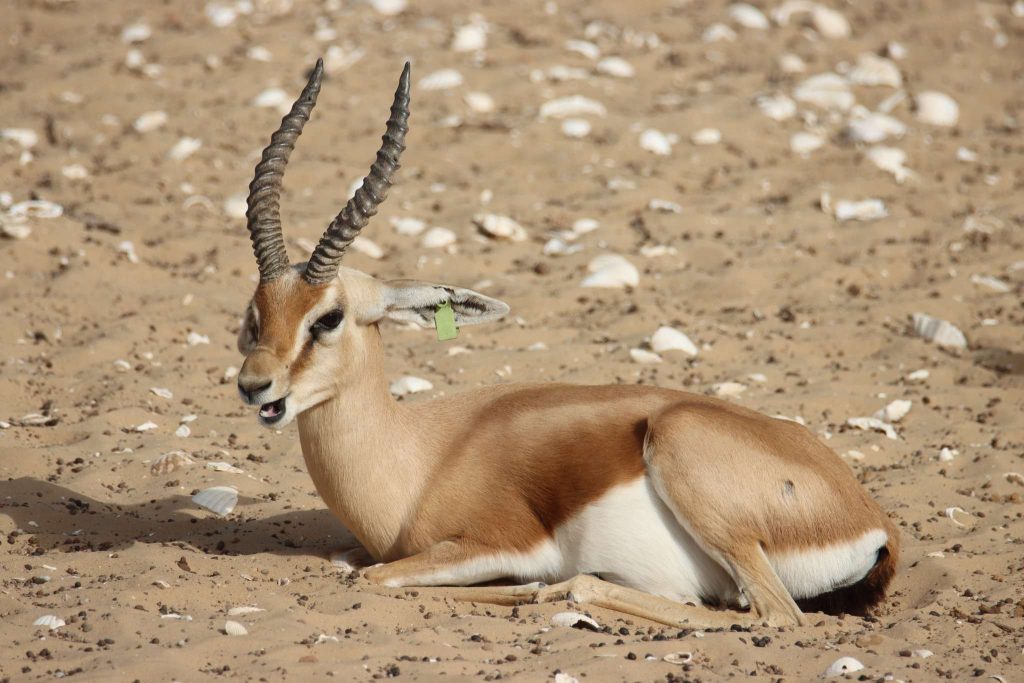
    5. The Dorcas Gazelle — Speed and Grace

    The Dorcas gazelle is one of the most adapted desert mammals. Small and agile, it can run at speeds up to 80 km/h to escape predators. Like the addax, it can survive almost entirely without drinking water, relying on dew and plant moisture. Standing at just 55 to 65 centimeters tall at the shoulder, these elegant animals weigh only 15 to 20 kilograms, making them remarkably efficient in terms of the energy and water they need to survive.

    These graceful animals are occasionally spotted in the rocky desert (hammada) regions between Merzouga and the Middle Atlas foothills, particularly during early morning drives. If you are lucky enough to see one, you will understand why the gazelle has been a symbol of beauty and grace in North African poetry and art for centuries. Our guides on multi-day custom tours know the areas where sightings are most likely.

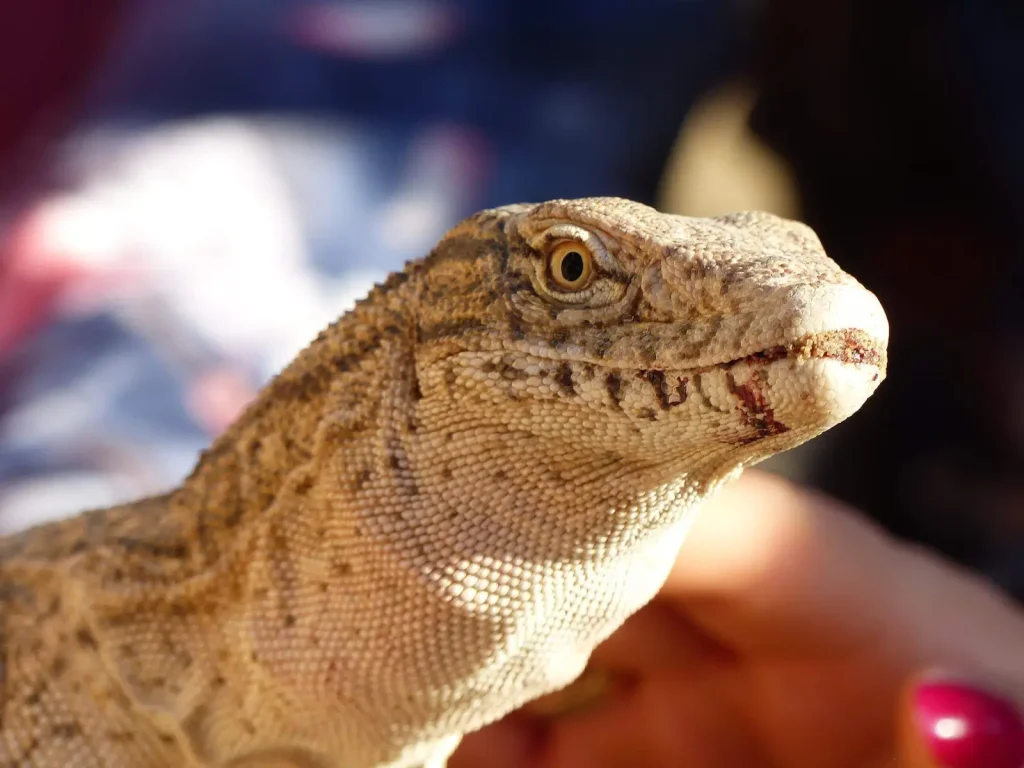
    6. The Desert Monitor Lizard — A Prehistoric Presence

    The desert monitor is the largest lizard in the Sahara, reaching up to 2 meters in length. These powerful reptiles are active during the day and can often be seen basking on rocks or hunting near oasis areas. They feed on insects, small mammals, birds, and eggs. Their forked tongues constantly taste the air for chemical signals, allowing them to track prey over long distances much like their larger cousins, the Komodo dragons.

    Desert monitors are surprisingly fast when they need to be, capable of short sprints and even standing upright on their hind legs to survey their surroundings. Spotting a desert monitor during a morning walk in the rocky desert near Merzouga is a thrilling encounter that reminds visitors of the ancient, untamed nature of this landscape.

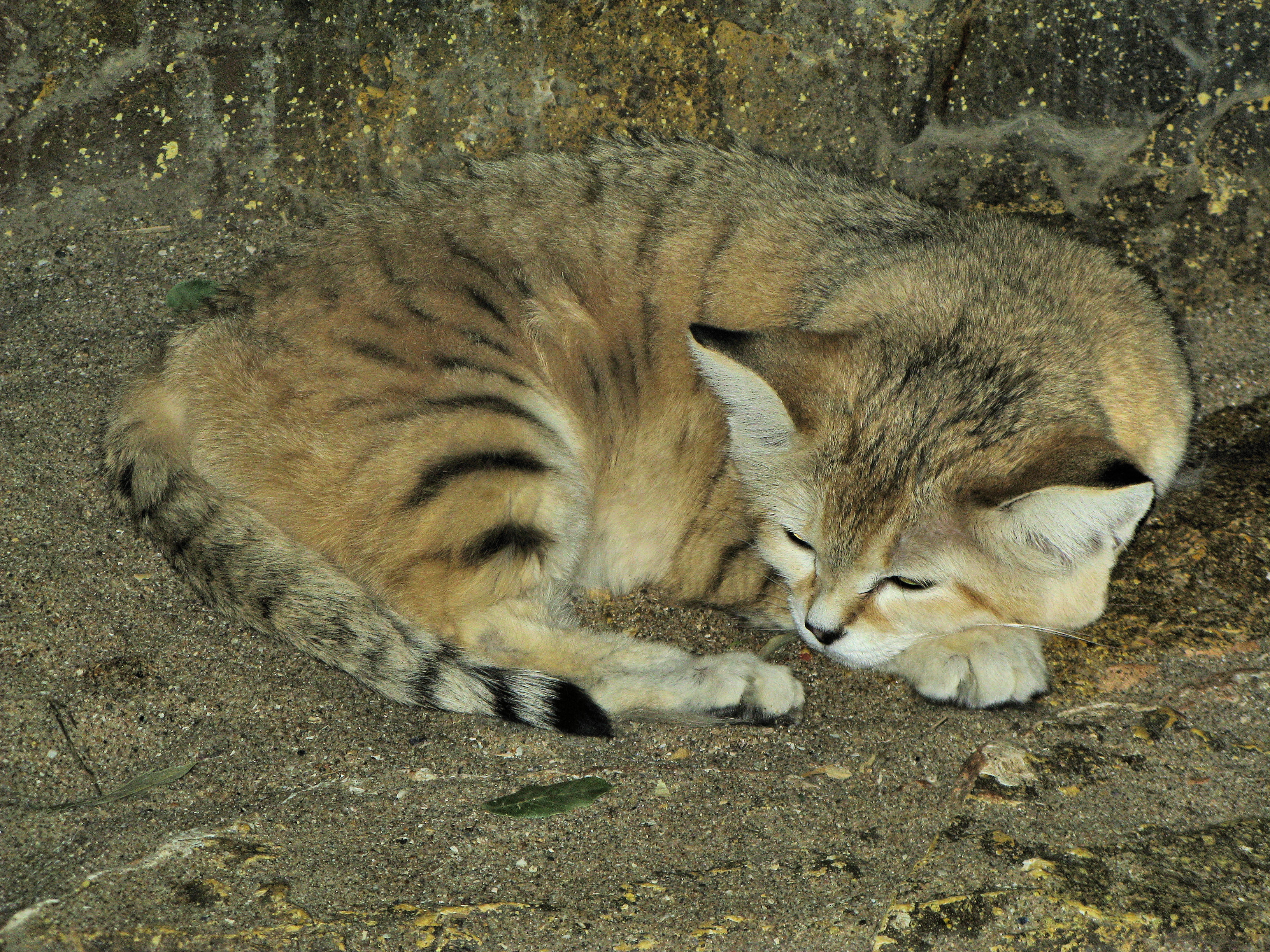
    7. The Sand Cat — The Desert’s Elusive Feline

    Sand Cat in the Sahara Desert

    The sand cat (Felis margarita) is the only wild cat species that lives exclusively in desert environments. With its broad, flat head, oversized ears, and large green eyes, it looks almost like a domestic kitten — but make no mistake, this is a skilled predator perfectly engineered for life in the Sahara. Thick fur covers the soles of its paws, acting as natural insulation against scorching sand that can reach temperatures above 80°C during the day. Its sandy-colored coat provides excellent camouflage against the desert terrain.

    Sand cats are solitary and strictly nocturnal, spending the hottest hours sheltered in burrows they dig themselves or take over from foxes and rodents. At night, they emerge to hunt small rodents, geckos, insects, and even venomous snakes with remarkable agility. Their exceptional hearing allows them to detect prey moving underground. Sand cats are extremely elusive and rarely seen, which makes a sighting during an overnight desert camp near Merzouga a truly magical and unforgettable experience. Our Berber guides occasionally spot their distinctive small tracks in the soft sand around the Erg Chebbi dunes at dawn.

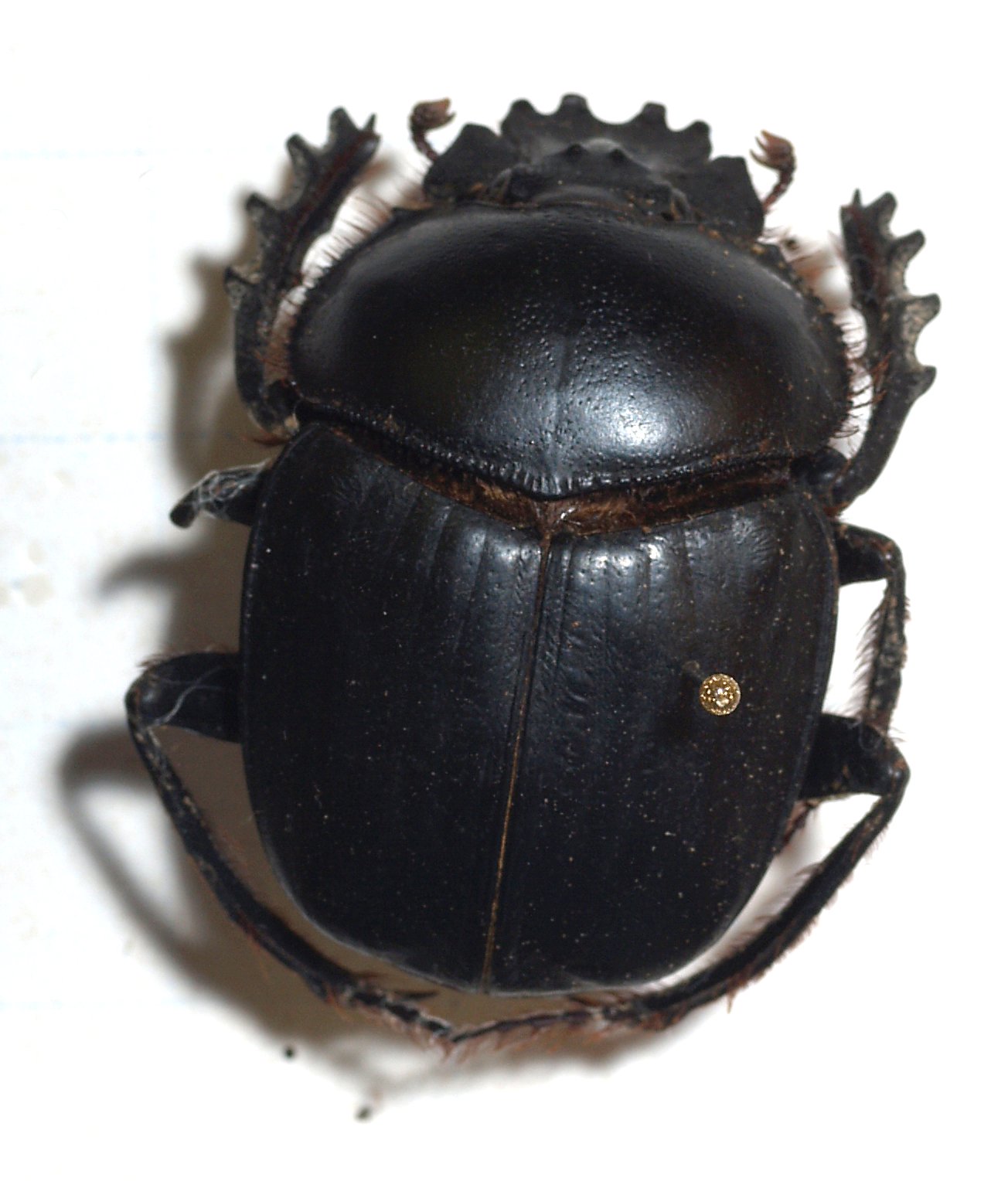
    8. The Sacred Scarab Beetle — An Ancient Symbol of the Desert

    Sacred Scarab Beetle in the Sahara Desert

    The sacred scarab beetle (Scarabaeus sacer) has been a symbol of creation and renewal since the time of the pharaohs. Ancient Egyptians believed this remarkable insect represented the sun god Khepri, as the way it rolls balls of dung across the sand mirrored the sun’s journey across the sky. These glossy black beetles are surprisingly large — up to 3 centimeters — and can be spotted in the early morning hours pushing their perfectly spherical dung balls across the sandy terrain.

    Scarab beetles play a vital ecological role in the desert ecosystem. By burying dung underground, they recycle nutrients back into the soil, aerate the sand, and help control flies and parasites. They are remarkably strong for their size, capable of rolling a ball that weighs many times their own body weight. During our desert tours near Merzouga, guests often spot scarab beetles at work in the early morning near the camel resting areas — a living connection to one of the most ancient and fascinating cultural symbols of North Africa.

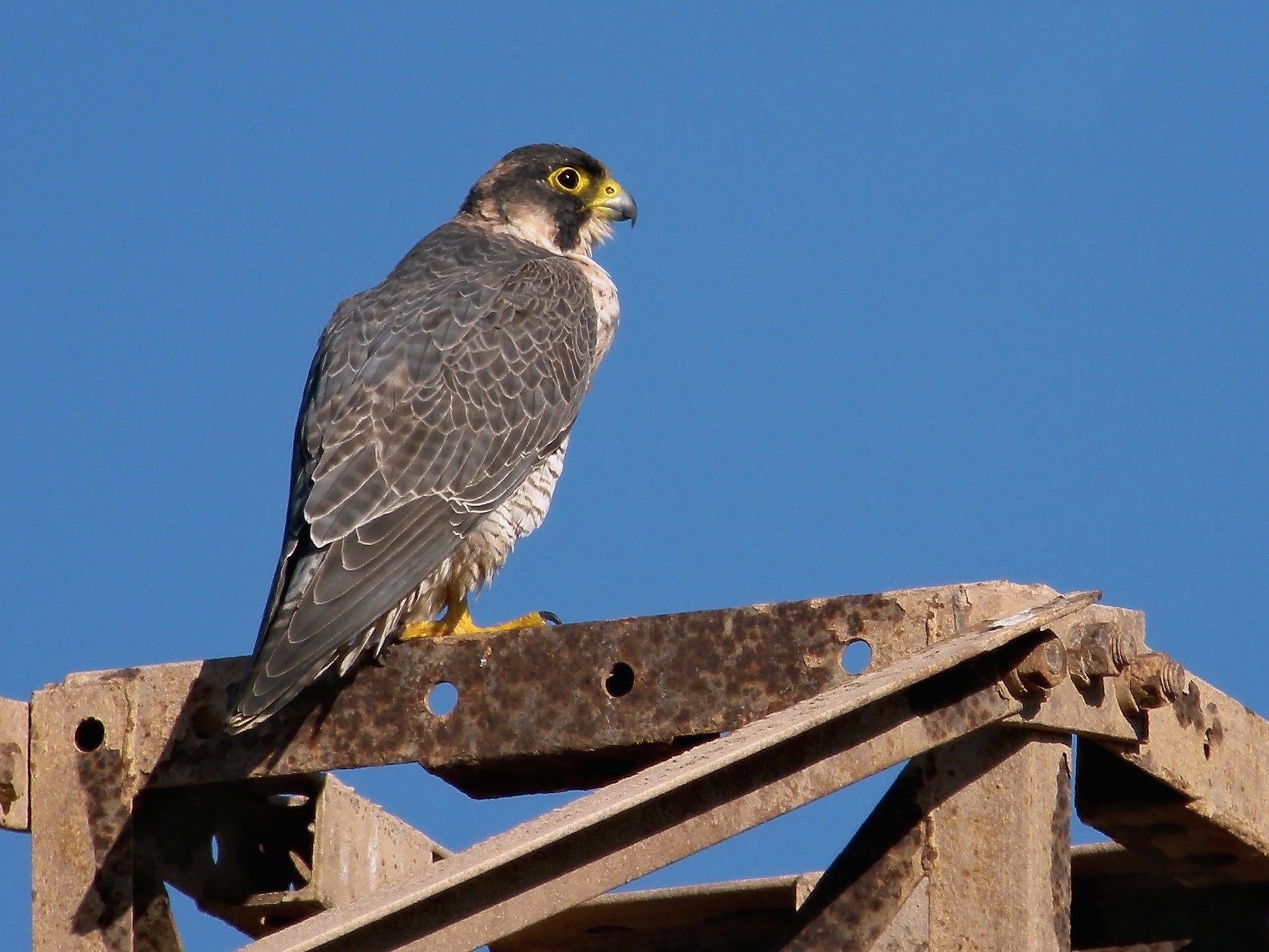
    9. The Barbary Falcon — Lord of the Skies

    Barbary Falcon in flight

    The Barbary falcon, closely related to the peregrine, is a formidable bird of prey that nests in the rocky cliffs and gorges at the edge of the Sahara. It reaches speeds over 300 km/h in its hunting dives, making it one of the fastest animals on Earth. According to the National Audubon Society, the Barbary falcon is a specialized subspecies perfectly adapted to the arid landscapes of North Africa and the Middle East.

    These raptors primarily hunt medium-sized birds such as sandgrouse, doves, and larks, striking them mid-flight with devastating precision. Birdwatchers on our multi-day tours through the Todra and Dades Gorges often spot these magnificent raptors soaring above the canyon walls at dawn. Even non-birdwatchers find the experience of watching a falcon hunt against the backdrop of red desert cliffs truly unforgettable.

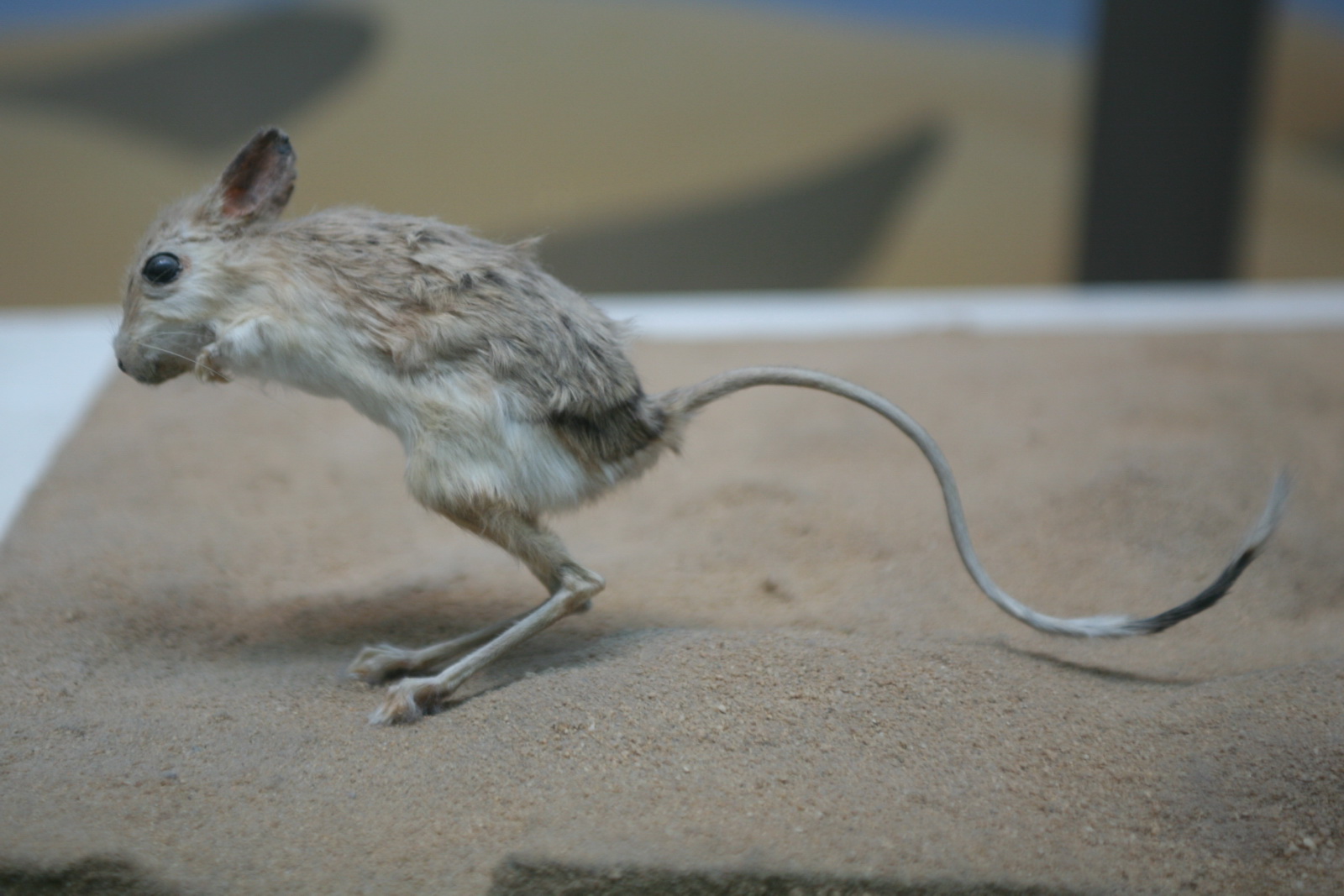
    10. The Egyptian Jerboa — A Desert Kangaroo

    Egyptian Jerboa in the desert

    Perhaps the most charming desert animal, the Egyptian jerboa is a tiny rodent with extraordinarily long hind legs that allow it to leap up to 3 meters in a single bound. Strictly nocturnal, it lives in deep burrows during the heat of the day and emerges at dusk to forage for seeds and insects. Its tail, which is longer than its entire body, serves as a balance mechanism during its incredible jumping feats.

    Jerboas have evolved specialized kidneys that produce extremely concentrated urine, minimizing water loss in their harsh environment. Their large eyes provide excellent night vision, and their long whiskers help them navigate in complete darkness. During overnight camps in the Erg Chebbi dunes, guests sometimes spot these tiny acrobats bouncing through the sand in the beam of a flashlight — a genuinely magical encounter that children and adults alike find absolutely delightful.

    Discover the Living Desert with Duna Daurada

    The Sahara is not the barren wasteland many imagine. It is a fragile, living ecosystem where extraordinary creatures have adapted over millennia to survive against the odds. According to National Geographic, the Sahara supports a surprisingly diverse range of species despite being the largest hot desert on Earth. When you travel with Duna Daurada, our experienced Berber guides share their deep knowledge of desert ecology, pointing out tracks, burrows, and behaviors that most visitors would never notice on their own.

    Whether you are on a 3-day camel trek, a luxury bivouac experience, or a multi-day Sahara circuit, the wildlife of the desert adds an unforgettable dimension to your Moroccan adventure. Many of our guests tell us that encountering these animals in their natural habitat was the highlight of their entire trip — more memorable than the sunsets, the stargazing, or even the dunes themselves.

    Ready to meet the animals of the Sahara? Browse our desert tours, explore our activities, or contact us to plan your perfect desert wildlife adventure. You can also use our tour finder to match your interests with the ideal itinerary.

  • Sahara Desert Safety: Essential Tips for a Worry-Free Adventure

    Sahara Desert Safety: Essential Tips for a Worry-Free Adventure

    The Sahara Desert is a place of staggering beauty, but it is also one of the most extreme environments on Earth. Temperatures can swing from blistering heat during the day to near freezing at night. Water sources are scarce, navigation without landmarks is disorienting, and the wildlife, though rarely dangerous, demands respect. None of this should discourage you from visiting. Thousands of travelers explore the Moroccan Sahara every year without incident. The key is preparation.

    This guide covers everything you need to know about staying safe during your Sahara adventure, from managing the desert heat and keeping hydrated to dealing with scorpions, preparing for sandstorms, and understanding why a guided tour is almost always the smartest choice.

    Understanding the Desert Climate

    Before you set foot on the sand, it helps to understand what makes the Sahara such a challenging environment. The desert is not simply hot. It is a place of extremes that can catch unprepared travelers off guard.

    Temperature Extremes

    During summer months (June through August), daytime temperatures in the Moroccan Sahara regularly exceed 45 degrees Celsius (113 degrees Fahrenheit). Even in the milder touring season from October through April, midday temperatures can reach 30 to 35 degrees Celsius. The real surprise for many visitors is how cold it gets after sunset. Winter nights in the Sahara can drop below 5 degrees Celsius, and even autumn evenings often dip into the low teens.

    This dramatic temperature swing has practical implications. You need clothing that protects you from fierce sun during the day and layers that keep you warm at night. A common mistake is packing only for the heat and then shivering through the night at a desert camp.

    UV Radiation

    At the Sahara’s latitude and altitude, ultraviolet radiation is intense. The lack of cloud cover, combined with reflection off the sand, means you are exposed to UV rays from above and below. Sunburn can happen remarkably fast, even on overcast days. This is not a place to rely on a quick application of sunscreen in the morning and forget about it.

    Humidity and Dryness

    The Sahara is one of the driest places on Earth. Relative humidity regularly drops below 25 percent and can fall to single digits. This extreme dryness accelerates dehydration because you may not realize how much moisture you are losing through perspiration. Sweat evaporates almost instantly, giving you a false sense of comfort while your body steadily loses water.

    Heat Safety and Sun Protection

    Heat-related illness is the single most common health concern for Sahara travelers. Fortunately, it is also one of the most preventable.

    Timing Your Activities

    The most effective heat safety strategy is simply avoiding the worst of it. Experienced desert guides plan activities around the sun’s schedule. Camel treks and dune walks typically happen in the early morning or late afternoon, when temperatures are manageable and the light is beautiful for photography. Midday hours, roughly from 11 a.m. to 3 p.m., are reserved for resting in the shade.

    When you book a guided Sahara tour, your itinerary will already reflect this rhythm. Guides who know the desert understand that pushing through the heat of the day is not just uncomfortable but genuinely risky.

    Clothing Choices

    Desert clothing should cover your skin while keeping you cool. This might seem contradictory, but loose-fitting, light-colored, long-sleeved garments actually keep you cooler than shorts and tank tops. They block direct sunlight, reduce UV exposure, and slow moisture loss from your skin.

    Essential clothing items include a wide-brimmed hat or a tagelmust (the traditional Tuareg head wrap, which your guide can show you how to wear), sunglasses with UV protection, lightweight long trousers, a long-sleeved shirt in breathable fabric, and closed-toe shoes or boots for walking on hot sand and rocky terrain.

    A cheche or scarf is indispensable. It protects your neck, can be wrapped around your face during wind, and doubles as a dust mask during sandstorms.

    Sunscreen and Skin Care

    Apply broad-spectrum SPF 50 sunscreen at least 30 minutes before sun exposure and reapply every two hours. Pay special attention to often-forgotten areas such as the tops of your ears, the back of your neck, your hands, and your lips (use an SPF lip balm). Bring more sunscreen than you think you need. The combination of sweat, sand, and wind wears it off faster than you expect.

    After a day in the desert, your skin will be dry. A good moisturizer helps prevent cracking, especially on your hands and lips.

    Hydration: The Most Critical Safety Factor

    Dehydration is the number one risk in the desert, and it can escalate from mild discomfort to a medical emergency faster than most people realize.

    How Much Water You Need

    In the Sahara heat, your body can lose up to 1.5 liters of water per hour during physical activity. Even at rest in the shade, you will lose significantly more fluid than you would in a temperate climate. A good baseline is to drink at least 4 to 6 liters of water per day in the desert, and more if you are active.

    Do not wait until you feel thirsty. Thirst is a lagging indicator. By the time you feel it, you are already mildly dehydrated. Instead, drink small amounts frequently throughout the day. A useful strategy is to take a few sips every 15 to 20 minutes.

    Electrolyte Balance

    Water alone is not enough. When you sweat, you lose electrolytes, primarily sodium, potassium, and magnesium. Drinking large amounts of plain water without replacing electrolytes can lead to hyponatremia, a potentially dangerous condition where blood sodium levels drop too low.

    Pack oral rehydration salts or electrolyte tablets. These are lightweight, inexpensive, and can make a significant difference to how you feel. Alternatively, Moroccan mint tea, which is served with sugar and often a pinch of salt, is a surprisingly effective rehydration drink. Your guide will likely offer it throughout the trip.

    Recognizing Dehydration

    Early signs of dehydration include dark urine, headache, fatigue, dizziness, and reduced urine output. More advanced symptoms include confusion, rapid heartbeat, dry mouth, and cessation of sweating. If you or someone in your group stops sweating in the desert heat, this is a serious warning sign that requires immediate attention: move to shade, drink fluids with electrolytes, and cool the body with wet cloths.

    Wildlife Awareness: Scorpions, Snakes, and Insects

    The Sahara is not teeming with dangerous creatures, but a few residents deserve your respect and awareness.

    Scorpions

    Scorpions are the desert wildlife concern that travelers ask about most. Morocco is home to several scorpion species, including the fat-tailed scorpion (Androctonus mauritanicus), which carries medically significant venom. The good news is that scorpion encounters are rare when you follow basic precautions.

    Always shake out your shoes before putting them on in the morning. This is the single most important habit to develop in the desert. Scorpions are nocturnal and seek shelter in dark, enclosed spaces during the day, and your shoes are an inviting hiding spot. Also shake out clothing and check your sleeping bag before climbing in.

    Avoid walking barefoot at night, even inside your camp. Wear shoes or sturdy sandals if you need to move around after dark. If you see a scorpion, keep your distance and inform your guide. Do not attempt to handle or kill it.

    Snakes

    The Sahara hosts several snake species, including the horned viper and the sand boa. Encounters are uncommon because desert snakes are generally shy and avoid human activity. They are most active at dawn and dusk.

    Watch where you step, especially around rocky outcrops and near bushes. Never reach into crevices or under rocks without looking first. If you see a snake, back away calmly. Snakes in the Sahara almost never pursue humans; they want to avoid you as much as you want to avoid them.

    Insects and Spiders

    Mosquitoes are rare in the deep desert but can be present near oases. Flies can be persistent during warmer months. A lightweight insect repellent provides comfort. Camel spiders, which look intimidating but are not actually dangerous to humans, occasionally appear in camps. They are fast-moving and can startle you, but they are not venomous and do not attack people.

    Sandstorm Preparation

    Sandstorms, ranging from mild dusty breezes to intense visibility-reducing events, are a reality of desert travel. They are most common in spring (March through May) but can occur at any time.

    What a Sandstorm Feels Like

    Minor sandstorms feel like standing in a strong, gritty wind. Sand gets everywhere: in your eyes, ears, nose, and any exposed skin. Severe sandstorms can reduce visibility to a few meters and create a disorienting whiteout effect. The sound of wind-driven sand is surprisingly loud.

    How to Stay Safe

    If a sandstorm catches you in the open, the most important thing is to protect your airways and eyes. Wrap your cheche or scarf around your nose and mouth. Put on your sunglasses or goggles. Turn your back to the wind if possible, and crouch or sit down to reduce your profile.

    Do not try to walk or drive during a severe sandstorm. Visibility is too poor and the risk of getting lost is real. If you are with a guide, follow their instructions. Experienced desert guides can read the sky and often anticipate sandstorms before they arrive, giving you time to prepare.

    Keep your electronics, especially cameras and phones, sealed inside zip-lock bags or a protective case during storms. Fine desert sand can destroy lenses and clog ports.

    After the Storm

    Once the storm passes, check your gear and shake out sand before it works its way into zippers and mechanisms. Rinse your eyes with clean water if they feel gritty. Drink extra water because sandstorms increase dehydration.

    Solo Travel vs. Guided Tours

    This is one of the most important safety decisions you will make regarding the Sahara.

    The Case for Guided Tours

    The Sahara is not a place for casual solo exploration. Even experienced desert travelers rarely venture into the dunes without a knowledgeable guide. The terrain is featureless, GPS signals can be unreliable, and the consequences of getting lost are severe. There are no trail markers, no cell signal in most areas, and no rescue services waiting around the corner.

    A reputable guided tour provides safety through expertise. Your guide knows the terrain, understands weather patterns, carries communication equipment, and can handle medical situations. They know where water sources are, which routes are safe for camels and vehicles, and how to navigate if visibility drops.

    When you explore available Sahara experiences, you will find that guided tours range from shared group excursions to fully private adventures, so there is an option that fits every preference and budget. You can also request a custom itinerary tailored to your specific needs, including any health or mobility considerations.

    If You Insist on Independence

    If you have desert experience and wish to explore independently, at minimum inform someone reliable of your planned route and expected return time. Carry a satellite communicator (such as a Garmin inReach or SPOT device), bring at least twice the water you think you need, and stay on established tracks. Never drive off-road into unfamiliar dune fields alone.

    First Aid Essentials for the Desert

    A well-stocked first aid kit is an essential piece of desert gear. Guided tours carry medical supplies, but having your own personal kit ensures you have what you need immediately.

    What to Pack

    Your desert first aid kit should include blister plasters and moleskin (foot blisters are common when walking in sand), adhesive bandages and wound closure strips, antiseptic wipes and antibiotic ointment, oral rehydration salts, pain relievers such as ibuprofen and paracetamol, antihistamine tablets for insect stings or allergic reactions, tweezers for splinters or thorns, a small flashlight or headlamp, any personal prescription medications in their original packaging, and a card listing your blood type, allergies, and emergency contacts.

    Heat Exhaustion and Heat Stroke

    Know the difference between heat exhaustion and heat stroke, because the response to each is different. Heat exhaustion presents with heavy sweating, weakness, cool and clammy skin, nausea, and a fast but weak pulse. Move the person to shade, apply cool cloths, and have them sip water with electrolytes. Most people recover with rest and rehydration.

    Heat stroke is a medical emergency. The person stops sweating, their skin is hot and dry, they may be confused or unconscious, and their body temperature rises dangerously. Cool the person aggressively with wet cloths, fan them, and seek medical evacuation. Heat stroke can be fatal without treatment.

    Bites and Stings

    If someone is stung by a scorpion, remain calm. Most scorpion stings in Morocco, while painful, are not life-threatening for healthy adults. Clean the sting site, apply a cold compress if available, take pain relief, and monitor for severe symptoms such as difficulty breathing, muscle spasms, or unusual heart rate. Seek medical attention when possible, and if you can safely photograph the scorpion, it helps medical staff identify the species.

    For snake bites, keep the affected limb immobilized and below heart level. Do not cut the wound, apply a tourniquet, or try to suck out venom. These outdated first aid measures do more harm than good. Keep the person calm and seek medical help as quickly as possible.

    Navigating the Desert Safely

    Even with a guide, understanding basic desert navigation principles adds a layer of confidence to your trip.

    Natural Navigation Cues

    Berber guides have navigated the Sahara for centuries using natural cues. The sun’s position gives a general sense of direction throughout the day. At night, the North Star (Polaris) provides a reliable northward reference. Wind patterns in the Erg Chebbi region tend to be consistent, and experienced guides use the orientation of dune ridges as directional markers.

    Sand dunes are not random. They form patterns shaped by prevailing winds, and these patterns remain relatively consistent over time. Your guide reads these patterns the way you read a road map.

    Modern Tools

    If you carry a GPS device or smartphone with offline maps (download them before you leave cell coverage), keep it as a backup rather than a primary navigation tool. Batteries drain quickly in extreme heat and cold, and touchscreens can become unresponsive in sand and sun. A physical compass remains reliable regardless of battery life or temperature.

    Traveling with Medical Conditions

    If you have a pre-existing medical condition, the desert is not off-limits, but extra planning is necessary.

    Travelers with diabetes need to monitor blood sugar more frequently in the heat and should carry medications in an insulated pouch. Heart conditions require caution with extreme heat; discuss your plans with your doctor before booking. Asthma sufferers should carry their inhaler accessible at all times, as sand and dust can trigger episodes.

    When you get in touch with us to plan your trip, share any medical concerns with your tour operator. A good operator adjusts the itinerary to accommodate your needs, whether that means shorter trekking distances, vehicle support, or camps with easier access.

    Children and Family Safety in the Desert

    Families with children can absolutely enjoy the Sahara, but kids are more vulnerable to heat and dehydration than adults. Their smaller body mass means they heat up faster and need proportionally more fluids.

    Keep children covered with lightweight clothing and hats. Apply sunscreen frequently and generously. Ensure they drink regularly, even if they say they are not thirsty. Shorter camel rides and more frequent shade breaks make the experience enjoyable rather than exhausting.

    Many family-friendly tours include vehicle support so that younger children can ride in air-conditioned comfort when the heat or distance becomes too much. Check the available tour options to find itineraries designed with families in mind.

    Communication and Emergency Planning

    Connectivity

    Cell phone coverage ends shortly after you leave the paved roads heading into the Erg Chebbi dunes. Do not rely on your phone for communication or navigation once you are in the desert. Some luxury camps offer limited Wi-Fi via satellite, but it is slow and unreliable.

    Professional tour operators carry satellite phones or satellite communicators for emergencies. Before your trip, confirm that your operator has a reliable means of contacting emergency services from remote locations.

    Emergency Contacts

    Share your itinerary and expected return date with someone at home. Provide them with the contact details of your tour operator. In the unlikely event that something goes wrong, this information allows authorities to narrow the search area quickly.

    The nearest medical facilities to the Erg Chebbi region are in Errachidia, roughly 120 kilometers away. For serious emergencies, evacuation to Marrakech or Casablanca may be necessary. Travel insurance that includes medical evacuation is strongly recommended for any Sahara trip.

    Respecting the Environment

    Safety in the desert is not only about protecting yourself. It is also about protecting the fragile ecosystem you are visiting.

    Stay on established paths to avoid disturbing desert vegetation, which stabilizes sand and provides habitat for wildlife. Carry all waste out of the desert, including biodegradable items that take far longer to decompose in arid conditions than in temperate environments. Avoid collecting rocks, fossils, or plants as souvenirs.

    Use biodegradable toiletries. Chemical sunscreens and soaps can contaminate the limited water sources that desert wildlife depends on.

    Final Thoughts on Sahara Safety

    The Sahara is a place that rewards preparation and respect. The risks are real but manageable, and the experience of watching the sun set over endless dunes, sleeping under a sky overflowing with stars, and sharing tea with Berber nomads is worth every ounce of planning.

    Choose a reputable guide, pack sensibly, stay hydrated, protect yourself from the sun, and approach the desert with humility. Do these things, and your Sahara adventure will be everything you dreamed of and more.

    Ready to plan your safe and unforgettable desert experience? Explore our Sahara tours or contact us to discuss your needs with our experienced team.

  • Camel Trekking in the Sahara: What to Expect on Your First Ride

    Camel Trekking in the Sahara: What to Expect on Your First Ride

    There are certain travel experiences that live up to every expectation, and riding a camel through the Sahara Desert is one of them. The rhythmic sway of the animal, the dunes glowing in warm light, the silence broken only by soft footfalls on sand — it is an experience that photographs cannot fully capture and words struggle to describe.

    But if you have never ridden a camel before, the prospect can also feel a little daunting. How do you get on? Will it be uncomfortable? What happens if the camel decides it does not like you? And is the sunset trek or the sunrise trek better?

    This guide answers every question a first-time camel trekker might have, so you can approach your Sahara adventure with confidence and excitement instead of anxiety.

    Dromedary, Not Camel (Technically)

    Before anything else, a quick clarification. The animals you will ride in the Moroccan Sahara are dromedaries, not the two-humped Bactrian camels of Central Asia. Dromedaries have a single hump, longer legs, and are perfectly adapted to the hot, arid conditions of the Sahara.

    In everyday English, and throughout Morocco, dromedaries are simply called camels. We will use the common term throughout this article, but if you want to impress your guide, call your ride a dromedary and watch the smile of appreciation.

    Dromedaries are remarkable animals. They can go for weeks without water, tolerate extreme heat, and carry loads of up to 200 kilograms across soft sand that would exhaust a horse in minutes. They have thick, calloused pads on their feet that spread wide to prevent sinking, and their double rows of eyelashes and closeable nostrils protect against blowing sand.

    They are also, it must be said, animals with personality. Some are placid and docile, others are vocal and opinionated, and a few are downright mischievous. Your guide will match you with a camel suited to your experience level, so trust the process.

    Types of Camel Treks Available

    Not all camel treks are the same, and choosing the right duration and format is important for enjoying the experience.

    Sunset Camel Trek (1-2 Hours)

    The most popular option for visitors with limited time or those who want a taste of camel riding without a full overnight commitment. You mount your camel at the edge of the dunes in the late afternoon, ride for about 45 minutes to an hour into the erg, watch the sunset from the top of a dune, and ride back to your starting point.

    Best for: Families with small children, travelers with physical limitations, those short on time, and anyone who wants the iconic sunset photo without the overnight camp.

    Overnight Camel Trek (Sunset to Sunrise)

    This is the classic Sahara experience and the option we recommend for most first-time visitors. You ride into the desert in the afternoon, arriving at a desert camp as the sun sets. The evening includes dinner, music around a campfire, and stargazing. You sleep in a tent or under the stars and ride back at sunrise the next morning.

    The ride to camp typically takes 1 to 1.5 hours each way, covering about 5 to 7 kilometers. This is enough to feel genuinely immersed in the desert without causing discomfort for inexperienced riders.

    Best for: Anyone who wants the full desert experience. This is the option that most travelers describe as life-changing.

    Two-Night Trek

    A two-night trek adds a full day in the desert between the sunset arrival and sunrise departure. This extra day allows you to explore on foot, try sandboarding, climb to the highest dune summits, visit nomadic encampments, and simply absorb the silence and scale of the landscape at a relaxed pace.

    Best for: Travelers who want a deeper immersion, photographers who need time for different light conditions, and anyone who does not want to feel rushed.

    Multi-Day Expedition (3-7 Days)

    For the truly adventurous, multi-day camel treks follow traditional caravan routes through the desert. You camp in a different location each night, cover significant distances, and experience the rhythm of desert travel as nomadic peoples have for centuries.

    These longer treks require reasonable physical fitness and a willingness to accept basic camping conditions. The rewards are proportional: remote landscapes that few tourists ever see, authentic interactions with nomadic families, and a sense of accomplishment that a short trek cannot match.

    Best for: Experienced travelers, adventure seekers, and anyone who has done the overnight trek and wants more.

    Browse all of our camel trekking options to find the right trek for your adventure level.

    How to Mount and Dismount a Camel

    The mounting and dismounting process is the part that makes most first-timers nervous, but it is actually straightforward once you know what to expect.

    Mounting

    Your camel will be seated on the ground with its legs folded beneath it. This is the position called “couched.” Even seated, the camel is large, and you will need to swing your leg over the saddle much as you would mount a tall horse.

    Step-by-step:

    1. Approach the camel from the left side (your guide will position you).
    2. Place your left foot in the stirrup or on the camel’s folded knee (your guide will show you which).
    3. Swing your right leg over the saddle and settle into position.
    4. Grip the front handle of the saddle firmly with both hands.
    5. Lean back. This is the crucial part. When the camel stands up, it rises rear-end first, which pitches you forward. If you lean back, you stay balanced. If you lean forward, you will feel like you are about to go over the camel’s head (you will not, but it feels that way).

    The camel standing up happens in two stages: first the back legs extend, tilting you forward, then the front legs unfold, leveling you out. The whole process takes about 3 seconds and feels dramatic the first time. By the second time, you will wonder why you were worried.

    Dismounting

    Dismounting is the reverse process. Your guide will instruct the camel to couch (sit down), and you lean back as the camel folds its front legs first (tilting you forward) and then its back legs.

    Once the camel is fully seated, swing your right leg over and step down on the left side. Hold the saddle handle until you are fully off to maintain balance.

    Important Tips

    • Trust your guide: They have done this thousands of times and will physically help you if needed.
    • Do not panic: The camel’s rising and sitting movements are sudden but not dangerous. Staying relaxed makes everything easier.
    • Keep your feet out of the way: When the camel couches, make sure your feet and legs are clear of its folding legs.

    What the Ride Feels Like

    Riding a camel is unlike riding any other animal. The motion is a distinctive side-to-side rolling gait that takes a few minutes to adjust to. Some describe it as similar to being on a gentle boat, with a rhythmic sway that can actually become quite relaxing once you stop fighting it and let your body move with the camel.

    The Rhythm

    Camels walk at about 5 kilometers per hour, which feels slow until you realize there is no rush. The steady pace is part of the experience. It gives you time to observe the changing patterns in the sand, watch your shadow stretch across the dunes, and feel the desert’s vastness settling into your consciousness.

    The Height

    Sitting on a camel puts you about 2 to 2.5 meters above the ground, significantly higher than horseback. This elevated vantage point gives you panoramic views over the dunes and creates a wonderful sense of scale.

    The Sound

    One of the surprising pleasures of camel trekking is the sound: the soft padding of camel feet on sand, the occasional grumble or snort from your mount, the creak of the saddle, and beneath it all, the deep silence of the desert. No engines, no horns, no notifications. Just you, the camel, and the sand.

    Comfort Tips for First-Time Riders

    Let us be honest: camel riding can be uncomfortable if you are unprepared. The saddle is hard, the motion is unfamiliar, and your inner thighs, lower back, and sitting bones will notice the effort. But with a few simple preparations, you can minimize discomfort and maximize enjoyment.

    What to Wear

    • Long trousers: Essential for protecting your legs from saddle friction. Loose cotton or linen trousers are ideal. Avoid shorts, which will leave your inner thighs in contact with the rough saddle or blanket.
    • Comfortable underwear: This matters more than you might think. Seamless, moisture-wicking underwear reduces chafing. Some experienced trekkers wear cycling shorts underneath their trousers.
    • Closed-toe shoes or sturdy sandals: You will need to use stirrups, and the sand can be very hot. Flip-flops are not suitable.
    • A scarf or cheche: Protects your head, face, and neck from sun and blowing sand. Your guide will typically provide one and show you how to wrap it.
    • Layers: Bring a warm layer for sunset and early morning, even if the daytime temperature is warm.

    Physical Preparation

    • Core strength helps: The constant balancing motion of camel riding engages your core muscles. If you have a few weeks before your trip, simple core exercises (planks, crunches, yoga) will make the ride more comfortable.
    • Stretch beforehand: A few minutes of hip and lower back stretching before mounting will reduce stiffness afterward.
    • Stretch afterward: Your muscles will appreciate some gentle stretching at camp, especially your hip flexors, hamstrings, and lower back.

    During the Ride

    • Relax your body: Tensing up amplifies every bump and sway. Let your hips move with the camel’s rhythm, keep your shoulders loose, and breathe naturally.
    • Shift your weight: Do not stay in exactly the same position for the entire ride. Shift your weight periodically, lean forward, lean back, and give your sitting bones a break.
    • Use the handle: The front of the saddle has a handle or pommel. Use it for stability, especially on inclines and declines.
    • Communicate with your guide: If you are uncomfortable, need a break, or want to walk for a stretch, just say so. There is no shame in walking part of the way, and your guide will be happy to accommodate.

    After the Ride

    It is normal to feel slightly sore after your first camel ride, especially in the inner thighs and lower back. This is similar to the soreness you might feel after horseback riding or cycling for the first time. It fades within a day or two and is a small price for an extraordinary experience.

    Sunset Trek vs. Sunrise Trek: Which Is Better?

    This is one of the most common questions we receive, and the answer depends on your preferences.

    The Sunset Trek

    The experience: You ride into the dunes in the warm afternoon light, watching the shadows lengthen and the colors deepen. As you reach your viewpoint or camp, the sun drops toward the horizon, painting the sand in shades of gold, copper, and eventually deep rose. The transition from day to night in the desert is gradual and spectacular.

    Pros: Warmer temperatures, softer light for photography, the excitement of riding into the unknown, watching the first stars appear after sunset.

    Cons: You are riding away from camp or base, so if you are tired, the walk or ride back may feel long (for short treks). For overnight treks, there is no downside.

    The Sunrise Trek

    The experience: You rise in the pre-dawn darkness, mount your camel under a sky full of stars, and ride as the eastern horizon begins to glow. Watching the sun rise over the dunes from camelback is one of the most serene experiences in travel. The early morning light creates long shadows and reveals the intricate ripple patterns in the sand.

    Pros: Cooler temperatures, fewer people, the magical transition from starlight to daylight, incredible photography light, the sense of being up before the world.

    Cons: Requires an early wake-up (typically around 5:30-6:00 AM depending on season), cold temperatures in winter months.

    Our Recommendation

    If you are doing an overnight trek, you get both. You ride in at sunset and ride out at sunrise, which is the ideal combination. If you are choosing a short trek with only one direction, the sunset trek is slightly more popular and arguably more dramatic, but the sunrise offers a quieter, more meditative experience.

    Camel Welfare: What You Should Know

    Responsible travelers rightly ask about the welfare of the camels used for trekking. Here is what to look for and what to expect from a reputable operator.

    Signs of Well-Cared-For Camels

    • Healthy body condition: The camel should look well-fed, with a firm (not sagging) hump. The hump stores fat, and a drooping or deflated hump can indicate poor nutrition.
    • Clean, undamaged saddle area: The blankets and saddle should not be causing sores or rubbing. Check for bare patches or wounds on the back and flanks.
    • Calm demeanor: While camels are naturally vocal (groaning and grumbling are normal), a camel that is panicked, excessively reluctant, or showing signs of distress may be overtired or mistreated.
    • Adequate rest: Camels should not be working continuously. Reputable operators rotate their animals and give them rest days.
    • Access to food and water: After the trek, camels should be watered and allowed to graze or eat supplementary feed.

    What Duna Daurada Does

    Our camels are owned and cared for by local Berber families who have raised these animals for generations. The relationship between a Saharan Berber and their camel is one of genuine partnership and respect. Our camels work limited hours, receive veterinary care, and are well-fed and watered. We believe that ethical treatment of our animals is not just a moral obligation but essential for providing a quality experience — a happy, healthy camel makes for a smoother, more enjoyable ride.

    What Happens at the Desert Camp

    For overnight treks, the camp is where the magic deepens.

    Arrival

    You arrive at camp as the sun is setting. Your guide helps you dismount, the camels are unsaddled and led away to rest and eat, and you are shown to your tent or sleeping area. There is time to explore the surrounding dunes, climb to a high point for sunset views, and take photographs in the extraordinary light.

    Dinner

    Dinner is typically a traditional Moroccan meal prepared by your camp staff: a starter of soup or salad, a main course tagine or couscous, and fruit for dessert. Meals are served in a communal dining tent, and the food is often surprisingly good given the remote setting. Vegetarian and other dietary requirements can be accommodated with advance notice.

    Evening Entertainment

    After dinner, your guides and camp staff gather around a fire pit (campfire conditions permitting) for music and conversation. Drums come out, songs are sung, and guests are invited to join in. This fireside session under a sky blazing with stars is, for many travelers, the single most memorable moment of their entire Morocco trip.

    Sleeping

    Depending on your camp level, you will sleep in a shared Berber tent, a private tent with a real bed, or a luxury suite with full amenities. Regardless of the accommodation level, sleeping bags or warm blankets are provided for cold nights. Many travelers choose to drag their mattress or blanket outside and sleep under the stars, which is an unforgettable option on clear, mild nights.

    Sunrise

    You will be woken early (around 5:30 to 6:00 AM) to watch the sunrise. Some guests climb the nearest high dune, while others watch from camp with a cup of coffee. The sunrise over Erg Chebbi is spectacular, and the post-dawn light creates ideal conditions for photography.

    After breakfast, you remount your camel for the ride back to the edge of the dunes, arriving in time to continue your onward journey.

    Frequently Asked Questions

    Is camel riding safe?

    Yes, when done with a reputable operator and experienced guides. Camels used for tourism are trained and accustomed to carrying passengers. Serious accidents are extremely rare.

    Can children ride camels?

    Yes. Most operators allow children from about age 4 or 5 to ride, usually sharing a camel with an adult or a guide. Younger children may ride in a carrier or share a saddle with a parent.

    I have back problems. Can I still ride?

    This depends on the severity of your condition. The camel’s swaying motion puts some stress on the lower back. If you have chronic back issues, a short sunset trek (1 hour or less) may be manageable, but a multi-hour trek could be uncomfortable. Discuss your situation with our team when booking, and we can suggest alternatives such as 4×4 access to the camp with a short camel ride for photos.

    What if I am afraid of heights or animals?

    The height is noticeable but not extreme (about 2 meters), and most people adjust quickly. If you are nervous around large animals, spending a few minutes with the camel before mounting — touching its neck, talking to it — can help ease anxiety. Your guide will be right beside you throughout.

    Do I need travel insurance?

    We strongly recommend travel insurance for any Morocco trip, including coverage for adventure activities. Check that your policy covers camel trekking specifically, as some standard policies exclude animal riding.

    How do I book?

    Browse our desert tours for itineraries that include camel trekking, or use the tour finder to filter by activity type. If you want a custom experience — perhaps a private overnight trek or a multi-day expedition — contact us to build a personalized itinerary.

    Final Thoughts

    Your first camel ride through the Sahara will be clumsy, unfamiliar, and probably a little uncomfortable. It will also be breathtaking, humbling, and quietly transformative. There is something about moving through an ancient landscape on the back of an animal that has carried travelers across these sands for centuries that strips away the noise of modern life and leaves you with something clearer and more essential.

    Do not overthink it. Do not worry too much about the perfect photo or the ideal seating position. Just get on the camel, let your body find the rhythm, and look out at the dunes stretching endlessly before you. The Sahara will do the rest.

  • Best Time to Visit the Moroccan Sahara: A Month-by-Month Guide

    Best Time to Visit the Moroccan Sahara: A Month-by-Month Guide

    One of the most common questions we hear from travelers planning a Sahara desert tour is simple: when should I go? The answer depends on what matters most to you. Do you want the mildest temperatures? The fewest crowds? The lowest prices? Or perhaps you want to time your visit around a cultural festival or a celestial event?

    The Moroccan Sahara is a year-round destination, but each season brings a dramatically different experience. Summer days can be scorching, winter nights can be surprisingly cold, and the shoulder seasons offer a sweet spot that many seasoned travelers swear by.

    This month-by-month guide breaks down everything you need to know so you can choose the perfect time for your desert adventure.

    Understanding the Sahara’s Climate

    Before diving into the monthly breakdown, it helps to understand the basic climate patterns of the Moroccan Sahara, particularly around Merzouga and Erg Chebbi, the most visited desert region.

    The Sahara has an arid desert climate with extreme temperature swings between day and night. This diurnal variation can be as much as 20 to 25 degrees Celsius in a single day. Rainfall is rare, averaging only about 50 to 100 millimeters per year, most of which falls between October and March in brief, intense bursts.

    Humidity is generally very low, which means that even hot temperatures feel more tolerable than they would in a tropical climate. However, the dry air also accelerates dehydration, making water intake critically important regardless of the season.

    Wind patterns vary throughout the year. Spring brings the sirocco (locally called chergui), a hot, dry wind from the southeast that can carry sand and reduce visibility. These sandstorms are usually short-lived but can affect travel plans.

    Peak Season: October to April

    The peak tourist season for the Moroccan Sahara runs from October through April. During these months, daytime temperatures are pleasant, ranging from the mid-teens to the low thirties (Celsius), and the nights are cool to cold. This is when the majority of tours operate, the widest range of accommodation is available, and the desert is at its most accessible.

    If you are visiting during peak season, we recommend booking your desert tour in advance, as popular dates fill up quickly.

    Month-by-Month Breakdown

    January

    Average High: 18-20 C | Average Low: 2-5 C | Crowds: Moderate | Prices: Mid-range

    January is one of the coldest months in the Sahara, but that should not discourage you. Daytime temperatures are pleasantly warm under clear skies, perfect for camel trekking and dune exploration. However, nights can drop to near freezing, and you will need serious warm layers for sleeping in the desert.

    Pros: Clear skies, excellent visibility for stargazing, comfortable daytime temperatures for hiking, fewer tourists than the autumn peak.

    Cons: Very cold nights require warm sleeping gear, shorter daylight hours, occasional rain showers that can make pistes (dirt roads) temporarily impassable.

    Best for: Stargazers, photographers seeking dramatic winter light, travelers who enjoy brisk conditions.

    What to pack: Warm jacket, thermal base layers, wool hat and gloves for evenings, layers for daytime.

    February

    Average High: 20-22 C | Average Low: 4-7 C | Crowds: Moderate | Prices: Mid-range

    February marks the beginning of a gradual warming trend. Days become noticeably milder, and the almond trees in the valleys leading to the desert begin to bloom, creating a beautiful contrast of pink blossoms against red earth.

    Pros: Warming temperatures, beautiful valley scenery on the approach, good conditions for multi-day treks, fewer crowds than October or November.

    Cons: Nights are still cold, occasional wind can pick up sand, slight possibility of rain.

    Best for: Active travelers who want to combine desert and mountain experiences, couples seeking a quieter romantic getaway.

    March

    Average High: 24-26 C | Average Low: 8-11 C | Crowds: Moderate to High | Prices: Mid to High

    March is the start of what many consider the ideal window for visiting the Sahara. Temperatures are warm but not hot, nights are cool but manageable, and the landscape can show traces of green from winter rains. This is also when some desert wildflowers make brief, spectacular appearances.

    Pros: Near-perfect daytime temperatures, beautiful light for photography, increasing daylight hours, possible wildflower blooms.

    Cons: Spring winds begin, possibility of sandstorms (usually brief), prices start to climb, busier than winter months.

    Best for: First-time visitors, photographers, families with children.

    April

    Average High: 28-31 C | Average Low: 12-15 C | Crowds: High | Prices: High

    April is one of the most popular months for Sahara desert tours, and for good reason. The weather is reliably warm and sunny, nights are comfortable, and the longer days give you more time for exploration. Easter holidays bring a surge of European visitors, so booking early is important.

    Pros: Excellent weather, long days, reliable sunshine, comfortable nights for camping, wide range of tours available.

    Cons: Peak tourist crowds, higher prices, early signs of increasing heat toward month’s end, spring winds still possible.

    Best for: Travelers who want the best overall conditions and do not mind sharing the dunes with other groups.

    Use our tour finder to check availability for April departures.

    May

    Average High: 33-36 C | Average Low: 17-20 C | Crowds: Moderate | Prices: Mid-range (dropping)

    May is a transitional month. The first half often maintains the lovely conditions of April, while the second half starts to show the approaching summer heat. This makes early May an excellent time for budget-conscious travelers who want good weather without peak-season prices.

    Pros: Crowds thin out significantly, prices drop, early May still has comfortable temperatures, longer daylight hours of the year.

    Cons: Heat builds noticeably toward the end of the month, midday can be too hot for comfortable hiking, increased UV exposure.

    Best for: Budget travelers, those who handle heat well, travelers seeking fewer crowds.

    June

    Average High: 38-42 C | Average Low: 22-25 C | Crowds: Low | Prices: Low

    June marks the beginning of the hot season. Daytime temperatures regularly exceed 40 degrees Celsius, and the sand surface can become too hot to walk on barefoot. Most tours adjust their schedules, with activities concentrated in the early morning and late afternoon.

    Pros: Very few tourists, lowest prices of the year, spectacular sunrises and sunsets, local life continues as normal.

    Cons: Extreme heat limits daytime activities, physically demanding, some tours and camps may reduce operations, risk of heat-related illness if unprepared.

    Best for: Heat-tolerant travelers on a tight budget, those seeking total solitude.

    July

    Average High: 42-46 C | Average Low: 25-28 C | Crowds: Very Low | Prices: Lowest

    July is the hottest month in the Sahara. Temperatures can reach the mid-forties, and the sand surface temperature can exceed 70 degrees Celsius. This is the most challenging time to visit, and most operators significantly reduce their offerings.

    Pros: Absolute solitude, rock-bottom prices, unique experience of the desert at its most extreme.

    Cons: Dangerously hot, very limited tour options, most luxury camps close, physical risk from heat exposure, sand too hot for comfortable barefoot walking.

    Best for: Experienced desert travelers with proper preparation, those with a specific reason to visit in summer.

    August

    Average High: 40-44 C | Average Low: 24-27 C | Crowds: Low | Prices: Low

    August remains very hot, though slightly less extreme than July in most years. Interestingly, this is also the month when occasional summer thunderstorms can roll through, bringing brief but dramatic rainfall. These rare desert rains can transform the landscape overnight, filling dry riverbeds and coaxing dormant vegetation to life.

    Pros: Chance of dramatic summer storms, slightly less extreme than July, low prices, solitude.

    Cons: Still very hot, unpredictable weather can disrupt plans, limited operator availability.

    Best for: Adventurous travelers who want a raw, unpolished desert experience.

    September

    Average High: 35-38 C | Average Low: 20-23 C | Crowds: Low to Moderate | Prices: Low to Mid

    September is the beginning of the recovery from summer heat. Temperatures gradually become more manageable, especially in the second half of the month. This is an excellent time for travelers who want warm conditions without the extreme heat of summer, combined with the low-season pricing that persists into early autumn.

    Pros: Temperatures dropping toward comfortable range, still low-season pricing in early September, crowds have not yet arrived, beautiful golden light.

    Cons: First half can still be quite hot, some operators still in reduced summer mode, occasional late-summer storms.

    Best for: Budget-savvy travelers who want to beat the autumn rush, photographers seeking warm golden light.

    October

    Average High: 28-31 C | Average Low: 14-17 C | Crowds: High | Prices: High

    October is widely considered one of the two best months to visit the Sahara (along with April). The summer heat has broken, nights are cool and pleasant, and the desert takes on a particularly vivid golden color in the autumn light. This is when the tourist season kicks into high gear.

    Pros: Ideal temperatures, beautiful light, all tours and camps fully operational, comfortable camping conditions, perfect for all activity types.

    Cons: Peak crowds, highest prices, popular dates book out well in advance.

    Best for: Anyone who wants the best possible conditions and is willing to pay peak-season prices.

    Browse our full selection of autumn desert tours to secure your preferred dates.

    November

    Average High: 22-25 C | Average Low: 8-11 C | Crowds: High | Prices: High

    November continues the excellent conditions of October, with slightly cooler temperatures. The days are warm and sunny, the nights are crisp and clear, and the desert atmosphere has a particular clarity that photographers love. This is also when some cultural events and local festivals take place.

    Pros: Excellent weather, clear skies for stargazing, rich cultural calendar, comfortable for all activity types.

    Cons: Nights getting cold, peak-season crowds and pricing, shorter daylight hours than autumn.

    Best for: Culture-focused travelers, stargazers, those combining desert with city visits.

    December

    Average High: 18-20 C | Average Low: 3-6 C | Crowds: Moderate to High | Prices: High (holiday surcharge)

    December brings the coldest temperatures and the holiday season. Christmas and New Year’s Eve in the Sahara is a magical and increasingly popular experience. Many camps offer special holiday programs with festive dinners, Berber music performances, and midnight celebrations under the stars.

    Pros: Magical holiday atmosphere, excellent stargazing conditions, unique New Year’s experience, dramatic winter light.

    Cons: Cold nights (near or below freezing), holiday surcharges on accommodations and tours, shorter days.

    Best for: Holiday travelers, couples seeking a unique Christmas or New Year’s Eve, winter stargazers.

    Special Events and Festivals

    Timing your visit around a local event can add an unforgettable dimension to your desert trip.

    Gnawa Music Festival (Essaouira)

    Held in June, this world-renowned music festival celebrates the Gnawa musical tradition with roots in sub-Saharan Africa. While it takes place on the coast in Essaouira, many travelers combine it with a desert trip before or after.

    Date Festival (Erfoud)

    In October, the town of Erfoud, located near Merzouga, hosts an annual date harvest festival. It is a wonderful opportunity to experience local agriculture, taste dozens of date varieties, and witness traditional celebrations.

    Moussem Festivals

    Throughout the year, various moussem (religious festivals) take place across the region. These community gatherings feature music, dance, horse riding, and communal feasting. Dates vary by year and are often announced locally.

    Ask us about upcoming events when you contact our team, and we can help you align your tour with local celebrations.

    Astronomical Events Worth Planning Around

    The Sahara’s dark skies make it one of the world’s premier stargazing destinations. Planning your visit around astronomical events can elevate your experience.

    • Meteor showers: The Perseids (August) and Geminids (December) are particularly spectacular from the desert.
    • Lunar cycles: Visit during a new moon for the darkest skies and best stargazing. A full moon illuminates the dunes beautifully but washes out fainter stars.
    • Planet alignments: These vary by year but can create remarkable viewing opportunities in the Sahara’s clear skies.

    Check our activities page for stargazing experiences and astronomy-focused desert nights.

    Our Recommendation

    If we had to pick one time window, we would say mid-October to mid-November offers the best overall combination of weather, atmosphere, and value. Temperatures are ideal for all activities, the light is beautiful, the skies are clear, and the desert is in its most photogenic state.

    However, the “best” time truly depends on your priorities. Budget travelers should look at May or September. Those seeking solitude will find it in the summer months. Winter visitors will enjoy dramatic skies and brisk desert air. And holiday travelers will find magic in the December desert.

    Whatever time you choose, the Sahara will leave its mark on you. Ready to find the perfect tour for your preferred dates? Use our tour finder or reach out to build a custom itinerary around your ideal travel window.

    The dunes are waiting, and they look stunning in every season.

  • The Ultimate Guide to Planning Your Sahara Desert Tour in Morocco

    The Ultimate Guide to Planning Your Sahara Desert Tour in Morocco

    Morocco’s Sahara Desert is one of the most awe-inspiring landscapes on Earth. Towering golden dunes, endless starlit skies, and the silence of a world untouched by modern noise draw thousands of travelers each year. But planning a Sahara desert tour in Morocco can feel overwhelming if you have never done it before. Which route should you take? How many days do you need? What should you pack? And how do you separate a genuine, immersive experience from a rushed tourist trap?

    This comprehensive guide answers every question you might have. Whether you are a solo backpacker, a couple seeking romance under the stars, or a family looking for adventure, you will find actionable advice here to help you design the Sahara trip of a lifetime.

    Why Visit the Moroccan Sahara?

    The Sahara is not just sand. It is a living, breathing landscape that has shaped cultures, trade routes, and civilizations for millennia. When you visit the Moroccan Sahara, you step into a world where Berber nomads have navigated by the stars for centuries, where camel caravans once carried gold and salt across impossible distances, and where the sky at night reveals more stars than you thought existed.

    Beyond the visual spectacle, a desert tour offers something increasingly rare in modern travel: genuine disconnection. With no cell signal and no artificial light, the desert invites you to slow down, breathe deeply, and experience the world at a pace that our ancestors would recognize.

    The Moroccan side of the Sahara is particularly accessible. Excellent infrastructure, well-established tour operators, and a long tradition of welcoming visitors make it one of the easiest places in the world to experience a true desert adventure.

    Choosing Your Desert Destination: Erg Chebbi vs. Erg Chigaga

    Morocco offers two major sand sea destinations, and understanding the difference between them is the first step in planning your trip.

    Erg Chebbi (Merzouga)

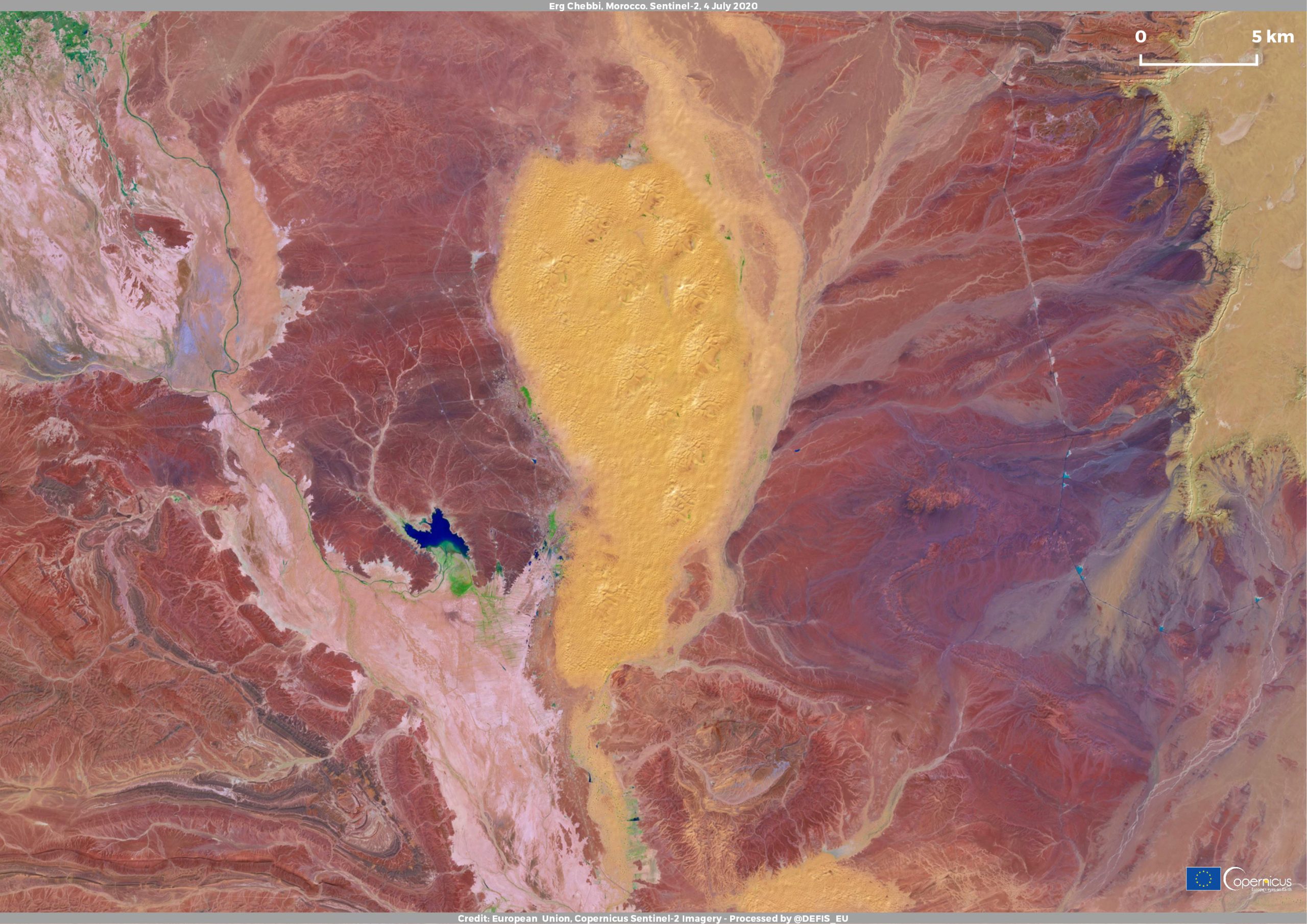
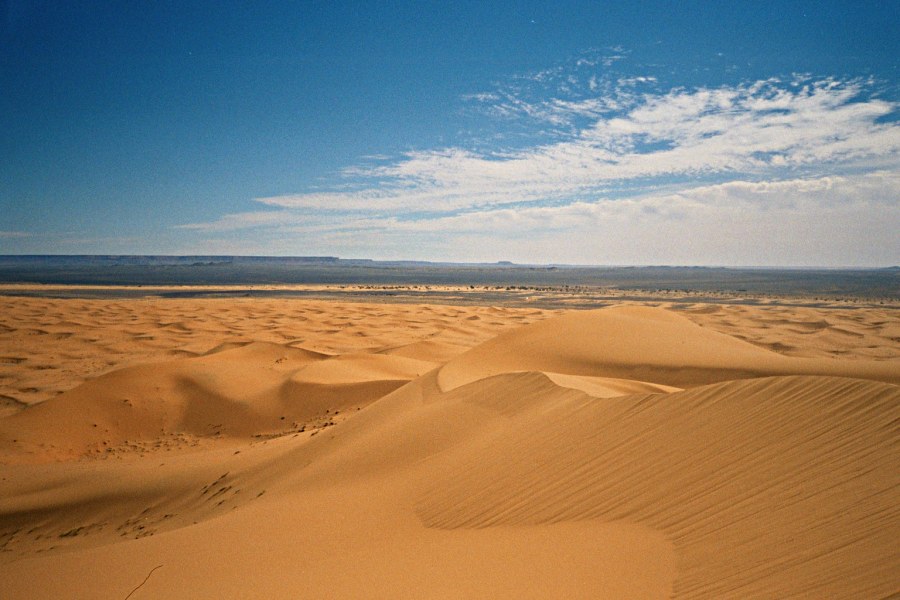
    Erg Chebbi, located near the small town of Merzouga in southeastern Morocco, is the most popular desert destination in the country. The dunes here reach heights of up to 150 meters and stretch across an area roughly 22 kilometers long and 5 kilometers wide. The sand takes on vivid shades of gold and orange, especially at sunrise and sunset.

    Erg Chebbi is easier to reach than Erg Chigaga, with paved roads running all the way to Merzouga. This accessibility makes it ideal for travelers with limited time or those who want a comfortable base from which to explore. The town of Merzouga has a range of accommodation options, from budget guesthouses to luxury desert camps.

    Erg Chigaga (M’Hamid)

    Erg Chigaga is the larger and more remote of the two sand seas. Located about 60 kilometers from the town of M’Hamid El Ghizlane, it requires a 4×4 vehicle or a multi-day camel trek to reach. The dunes here are slightly lower than Erg Chebbi but spread across a much wider area, creating a sense of boundless emptiness.

    If you are looking for solitude and a wilder desert experience, Erg Chigaga is the better choice. It attracts fewer visitors and feels more rugged and untamed. However, the extra travel time and logistics mean you will need at least three days to do it justice.

    For most first-time visitors, we recommend Erg Chebbi for its combination of accessibility, stunning scenery, and variety of experiences. Browse our desert tours to see itineraries that cover both destinations.

    How to Get to the Sahara Desert

    From Marrakech

    The most common starting point for a Sahara desert tour is Marrakech. The drive to Merzouga takes approximately 9 to 10 hours via the N10 highway, crossing the High Atlas Mountains through the Tizi n’Tichka pass. Most tours break this journey into two days, stopping overnight in the Dades Valley or Todra Gorge area.

    The route itself is spectacular. You will pass through Berber villages clinging to mountainsides, cross dramatic gorges, and watch the landscape transform from green valleys to arid steppe to golden sand.

    From Fes

    Fes is the second most popular departure point, with the drive to Merzouga taking roughly 8 hours. The route passes through the Middle Atlas cedar forests (home to Barbary macaques), the town of Midelt, and the Ziz Valley with its stunning palm-lined gorge. This route is slightly less traveled and offers a different perspective on Morocco’s diversity.

    From Ouarzazate

    If you are already in southeastern Morocco, Ouarzazate is about 5 hours from Merzouga. This is a good option if you have been visiting the Ait Benhaddou kasbah or the film studios.

    Flying

    The nearest airport to Merzouga is Errachidia, about 130 kilometers away. There are occasional domestic flights from Casablanca, though schedules can be irregular. Most travelers find the overland route more practical and far more scenic.

    Types of Sahara Desert Tours

    Understanding the different tour formats will help you choose the experience that matches your interests, fitness level, and budget.

    Overnight Camel Trek (1-2 Nights)

    This is the most popular option and an excellent choice for first-time visitors. You ride a camel from the edge of the dunes to a desert camp, spend the night under the stars, and ride back at sunrise. The trek typically takes 1 to 1.5 hours each way, covering about 5 to 7 kilometers.

    One-night treks offer a taste of the desert. Two-night treks allow you to venture deeper into the dunes and spend a full day exploring on foot, sandboarding, or simply absorbing the silence.

    Multi-Day Camel Expedition (3-7 Days)

    For those who want a deeper immersion, multi-day camel treks follow traditional nomadic routes through the desert. You camp in different locations each night, visit remote oases, and experience the rhythm of desert travel as it has been practiced for centuries.

    These longer treks are physically more demanding but incredibly rewarding. They are best suited for adventurous travelers who are comfortable with basic camping conditions.

    4×4 Desert Safari

    If camel riding is not your preference, 4×4 tours offer an exciting alternative. You cover more ground, visit multiple landscapes in a single day, and can access remote areas that would take days to reach on camelback.

    Many travelers combine a 4×4 safari with a shorter camel ride to get the best of both worlds.

    Luxury Desert Experience

    For those who want the magic of the desert without roughing it, luxury camps offer an unforgettable experience. Think private tented suites with real beds, en-suite bathrooms, gourmet dinners under the stars, and personalized service.

    If you have specific preferences or want to combine several of these options, consider building a custom tour tailored to your group.

    What to Pack for Your Sahara Desert Tour

    Packing correctly can make the difference between a comfortable adventure and a miserable one. The desert environment is extreme, with hot days, cold nights, and sand that gets into everything.

    Clothing Essentials

    • Layers: Temperatures can swing from above 40 degrees Celsius during summer days to below 5 degrees Celsius on winter nights. Layering is essential regardless of the season.
    • Long, loose clothing: Light cotton or linen trousers and long-sleeved shirts protect against sun and sand without overheating you.
    • A warm jacket or fleece: Even in summer, desert nights can be surprisingly chilly. In winter, you will want a proper warm layer.
    • A scarf or cheche: The traditional Saharan headscarf serves multiple purposes. It protects against sun, wind, and blowing sand. Your guide will likely offer you one and show you how to wrap it.
    • Sturdy sandals or closed shoes: You need footwear that can handle both sand and rocky terrain. Many travelers bring both sandals for camp and closed shoes for trekking.

    Practical Items

    • Sunscreen (SPF 50+): The desert sun is intense, and there is no shade.
    • Sunglasses: Essential for protecting your eyes from glare and sand.
    • A headlamp or small flashlight: Desert camps have limited lighting, and you will need this for navigating at night.
    • A refillable water bottle: Staying hydrated is crucial. Most tours provide water, but having your own bottle is always wise.
    • A small daypack: Useful for carrying essentials during camel rides and hikes.
    • Camera and extra batteries: Cold night temperatures drain batteries faster than normal. Keep spare batteries warm in your sleeping bag.

    What to Leave Behind

    Avoid bringing large suitcases. Most tours transfer your main luggage by vehicle and provide saddlebags for essentials during the camel trek. Pack light and focus on practical items.

    Budget Tips for Your Sahara Desert Tour

    Desert tours range widely in price, and understanding what drives costs will help you get the best value.

    What Affects the Price

    • Duration: Longer tours cost more but often offer better per-day value.
    • Accommodation type: Luxury camps with private facilities cost significantly more than shared Berber tents.
    • Group size: Private tours are more expensive than shared group tours, but they offer flexibility and a more personal experience.
    • Season: Peak season (October to April) generally commands higher prices.
    • Inclusions: Some tours include all meals, activities, and transport, while others have additional costs for optional experiences.

    How to Save Money

    • Travel in shoulder season: Late September and early May offer good weather with lower prices.
    • Join a small group tour: Sharing costs with other travelers reduces the per-person price without sacrificing quality.
    • Book directly with a local operator: Cutting out international middlemen can save you 20 to 40 percent.
    • Be flexible with dates: Midweek departures are sometimes cheaper than weekend ones.

    Use our tour finder to compare options and find the itinerary that fits your budget.

    Health and Safety in the Desert

    The Sahara is a safe destination, but it demands respect. A few common-sense precautions will keep you healthy and comfortable.

    Hydration

    Drink more water than you think you need. The dry desert air causes dehydration even when you do not feel thirsty. Aim for at least 3 liters per day, and more if you are physically active.

    Sun Protection

    Heat exhaustion and sunburn are the most common health concerns for desert visitors. Wear a hat, apply sunscreen frequently, and seek shade during the hottest part of the day (roughly 12:00 to 15:00).

    Physical Preparation

    Camel riding uses muscles you may not be accustomed to using. If you are planning a multi-day trek, some basic fitness preparation in the weeks before your trip will make the experience more enjoyable. Walking, light stretching, and core exercises are all helpful.

    Medical Considerations

    Bring any prescription medications you need, along with basic first aid supplies. The nearest hospitals to Merzouga are in Errachidia (about 130 km) and Rissani (about 35 km). Reputable tour operators carry first aid kits and have emergency communication equipment.

    Making the Most of Your Desert Experience

    Beyond the camel rides and dune views, the Sahara offers experiences that many travelers overlook.

    Stargazing

    With virtually zero light pollution, the Sahara offers some of the best stargazing in the world. On a clear night, you can see the Milky Way in stunning detail, spot shooting stars, and identify constellations that are invisible from urban areas. Check our activities page for stargazing tours and astronomy-focused experiences.

    Cultural Encounters

    Spending time with Berber families and nomadic communities is one of the most meaningful parts of a desert tour. Sharing mint tea, listening to traditional Gnawa music around a campfire, and learning about desert survival skills offer windows into a way of life that has endured for thousands of years.

    Photography

    The desert is a photographer’s paradise. Golden hour light transforms the dunes into sculpted waves of color, and the contrast between shadow and light creates dramatic compositions. Wake up early for sunrise shoots, and stay up late for astrophotography.

    Sandboarding

    For the adventurous, sandboarding down the dunes of Erg Chebbi is an exhilarating experience. It is similar to snowboarding but on sand, and no prior experience is necessary.

    Planning Your Itinerary: Sample Timelines

    3-Day Desert Tour (Most Popular)

    • Day 1: Depart from Marrakech or Fes, scenic drive through Atlas Mountains or Ziz Valley, overnight in Dades Valley or similar.
    • Day 2: Continue to Merzouga, afternoon camel trek into Erg Chebbi, sunset from the dunes, overnight in desert camp.
    • Day 3: Sunrise over the dunes, camel ride back, return journey or continue to Fes/Marrakech.

    5-Day Extended Tour

    Adds time for exploring Todra Gorge, visiting Berber villages, and potentially a second night in the desert for a deeper immersion.

    7-Day Comprehensive Tour

    Combines the desert experience with visits to Ait Benhaddou, the Draa Valley, and either Marrakech or Fes, offering a complete southeastern Morocco experience.

    Booking Your Sahara Desert Tour

    The key to a great desert experience is choosing the right operator. Look for companies with local knowledge, experienced guides, and a commitment to responsible tourism.

    At Duna Daurada, we specialize in authentic Sahara experiences that respect both the environment and local communities. Our guides are local Berbers who grew up in the desert and know it intimately. Whether you want a quick overnight adventure or a week-long expedition, we can help you design the perfect trip.

    Ready to start planning? Browse our available tours, use our tour finder to match your preferences, or contact us directly to discuss your dream desert adventure.

    Final Thoughts

    A Sahara desert tour is more than a holiday. It is an experience that changes how you see the world. The vastness of the dunes, the warmth of Berber hospitality, and the clarity of a sky full of stars stay with you long after you have returned home. With the right preparation and the right guide, your Morocco desert trip will be one of the most memorable journeys of your life.

    Take the first step today. The desert is waiting.