Category: Morocco Culture

  • The Art of Moroccan Mint Tea: More Than Just a Drink

    The Art of Moroccan Mint Tea: More Than Just a Drink

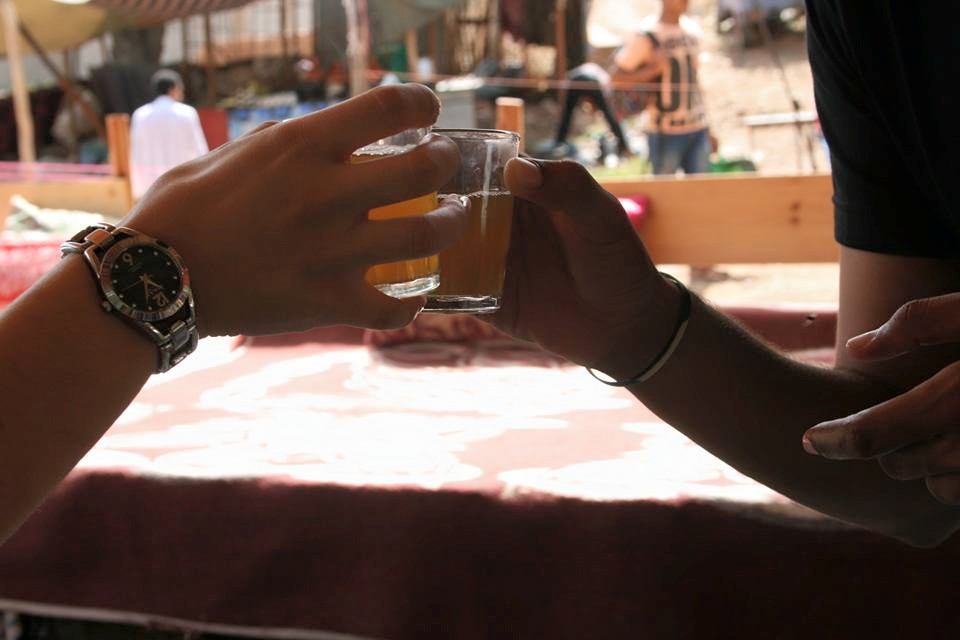
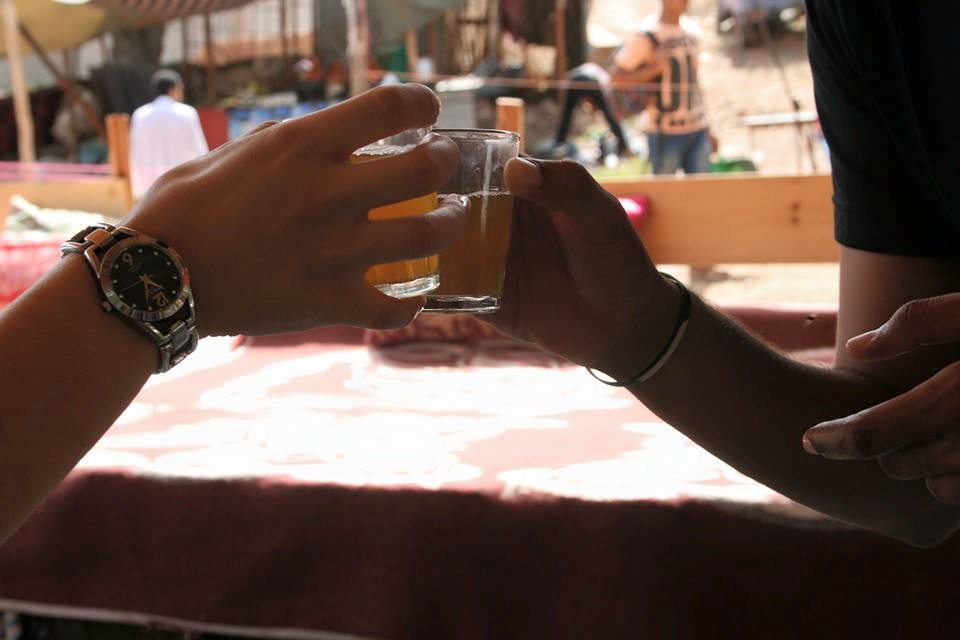
    In Morocco, offering tea is offering friendship. Refusing tea is refusing connection. This simple beverage, a combination of Chinese gunpowder green tea, fresh spearmint, and generous amounts of sugar, is the most important social ritual in Moroccan daily life. It is served at every gathering, every negotiation, every meal, every welcome, and every farewell. It is the first thing offered to a guest and the last shared before parting. Understanding Moroccan mint tea is understanding something essential about Moroccan culture itself.

    Known locally as “atay naa naa” (literally “tea with mint”) or “Berber whiskey” (a humorous nod to its popularity in a predominantly Muslim country where alcohol is not widely consumed), Moroccan mint tea is far more than a refreshment. It is a performance, a social contract, a measure of hospitality, and an art form. The way it is prepared, poured, and served communicates respect, generosity, and skill.

    For travelers visiting Morocco, and especially those joining a Sahara Desert tour, the tea ritual will be one of the most frequent and meaningful cultural encounters of the journey. This guide explores the history, preparation, social significance, regional variations, and the unforgettable experience of sharing tea under the stars in a desert camp.

    The History of Moroccan Tea

    Tea Arrives in Morocco

    Tea is not native to Morocco or North Africa. The tea plant (Camellia sinensis) originates in East Asia, and the habit of drinking tea reached Morocco relatively recently in its long history.

    The most widely accepted account places the introduction of tea to Morocco in the 18th century, when British merchants, seeking new markets for tea from their Chinese trade, began selling it through the port of Mogador (modern Essaouira) and other Moroccan coastal cities. By the mid-1800s, tea had become established among the Moroccan elite, particularly in the northern cities of Tangier, Tetouan, and Fez.

    Some historians trace earlier introductions through Ottoman trade networks or through the tea that European diplomatic missions brought as gifts to the Moroccan sultan. Regardless of the precise timeline, what is remarkable is how quickly and completely Morocco adopted tea as its own, integrating it into a culture that had previously centered its social rituals around coffee, buttermilk, and other beverages.

    From Luxury to National Drink

    Initially, tea was an expensive luxury available only to the wealthy. Chinese gunpowder green tea (so named because the leaves are rolled into small pellets resembling gunpowder) had to be imported at significant cost. However, as trade expanded and prices dropped during the 19th century, tea consumption spread rapidly through all levels of Moroccan society.

    The addition of mint and sugar, which defines Moroccan tea, appears to have developed during this period of democratization. Fresh spearmint was abundantly available throughout Morocco, sugar was becoming more accessible, and the combination transformed a simple hot drink into something uniquely Moroccan. By the early 20th century, mint tea had become the undisputed national beverage, consumed multiple times daily by virtually every household in the country.

    Tea and Moroccan Independence

    Tea played a symbolic role during Morocco’s struggle for independence from French colonial rule in the mid-20th century. The tea ritual represented Moroccan cultural identity and resistance to French cultural assimilation. Gathering for tea became an implicit assertion of Moroccan tradition, and the tea ceremony’s emphasis on hospitality, patience, and community embodied values that colonialism could not extinguish. Today, the preparation and sharing of tea remains a daily affirmation of Moroccan cultural identity.

    The Preparation Ritual

    Preparing Moroccan mint tea is a deliberate, multi-step process that is traditionally performed by the male head of the household or the host, though in practice, anyone may prepare it. The ritual is not rushed; it is part of the social experience, and guests are expected to enjoy the process as much as the final product.

    Ingredients

    The three essential components of traditional Moroccan mint tea are:

    1. Chinese gunpowder green tea: The tightly rolled leaves are prized for their strong, slightly bitter flavor that balances the sweetness. Quality varies significantly, and Moroccans are discerning about their tea brands.
    2. Fresh spearmint (naa naa): Fresh, not dried, is non-negotiable. The mint should be bright green, aromatic, and abundant. In Morocco, huge bundles of fresh mint are sold at every market and are a daily household purchase.
    3. Sugar: Traditionally sold in large, dense cones that are broken into chunks with a special hammer. Moroccan tea is sweet, often startlingly so for Western palates. The sugar is not merely a flavoring but a structural element that gives the tea its characteristic body and texture.

    Step-by-Step Preparation

    Step 1: Rinse the tea. A tablespoon or two of gunpowder green tea is placed in the teapot (a distinctive, long-spouted, silver-colored metal pot). A small amount of boiling water is added, swirled briefly, and then poured off. This “washing” removes dust and the most bitter tannins from the tea leaves.

    Step 2: First infusion. Boiling water is poured over the rinsed tea and left to steep for one to two minutes. This first infusion, called the “spirit of the tea,” is poured into a glass and set aside. It contains the most concentrated flavor and will be returned to the pot later.

    Step 3: Second rinse. Another small amount of boiling water is added to the pot, swirled, and discarded. This further mellows the remaining bitterness.

    Step 4: Build the tea. The reserved first infusion is poured back into the pot. A large handful of fresh mint is stuffed into the pot, followed by sugar (typically several large chunks or the equivalent of four to six tablespoons for a standard pot). More boiling water is added to fill the pot.

    Step 5: Steep and blend. The pot is placed on a low flame or returned to the heat source and allowed to come just to a simmer. This step melds the flavors and dissolves the sugar completely.

    Step 6: Taste and adjust. The preparer pours a glass, tastes it, and adjusts the sugar, mint, or steeping time as needed. This tasting is an important part of the ritual and demonstrates the host’s care for quality.

    Step 7: Pour. Once satisfied, the tea is poured.

    The Art of Pouring

    The pour is the most visually dramatic element of the Moroccan tea ceremony. The teapot is held high above the glass, sometimes 30 centimeters or more, and the tea is poured in a long, continuous stream that creates a layer of froth on the surface of the glass. This high pour is not showmanship for its own sake; it serves practical purposes:

    • Aerates the tea: The stream passing through air cools the tea slightly and introduces oxygen, which alters the flavor profile and makes it smoother.
    • Mixes the flavors: The turbulence in the glass ensures that sugar, mint, and tea are fully blended.
    • Creates froth: The bubbly foam on top is a sign of quality preparation and is appreciated by Moroccans much as the crema on an espresso is valued in Italian coffee culture.

    The tea is typically poured back and forth between the pot and the glass several times before serving, a process the French call “marier le the” (marrying the tea). Each pour-back further blends and aerates the mixture.

    The Social Significance of Tea

    Three Glasses of Hospitality

    The most widely cited tea tradition is the custom of serving three glasses, each with a different character. A Moroccan proverb describes them:

    The three glasses represent a progression from mild to strong, from bitter to sweet, and from courtesy to connection. While the proverb is sometimes presented as strict ritual, in practice the number of glasses varies by occasion and context. However, accepting at least one glass is considered essential courtesy, and leaving after just one can be perceived as reluctance to engage.

    Tea as Social Lubricant

    In Moroccan society, tea accompanies virtually every social interaction:

    • Business negotiations: No discussion of commerce, rent, or agreements begins without tea. The shared preparation and drinking of tea establishes a tone of mutual respect and patience before any negotiation begins.
    • Market haggling: In the souks, being offered tea by a shopkeeper signals that you are being treated as a serious customer, not a passing browser. It also extends the interaction, giving both parties time to build rapport.
    • Family gatherings: Tea is central to family visits, holiday celebrations, and weekend gatherings. Preparing and serving tea for the family is a meaningful domestic act.
    • Welcoming strangers: In rural areas and among the Berber communities of the Atlas Mountains and Sahara, offering tea to a passing traveler is an almost automatic act of hospitality. Refusing this offer without good reason is considered impolite.
    • Religious and ceremonial occasions: Tea is served at weddings, funerals, religious holidays, and community gatherings. It marks moments of significance with a shared ritual.

    The Role of the Tea Preparer

    Traditionally, preparing and serving tea is a role of honor. The male head of household or the most senior male present typically performs the ceremony for guests, though this convention is relaxing in modern, urban Morocco. The preparer’s skill, the quality of their tea, and the grace of their pour are matters of personal pride and social reputation.

    In the desert, Berber guides take great pride in their tea preparation. The ability to make excellent tea over a simple charcoal burner in the sand, using nothing but basic equipment, is a practical skill that also carries cultural weight. When your guide prepares tea for you in a desert camp, they are offering a genuine piece of their heritage.

    Regional Variations

    While the basic combination of green tea, mint, and sugar is universal across Morocco, regional variations add local character.

    Southern and Saharan Tea

    In the southern regions and the Sahara, tea is often even sweeter and stronger than in the north. The desert version may include less mint (which is harder to obtain far from market towns) and more sugar. Saffron or orange blossom water is sometimes added, reflecting the local agricultural products of the Draa and Ziz Valleys. In some Saharan communities, tea is prepared in three sequential pots rather than three glasses from one pot, each with a distinct character.

    Northern Variations

    In the Rif Mountains and northern Morocco, absinthe herb (chiba) is sometimes added to the tea alongside or instead of mint, giving it a distinctly bitter, aromatic edge. This variation is an acquired taste but is prized by locals for its digestive properties and bold flavor.

    Atlas Mountain Tea

    Berber communities in the High Atlas sometimes prepare tea with wild herbs gathered from the mountain slopes, including thyme, pennyroyal, verbena, and sage. These herbal teas, served in the same ceremonial fashion as mint tea, reflect the mountain environment and the traditional herbal knowledge of Amazigh culture.

    Seasonal Adjustments

    In winter, when fresh mint is less abundant, dried mint or other herbs may substitute. Cinnamon, ginger, and cloves are sometimes added to winter teas for warmth. In summer, the same tea may be served in larger glasses with extra mint for a more refreshing character.

    Tea in the Desert Camp

    For travelers on a Sahara Desert tour, the tea ceremony takes on a special dimension. There is something deeply atmospheric about watching your Berber guide prepare tea over a small charcoal burner in the sand as the sun sets behind the dunes and the first stars appear.

    The Desert Tea Experience

    In a typical desert camp evening, tea is prepared and served multiple times:

    • Upon arrival: After the camel trek or drive to camp, a glass of tea welcomes you and signals that you have arrived at a place of rest and hospitality.
    • Before dinner: As the camp comes alive with cooking preparations and music, tea is shared around the fire.
    • After dinner: The post-dinner tea service is often the longest and most relaxed, accompanying conversation, drumming, and storytelling under the stars.
    • Morning: Before departure, a final glass of tea accompanies a simple breakfast of bread, jam, and olive oil.

    The Campfire Setting

    Desert tea preparation around a campfire has its own character. The charcoal burner is set directly in the sand, the pot heated slowly, and the pour performed with the same high-stream technique used in homes and cafes. The firelight catches the golden stream of tea as it arcs from pot to glass, and the sound of pouring blends with the crackle of the fire and the silence of the surrounding desert.

    This is often the moment when guides share stories, when travelers from different countries find common ground, and when the pace of the journey slows to something genuinely restful. The tea ritual provides structure and rhythm to the desert evening, creating natural pauses for reflection and conversation.

    When you book a desert experience with Duna Daurada, the tea ceremony is an integral part of every camp evening, prepared by your Berber hosts with the same care and pride they would show in their own homes.

    How to Make Moroccan Mint Tea at Home

    While the experience of drinking tea in a Moroccan riad or desert camp cannot be replicated, the tea itself can be prepared anywhere with the right ingredients.

    What You Need

    • A small teapot (ideally the traditional Moroccan style, but any small pot works)
    • Chinese gunpowder green tea (available at Middle Eastern grocery stores or online)
    • A generous bunch of fresh spearmint
    • White sugar (granulated is fine; adjust to taste)
    • Small glasses (traditional Moroccan tea glasses are about 100ml, but any small heatproof glass or cup works)

    Basic Recipe (Serves 4 to 6 Glasses)

    1. Add 1.5 tablespoons of gunpowder green tea to the pot.
    2. Add a splash of boiling water, swirl for 15 seconds, and pour off the rinse water.
    3. Add 500ml of boiling water and steep for 2 minutes.
    4. Add a large handful of fresh mint (stems and all) and 3 to 5 tablespoons of sugar.
    5. Return to low heat and bring just to a simmer.
    6. Taste and adjust sweetness.
    7. Pour from a height into small glasses.
    8. Pour the first glass back into the pot, then pour again for serving.

    Tips for Authenticity

    • Do not skimp on the sugar. Moroccan tea is meant to be sweet. You can reduce it to your preference, but know that authentic Moroccan tea is significantly sweeter than most Western expectations.
    • The mint should be fresh and abundant. Dried mint produces a fundamentally different flavor.
    • The high pour matters. Practice over the sink until you can pour a steady stream from 20 to 30 centimeters above the glass.
    • Serve immediately. Moroccan tea does not sit well; it should be consumed fresh and hot.

    Tea Etiquette for Travelers

    Understanding basic tea etiquette will enrich your interactions throughout Morocco.

    Accepting Tea

    • Always accept the first glass offered. Declining tea from a host is considered impolite and can create awkwardness.
    • If you genuinely cannot drink more (medical reasons, timing), explain politely. A simple “shukran, baraka” (thank you, that is enough) is understood.
    • Hold the glass by the rim between your thumb and first finger. Moroccan tea glasses have no handles and the body of the glass is hot.

    During the Service

    • Do not rush the process. Tea preparation is meant to be unhurried, and demonstrating patience shows respect for the host.
    • Compliment the tea. A sincere “bneen” (delicious) is always appreciated.
    • If offered, accept biscuits or pastries alongside the tea. These are part of the hospitality.
    • It is acceptable to add sugar to your glass if you find it insufficiently sweet, but removing sweetness from a tea already prepared is obviously not possible, so mention your preference before the pour if you want less sugar.

    In a Shop or Market

    • Accepting tea in a shop does not obligate you to purchase anything, though some travelers feel pressured. The tea is a gesture of welcome and a social custom; it does not create a debt.
    • That said, if you spend significant time in a shop drinking tea and examining goods, making a small purchase is a courteous gesture.

    The Deeper Meaning

    At its core, the Moroccan tea ritual embodies values that define Moroccan culture: generosity, patience, community, and the belief that the process of sharing is as important as what is shared. In a world that increasingly values speed and efficiency, the deliberate slowness of preparing and sharing three glasses of tea with friends, family, or strangers is a quiet act of resistance against the rush.

    For travelers, participating in the tea ceremony, whether in a Fez riad, a Marrakech souk, a mountain village, or a Sahara Desert camp, is one of the most authentic and accessible entry points into Moroccan culture. It requires no language, no special knowledge, and no preparation beyond a willingness to sit, accept a glass, and be present.

    Experience the Tradition for Yourself

    The best way to understand Moroccan mint tea is to drink it in context, prepared by people for whom it is not a novelty but a daily practice, in places where the ritual has been performed for generations. Our desert tours include authentic Berber camp experiences where tea preparation and sharing is a central part of every evening. If you would like to build a journey around Morocco’s cultural traditions, including tea, cuisine, music, and craftsmanship, get in touch with our team to design a custom tour that goes beyond the surface.
  • Ait Ben Haddou: Morocco’s UNESCO Kasbah and Hollywood’s Favorite Desert Set

    Ait Ben Haddou: Morocco’s UNESCO Kasbah and Hollywood’s Favorite Desert Set

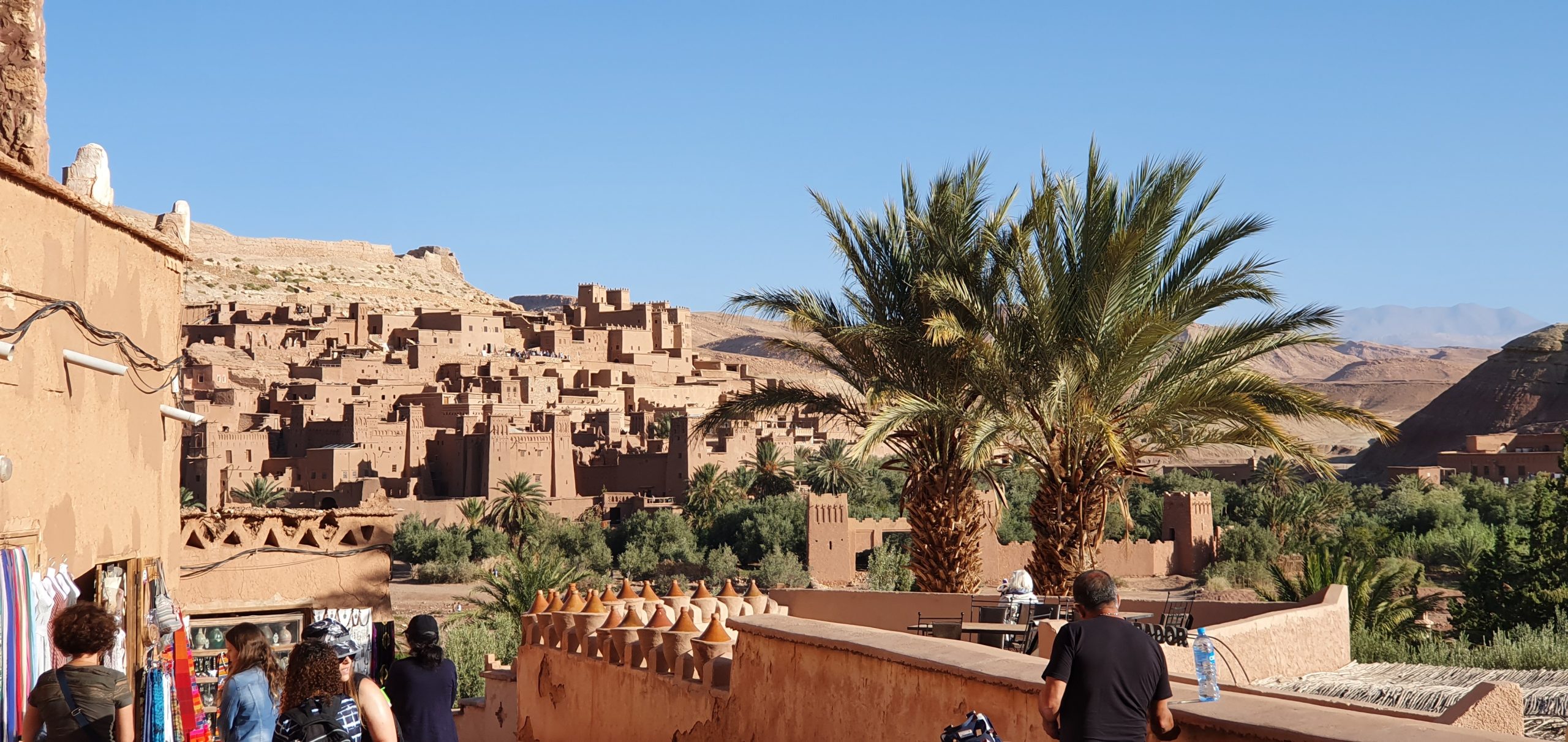
    Rising from the arid riverbank of the Ounila Valley like a fortress from another age, Ait Ben Haddou is Morocco’s most dramatic architectural site and one of the most recognizable filming locations in the world. Its towers of red earthen clay, clustered homes climbing the hillside, and fortified granaries have appeared in dozens of Hollywood productions, from Lawrence of Arabia to Gladiator to Game of Thrones. Yet this is not a movie set. It is a real community with a thousand years of history, and it is one of the most rewarding stops on any journey between Marrakech and the Sahara Desert.

    This guide covers the history and significance of Ait Ben Haddou, the movies filmed here, practical visiting tips, photography advice, and how to include this extraordinary site in your desert tour itinerary.

    The History of Ait Ben Haddou

    Origins and Strategic Importance

    Ait Ben Haddou is a ksar, a fortified village composed of multiple kasbahs (family compounds) and individual dwellings enclosed within defensive walls. The exact founding date is debated, but the site is believed to have originated in the 11th century, during the Almoravid dynasty that controlled much of North Africa and southern Spain.

    The village’s location was strategic. Sitting at a natural crossroads between the Sahara Desert and the city of Marrakech, Ait Ben Haddou controlled a key section of the ancient trans-Saharan trade route. Camel caravans carrying gold, salt, ivory, and enslaved people passed through this valley on their journey between sub-Saharan Africa and the markets of the Mediterranean. The fortified architecture reflects this role: the thick walls, watchtowers, and elevated position were designed to protect the community and its trade goods from raiders and rivals.

    Architecture and Construction

    The buildings of Ait Ben Haddou are constructed from pise, a technique of rammed earth mixed with straw, lime, and water. The red-ochre color of the structures comes from the iron-rich local soil. Decorative elements include geometric patterns pressed into the wet clay, carved wooden lintels above doorways, and corner towers topped with crenellations.

    The ksar follows a hierarchical layout. The most important families lived in the largest kasbahs at the top of the hill, nearest to the communal granary (agadir) at the summit. The granary served as the community’s food reserve, storing grain, dates, nuts, and other provisions that would sustain the village during sieges or droughts. Its elevated, easily defended position reflects the crucial importance of food security in a region where resources were always scarce.

    Lower down the hillside, more modest homes housed ordinary families, and the outermost structures served as workshops, stables, and market spaces. The entire village was enclosed within a defensive wall with a single main gate, allowing the community to seal itself off from external threats.

    Decline and Preservation

    By the mid-20th century, Ait Ben Haddou’s strategic importance had faded. Modern roads bypassed the ancient trade routes, and many families moved across the river to a new village with better access to water, electricity, and transportation. The old ksar was gradually abandoned, and its earthen structures began to deteriorate.

    Recognition came in 1987, when UNESCO inscribed Ait Ben Haddou as a World Heritage Site, citing it as an outstanding example of a pre-Saharan earthen architecture settlement. The inscription brought international attention, conservation funding, and, inevitably, tourism. Restoration efforts have stabilized many of the structures, though the challenge of maintaining rammed earth buildings in an arid climate with occasional flash floods is ongoing.

    Today, a handful of families still live within the old ksar, maintaining a connection to the site that stretches back generations. Their presence adds an authenticity that purely preserved or reconstructed sites lack.

    Hollywood in the Desert: Movies Filmed at Ait Ben Haddou

    Ait Ben Haddou’s cinematic career began in the 1960s and has only accelerated since. The combination of spectacular architecture, dramatic natural setting, and proximity to Ouarzazate’s Atlas Studios (the largest film studio in Africa) has made it irresistible to filmmakers.

    The Major Productions

    Some of the most notable productions filmed at Ait Ben Haddou and the surrounding area include the following.

    Lawrence of Arabia (1962): David Lean’s epic used the Moroccan landscape extensively, and Ait Ben Haddou appeared in several scenes. The film’s sweeping desert visuals helped establish Morocco as a go-to location for Hollywood productions set in the Middle East and North Africa.

    Jesus of Nazareth (1977): Franco Zeffirelli’s television miniseries used Ait Ben Haddou as a stand-in for Jerusalem and other biblical locations. The aged, Middle Eastern appearance of the architecture required almost no modification.

    The Jewel of the Nile (1985): The adventure sequel starring Michael Douglas and Kathleen Turner used Ait Ben Haddou for several key scenes, bringing the site to mainstream audience attention.

    The Last Temptation of Christ (1988): Martin Scorsese chose the area for its authenticity in depicting first-century Palestine.

    Gladiator (2000): Ridley Scott’s Oscar-winning film used Ait Ben Haddou as the slave market where Maximus (Russell Crowe) is purchased. The scenes of the gladiatorial training compound were also filmed in the area, using the existing architecture supplemented with temporary set construction.

    Alexander (2004): Oliver Stone’s epic about Alexander the Great used multiple Moroccan locations, including Ait Ben Haddou, for ancient city scenes.

    Kingdom of Heaven (2005): Ridley Scott returned to Morocco for this Crusades epic, once again employing Ait Ben Haddou as a medieval Middle Eastern setting.

    Game of Thrones (2013-2015): The HBO series used Ait Ben Haddou as the city of Yunkai, one of the slave cities in Slaver’s Bay that Daenerys Targaryen liberates during seasons 3 through 5. For fans of the show, standing before the ksar and recognizing it as Yunkai is a thrill. The production brought enormous renewed attention to the site.

    The Mummy (1999): Stephen Sommers’ adventure film used the Moroccan desert and Ait Ben Haddou for the fictional ancient city of Hamunaptra.

    Prison Break (2017): The revival season of the television series filmed portions in and around Ait Ben Haddou and Ouarzazate.

    Why Filmmakers Love It

    Several factors make Ait Ben Haddou so attractive to film production. The architecture is genuinely ancient and looks authentic on camera without requiring extensive set dressing. The surrounding landscape offers diverse visual backdrops, from river valleys and palm groves to rocky desert and distant snow-capped mountains. Ouarzazate, just 30 kilometers away, provides studio facilities, experienced local crew members, and production infrastructure. Morocco’s government also offers favorable filming incentives and an efficient permitting process.

    Perhaps most importantly, Ait Ben Haddou is versatile. It has convincingly doubled for locations across the ancient and medieval world, from Roman North Africa to biblical Palestine to fantasy Essos. Its timeless quality means it does not look like any specific place, yet it looks like everywhere that existed before the modern era.

    Visiting Ait Ben Haddou: Practical Tips

    Getting There

    Ait Ben Haddou is located approximately 30 kilometers northwest of Ouarzazate in southeastern Morocco. If you are traveling between Marrakech and the Sahara, you will almost certainly pass through or near it.

    From Marrakech, the drive takes approximately four hours via the Tizi n’Tichka pass over the High Atlas Mountains, one of the most scenic drives in Morocco. The road is well-maintained but winding, with stunning views of terraced valleys, Berber villages, and mountain peaks. Most Sahara desert tours departing from Marrakech include a stop at Ait Ben Haddou as a standard part of the itinerary.

    From Ouarzazate, the drive is about 30 minutes along a good paved road.

    Entrance and Access

    There is no entrance fee to walk through the ksar, though unofficial guides at the entrance may offer their services for a negotiated price. Having a knowledgeable guide significantly enriches the experience, as they can explain the architectural features, point out filming locations, and share the history that the buildings cannot tell on their own.

    To reach the ksar from the parking area, you cross the Ounila River. In dry months, this means stepping across sandbags or a shallow ford. During rare periods of higher water, a small footbridge is available nearby. Wear shoes that can get a little wet or sandy.

    The path through the ksar climbs steadily uphill over uneven terrain. Comfortable, closed-toe shoes with some grip are important. The walk from the base to the granary at the top takes roughly 30 to 45 minutes at a leisurely pace, with many stops for photographs and exploration.

    When to Visit

    The best time to visit Ait Ben Haddou is early morning or late afternoon. The morning light casts warm shadows across the earthen walls, highlighting textures and creating depth. Late afternoon light is equally beautiful and has the advantage of illuminating the front face of the ksar, which faces roughly west.

    Midday visits are hotter and the light is flat, washing out the colors and reducing the visual drama. If your tour schedule gives you a choice, advocate for a morning arrival.

    The site is open year-round. Spring (March through May) and autumn (September through November) offer the most pleasant temperatures. Summer visits are possible but hot, especially during the uphill walk. Winter mornings can be cool but are comfortable for exploration.

    How Long to Spend

    Most visitors spend one to two hours at Ait Ben Haddou, which is sufficient to walk through the ksar, climb to the top, and take photographs. If you are particularly interested in architecture, history, or photography, three hours allows for a more thorough exploration, including time to sketch, photograph details, and chat with the few remaining residents.

    If your schedule allows, consider staying overnight in one of the guesthouses near the site. This gives you access to the golden hour light at both ends of the day and the experience of seeing the ksar illuminated at night, with far fewer visitors around.

    Photography at Ait Ben Haddou

    Ait Ben Haddou is a photographer’s paradise, offering opportunities ranging from sweeping landscape compositions to intimate architectural details.

    The Classic Panoramic View

    The most iconic view of Ait Ben Haddou is from across the river, looking up at the full ksar with the hill and granary behind it. This is the image that appears on postcards and in travel guides. The best vantage point is from the elevated area on the approach road, slightly to the south of the main parking area. Morning light is ideal for this shot, when the sun illuminates the eastern face of the structures.

    Sunrise and Sunset

    Sunrise from the top of the ksar, looking out over the valley, is spectacular but requires either staying overnight nearby or arriving very early. The light at this hour is warm and directional, perfect for dramatic shadows and saturated colors.

    Sunset shots work best from the opposite bank of the river, looking back at the ksar as the western light sets the red walls aglow. The sky behind the ksar can produce vivid colors, especially in autumn and spring.

    Inside the Ksar

    Within the village, the narrow lanes, arched passages, and carved doorways create intimate compositions. Look for patterns created by light filtering through palm frond roofing, the texture of deteriorating plaster revealing the rammed earth beneath, and geometric designs carved into doorframes and lintels.

    The view from the top of the granary offers a 360-degree panorama of the surrounding valley, the modern village across the river, and the distant Atlas Mountains. On clear days, the backdrop of snow-capped peaks behind the red-earth village is remarkable.

    Equipment Recommendations

    A wide-angle lens (24mm or wider) captures the grand scale of the ksar and its setting. A mid-range zoom (24-70mm or equivalent) handles most situations. A telephoto lens allows you to compress the layers of the village from across the river, stacking towers and walls for dramatic effect.

    Polarizing filters help manage reflections and deepen blue skies against the red structures. The dusty environment can be tough on gear, so bring a lens cloth and consider a protective filter on your primary lens.

    Tips for Better Photos

    Avoid placing people in every shot. The architecture speaks powerfully on its own. Look for leading lines: stairways, walls, and pathways naturally guide the eye through compositions. Include foreground elements like palm trees, river stones, or architectural details to add depth to wide shots.

    If you want to photograph residents, ask permission first. A smile and a gesture toward your camera will usually get you a clear yes or no. Some residents may ask for a small tip in exchange for posing, which is a reasonable exchange.

    Combining Ait Ben Haddou with Your Sahara Desert Tour

    Ait Ben Haddou sits on the natural route between Marrakech and the Sahara, making it a logical and rewarding stop on any desert tour.

    The Classic Marrakech to Sahara Route

    The most popular route from Marrakech to the Erg Chebbi dunes near Merzouga passes directly through the Ait Ben Haddou area. A typical itinerary includes the following progression: Marrakech, over the Tizi n’Tichka pass, Ait Ben Haddou, Ouarzazate, Dades Valley, Todra Gorge, Erfoud, and finally Merzouga and the dunes.

    On this route, Ait Ben Haddou is usually visited on the first day, providing a spectacular introduction to the architecture and landscapes of southeastern Morocco. The stop breaks up the long drive from Marrakech and sets the tone for the journey ahead.

    Ouarzazate and Atlas Studios

    If you have extra time, the nearby city of Ouarzazate is worth a brief visit. Known as the “Hollywood of Morocco,” Ouarzazate is home to Atlas Studios, where many of the productions filmed at Ait Ben Haddou base their operations. Studio tours are available and offer a behind-the-scenes look at film sets, including partially standing sets from various productions.

    The Kasbah Taourirt in Ouarzazate city center is another impressive example of traditional Moroccan architecture, featuring elaborate interior decoration and a museum of regional history.

    The Valley of a Thousand Kasbahs

    Heading east from Ouarzazate toward the Sahara, the road follows the Dades River through a landscape dotted with dozens of kasbahs in various states of preservation. This stretch is known as the Valley of a Thousand Kasbahs (Vallee des Mille Kasbahs), and it offers a continuous visual feast of earthen architecture set against dramatic canyon walls and green palm oases.

    Key stops along this route include the Dades Gorge, where the canyon walls narrow dramatically and the road winds through a series of switchbacks, and the Todra Gorge, where sheer limestone cliffs rise 300 meters on either side of a narrow passage. Both gorges offer excellent hiking opportunities and are standard stops on most desert tour itineraries.

    Custom Itinerary Options

    If Ait Ben Haddou particularly interests you and you want more than a brief stop, consider building a custom itinerary that includes an overnight stay near the ksar. This allows you to explore at dawn and dusk when the light is best and the crowds are smallest, visit the modern village across the river where local life continues, and take your time with photography and exploration.

    Some travelers combine an extended Ait Ben Haddou visit with a day of exploring the surrounding Ounila Valley, which contains several smaller kasbahs and traditional Berber villages that receive far fewer visitors.

    The Kasbah Beyond the Movies

    While Ait Ben Haddou’s fame rests largely on its cinematic career, the site deserves attention for reasons that go beyond Hollywood.

    A Living Heritage

    The earthen architecture of Ait Ben Haddou represents a building tradition that stretches back centuries and is still practiced in parts of southeastern Morocco. Rammed earth construction is sustainable, using locally available materials and requiring no industrial inputs. The thermal mass of the thick walls naturally regulates interior temperatures, keeping rooms cool in summer and warm in winter.

    This building technology, while ancient, offers lessons for contemporary sustainable architecture. Researchers and architects studying low-carbon construction methods have drawn inspiration from the Saharan ksar model, recognizing that traditional builders solved problems of climate adaptation that modern construction is only beginning to address.

    Community and Conservation

    The preservation of Ait Ben Haddou depends on a partnership between UNESCO, the Moroccan government, and the local community. Conservation efforts face unique challenges: rammed earth structures require ongoing maintenance, and the traditional repair techniques demand specialized knowledge that is being lost as younger generations move to cities.

    Several organizations work to train local craftspeople in traditional construction and restoration methods, creating employment while preserving knowledge. Tourism revenue contributes to these efforts, making your visit part of the conservation equation.

    The Living Village

    Do not overlook the modern village on the opposite bank of the river. While it lacks the dramatic appeal of the ancient ksar, it is where daily life actually happens. Small shops, a school, restaurants catering to visitors, and the homes of families who once lived within the old walls all line the main road. Walking through the modern village gives context to the old one and offers glimpses of contemporary rural Moroccan life.

    Exploring the Area: Activities and Excursions

    Beyond the ksar itself, the Ait Ben Haddou area offers several worthwhile activities for visitors with extra time.

    Hiking

    Trails lead from the ksar into the surrounding hills, offering elevated views of the village and valley. A moderate hike of about an hour takes you to a viewpoint above the ksar that provides a unique perspective rarely captured in photographs. Longer hikes follow the Ounila Valley upstream toward smaller, less-visited kasbahs.

    Cooking Classes

    Several guesthouses in the area offer Moroccan cooking classes where you can learn to prepare tagine, couscous, and traditional bread using local ingredients. This is a wonderful way to engage with Moroccan culture beyond sightseeing.

    Pottery and Crafts

    The village has a tradition of pottery making, and you can visit small workshops where artisans produce traditional pieces using techniques passed down through generations. Watching the process from raw clay to finished product is fascinating, and purchasing directly from the artisan supports the local economy.

    Final Thoughts

    Ait Ben Haddou is more than a photogenic ruin or a movie set. It is a testament to the ingenuity and resilience of the communities that built it, a window into a chapter of history when trade routes connected the Sahara to the Mediterranean, and a place where the intersection of culture, architecture, and landscape produces something genuinely extraordinary.

    Whether you are a film enthusiast hoping to stand where Russell Crowe was sold into slavery, a history lover fascinated by trans-Saharan trade, an architecture student studying earthen construction, or simply a traveler who appreciates beauty, Ait Ben Haddou delivers. And as a stop on your journey into the Sahara, it sets the stage magnificently for the dunes that await.

    Ready to include Ait Ben Haddou in your Sahara adventure? Explore our desert tours that pass through this extraordinary site, or contact our team to plan a custom journey that gives you the time and access to experience it fully.

  • Fez: Morocco’s Imperial City and Gateway to the Eastern Sahara

    Fez: Morocco’s Imperial City and Gateway to the Eastern Sahara

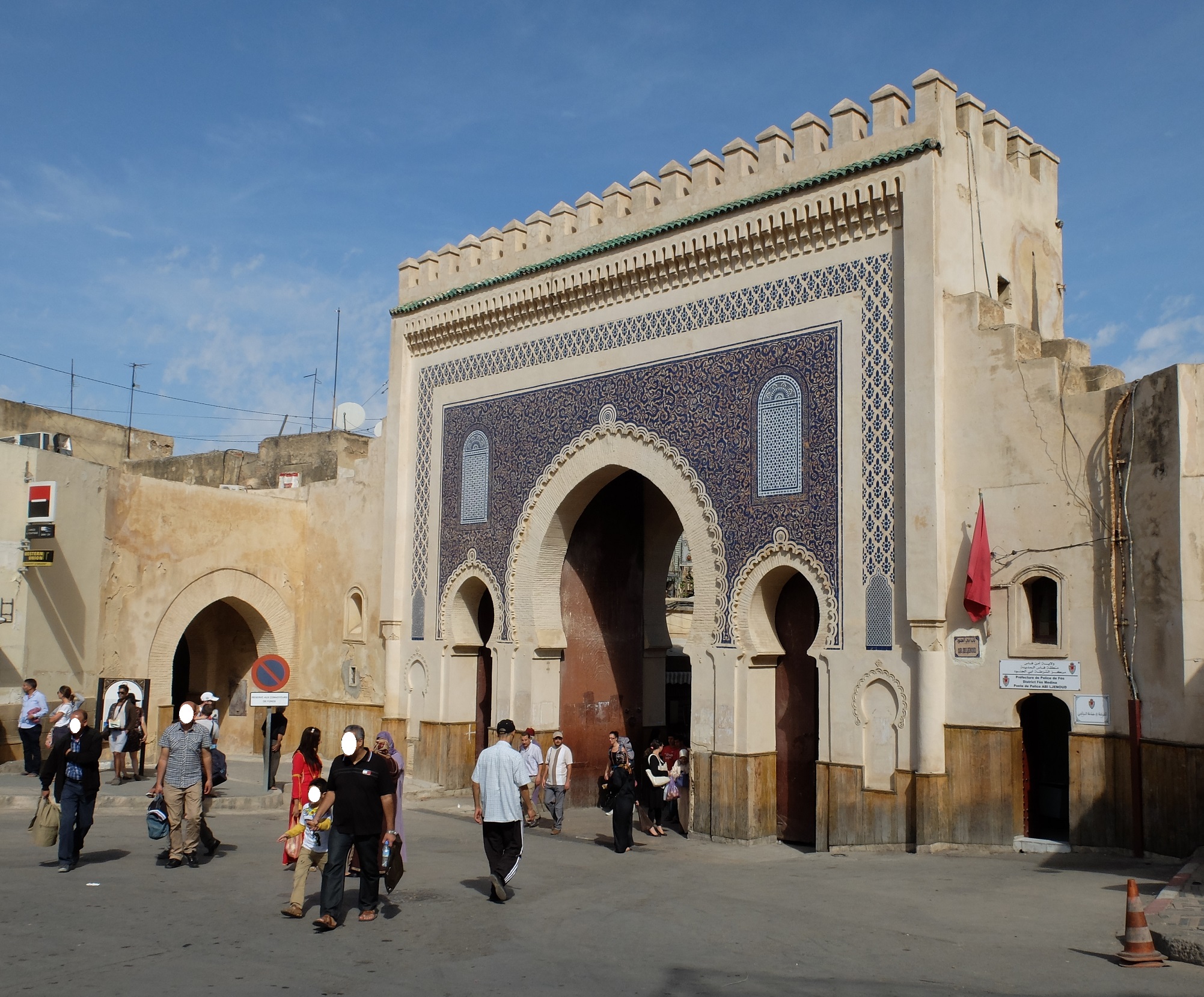
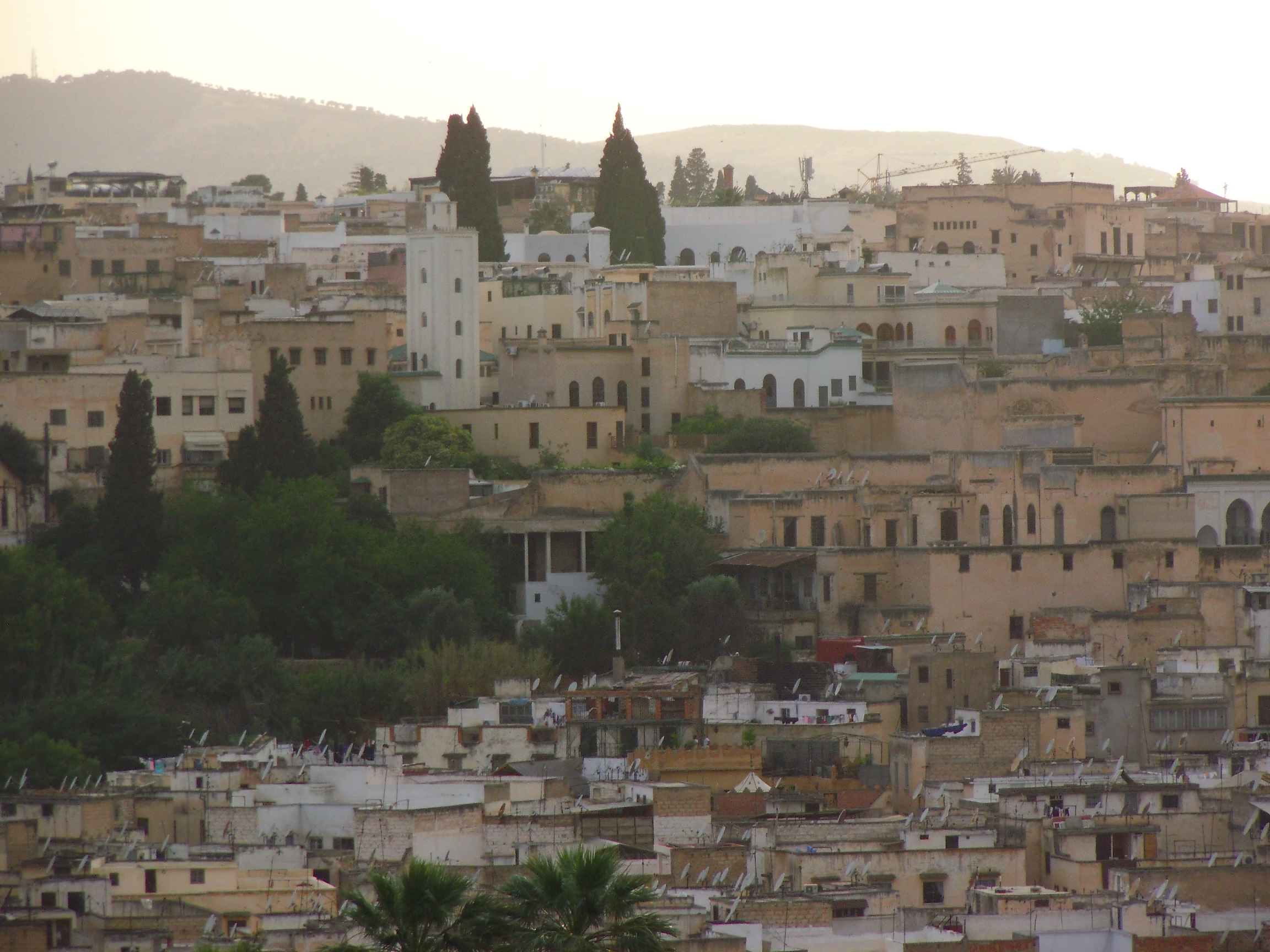
    Fez is a city that demands all of your senses at once. The moment you step through one of the ancient gates of the medina, you are immersed in a labyrinth of narrow alleys where the smell of cedar wood, cured leather, and fresh bread mingles with the calls of vendors, the clatter of mule hooves on cobblestone, and the shimmering colors of hand-painted zellige tilework. Founded in 789 AD, Fez is Morocco’s oldest imperial city and home to one of the world’s most intact medieval urban landscapes, a living, functioning city that has barely changed in its fundamental character for over a thousand years.

    But Fez is more than a destination in its own right. It is also the ideal gateway to Morocco’s eastern Sahara Desert. Located roughly halfway between the Mediterranean coast and the Erg Chebbi dunes, Fez serves as the natural starting point for some of the most scenic desert routes in the country, passing through the Middle Atlas mountains, cedar forests, the Ziz Valley, and a series of dramatic gorges before arriving at the golden sands of the Sahara.

    This guide covers everything you need to know about exploring Fez and using it as the launch point for your desert adventure.

    A Brief History of Fez

    Fez was founded by Idris I, the founder of Morocco’s first Islamic dynasty, on the banks of the Fez River in the late 8th century. His son, Idris II, expanded the city into a major urban center, attracting scholars, artisans, and refugees from Andalusia (Islamic Spain) and Kairouan (modern Tunisia). These two waves of immigration gave Fez its dual character: the Andalusian Quarter on the east bank and the Kairouanine Quarter on the west bank, each with its own mosque, market, and traditions.

    By the 10th century, Fez had become one of the most important cities in the Islamic world. The University of Al Quaraouiyine, founded in 859 AD by Fatima al-Fihri, is recognized by UNESCO and the Guinness Book of World Records as the oldest continuously operating degree-granting university on Earth. At its peak, Fez was a center of learning, trade, and craftsmanship that rivaled Baghdad, Cordoba, and Cairo.

    The city served as Morocco’s capital under several dynasties, including the Merinids (13th to 15th centuries), who built the “new” city of Fez el-Jdid adjacent to the ancient medina. The Merinid period saw the construction of many of the madrasas (theological colleges), fondouks (caravanserai), and public buildings that remain among the medina’s architectural highlights today.

    Although the political capital eventually moved to Rabat, Fez retained its status as Morocco’s spiritual and cultural capital, a distinction it holds to this day.

    Exploring the Fez Medina (Fes el-Bali)

    The medina of Fez, known as Fes el-Bali, is the largest car-free urban zone in the world. With an estimated 9,400 narrow alleys, dead ends, and passages, it is genuinely easy to get lost, and getting lost is part of the experience. Approximately 150,000 people live and work within its walls, carrying on trades and traditions that have persisted for centuries.

    Navigating the Medina

    The two main arteries of the medina are Talaa Kebira (the Large Slope) and Talaa Seghira (the Small Slope), both running downhill from the Bab Bou Jeloud gate toward the heart of the old city. These streets are lined with shops, restaurants, and workshops and serve as the primary orientation landmarks. If you can find your way back to one of these two streets, you can find your way out.

    That said, hiring a local guide for at least your first exploration of the medina is highly recommended. The layout is deliberately complex, designed over centuries to slow invaders and create private residential neighborhoods. A knowledgeable guide will navigate efficiently and provide historical and cultural context that transforms a walk through the alleys into a journey through a thousand years of history.

    Key Sights Within the Medina

    Al Quaraouiyine University and Mosque: The spiritual heart of Fez, this complex has been a center of Islamic scholarship since the 9th century. While the mosque interior is closed to non-Muslims, the recently restored library (Khizanat al-Qarawiyyin) occasionally opens for guided visits, and the surrounding courtyards and architectural details are visible from the entrances.

    Bou Inania Madrasa: Built by the Merinid sultan Abu Inan Faris in the 1350s, this is the only madrasa in Fez open to non-Muslim visitors and is considered one of the finest examples of Marinid architecture in existence. The intricate carved stucco, zellige tilework, and cedar wood carvings are extraordinary.

    Chouara Tanneries: The most famous (and most pungent) sight in Fez, the Chouara tanneries have operated continuously since at least the 11th century. Workers stand in stone vats filled with natural dyes and solutions, processing leather using methods that have barely changed in a millennium. The best views are from the surrounding terraces of leather shops, where you can look down on the colorful array of vats. Visit in the morning when the light is best and the tanneries are in full operation.

    Nejjarine Museum of Wooden Arts and Crafts: Housed in a beautifully restored 18th-century fondouk, this museum showcases traditional Moroccan woodworking and offers a peaceful rooftop terrace with views over the medina.

    Dar Batha Museum: Located in a 19th-century palace, this museum displays a collection of traditional Fassi arts, including ceramics, embroidery, carved wood, and Berber jewelry.

    Mellah (Jewish Quarter): Fez’s historic Jewish quarter, established in the 15th century, features distinctive architecture with wooden balconies overlooking the streets, a contrast to the inward-facing design of the Muslim quarters. The Ibn Danan Synagogue, recently restored, is open to visitors.

    The Artisan Workshops of Fez

    Fez has been designated a UNESCO World Heritage Site in large part because of its living artisan traditions. The medina is home to thousands of workshops where craftspeople practice skills passed down through family lines for generations.

    Zellige Tilework

    The geometric mosaic tilework that adorns mosques, madrasas, and fountains throughout Morocco originates in Fez. In workshops around the medina, you can watch artisans chip individual tiles by hand from glazed ceramic squares, assembling them face-down into intricate geometric patterns guided by nothing but memory and experience.

    Metalwork and Brass

    The Place Seffarine, a small square near the Al Quaraouiyine Mosque, is the center of Fez’s metalworking tradition. Coppersmiths and brass workers hammer, engrave, and inlay trays, lanterns, teapots, and decorative objects using techniques that date back centuries. The rhythmic hammering echoing off the surrounding walls is one of the most distinctive sounds of the medina.

    Leather and Textiles

    Beyond the tanneries, Fez is renowned for its leather goods, from babouche slippers to bags and book covers, and for traditional textile weaving. Looms in workshops throughout the medina produce silk and wool fabrics for caftans, scarves, and ceremonial garments.

    Pottery and Ceramics

    The Fez pottery district, located just outside the medina walls in the Ain Nokbi area, is home to large cooperative workshops where you can observe the entire process from clay shaping to painting to kiln firing. The distinctive Fez blue pottery, with its cobalt blue geometric designs on white backgrounds, is immediately recognizable and makes a memorable souvenir.

    Fez Beyond the Medina

    While the medina is the primary attraction, Fez offers several worthwhile experiences beyond its walls.

    Fez el-Jdid

    The “new” city, built in the 13th century (relatively new by Fez standards), contains the Royal Palace (Dar el-Makhzen) with its spectacular golden doors, the Mellah, and the Moulay Abdellah Quarter. The Royal Palace gates are a popular photography spot, though the palace itself is not open to the public.

    Merinid Tombs

    The ruins of the Merinid dynasty tombs sit on a hillside north of the medina, offering a panoramic view of the entire old city, particularly stunning at sunset when the minaret-studded skyline turns golden. This is the classic viewpoint for photographing Fez.

    Borj Nord and Borj Sud

    Two historic fortresses flanking the medina, Borj Nord houses a weapons museum while Borj Sud offers excellent viewpoints. Both are accessible by road or a moderately steep walk from the medina edges.

    Ville Nouvelle

    The French colonial new town, built during the Protectorate era (1912 to 1956), features wide boulevards, Art Deco architecture, cafes, and modern shops. It provides a contrast to the medieval medina and is where most banks, pharmacies, and international restaurants are located.

    Where to Eat in Fez

    Fassi cuisine is considered among the finest in Morocco, distinct from Marrakech’s simpler fare. The city’s culinary traditions reflect centuries of Andalusian, Arab, and Berber influence.

    Signature Fassi Dishes

    • Pastilla (Bastilla): A sweet and savory pie traditionally filled with pigeon (now often chicken), almonds, eggs, and spices, wrapped in crispy warqa pastry and dusted with powdered sugar and cinnamon. Fez is the undisputed home of this dish.
    • Fassi-style Tagine: Fez tagines tend to be more refined and layered than their southern counterparts, often featuring prunes, apricots, honey, and saffron alongside lamb or chicken.
    • Rfissa: A celebratory dish of shredded msemen (layered flatbread) with lentils and chicken in a spiced fenugreek broth.
    • Harira: A hearty tomato and lentil soup, eaten especially during Ramadan but available year-round.

    Where to Eat

    Both traditional riad restaurants within the medina and more modern establishments in the Ville Nouvelle offer excellent meals. For an immersive experience, seek out restaurants in converted riads where you eat in a central courtyard surrounded by zellige tilework and the sound of a fountain.

    Fez as a Gateway to the Sahara

    Fez is the most popular starting point for desert tours heading to Morocco’s eastern Sahara, specifically the Erg Chebbi dunes near Merzouga. The journey from Fez to the desert is itself one of the most scenic road trips in North Africa, passing through dramatically varied landscapes.

    The Classic Fez-to-Sahara Route

    The standard route from Fez to Merzouga covers approximately 460 kilometers and is typically done over two days with stops along the way, though it can be driven in a single long day if necessary.

    Day 1: Fez to the Middle Atlas and Ziz Valley

    The road south from Fez climbs into the Middle Atlas Mountains, passing through Ifrane (known as “Morocco’s Switzerland” for its alpine architecture and cool climate) and the cedar forests of Azrou, where Barbary macaques live in the wild. The route continues through Midelt and descends into the Ziz Valley, a stunning palm-lined river gorge that seems to appear from nowhere in the arid landscape.

    Day 2: Ziz Valley to Erfoud and Merzouga

    From the Ziz Valley, the route continues south through Errachidia and Erfoud, a small town known for its fossil trade, before arriving at Merzouga and the edge of the Erg Chebbi dunes. The transition from mountain terrain to flat hammada (rocky desert) to towering sand dunes is one of the most dramatic landscape shifts you can experience in a single day.

    The Northern Route via Taza

    An alternative route passes through Taza, an often-overlooked city with an impressive medina and nearby national park, before joining the main road south through the Moulouya Valley. This route is less traveled and offers a different perspective on Morocco’s geographic diversity.

    Combining Fez with a Desert Tour

    The most rewarding way to experience both Fez and the Sahara is to combine them into a single itinerary. Many travelers spend two to three days exploring Fez before departing on a multi-day desert tour that follows the scenic route south, includes stops at gorges, kasbahs, and oasis valleys, and culminates with camel trekking and overnight camping in the Erg Chebbi dunes.

    Duna Daurada offers several tours departing from or passing through Fez, ranging from three-day express trips to longer, more leisurely itineraries that include the Todra and Dades Gorges, the Rose Valley, and Ait Benhaddou. If you want to tailor the route to your interests and schedule, a custom tour allows full flexibility.

    Practical Tips for Visiting Fez

    Getting There

    Fez has an international airport (Fes-Saiss, FEZ) with direct flights from several European cities, including budget carriers. The city is also well connected by train to Casablanca, Rabat, Marrakech, and Tangier, and by bus to virtually every major Moroccan city.

    How Long to Spend

    Two full days is the minimum to appreciate the medina and key sights. Three days allows for a more relaxed pace, including visits to the pottery workshops, the Merinid Tombs at sunset, and a cooking class. If Fez is the starting point for your desert tour, plan to arrive at least one day before your tour departure to recover from travel and begin exploring.

    Accommodation

    Staying in a traditional riad within the medina is the quintessential Fez experience. These converted family homes are built around a central courtyard and often feature rooftop terraces with views over the medina. Riads range from budget-friendly guesthouses to luxurious five-star properties with private plunge pools and gourmet restaurants.

    Guides and Getting Around

    Within the medina, everything is on foot. For your first visit, hiring an official local guide (available through your riad or the tourist office) is strongly recommended. Expect to pay around 300 to 400 MAD for a half-day guided tour of the medina highlights.

    For travel beyond the medina, petit taxis (small red taxis) are inexpensive and readily available. For the journey to the Sahara, a private vehicle with a driver or an organized tour is the most practical option.

    Shopping Tips

    The souks of Fez are among the best in Morocco for quality craftsmanship. Look for leather goods, zellige tiles, brass lanterns, Fez blue pottery, and traditional textiles. Bargaining is expected and part of the culture; start at roughly half the asking price and negotiate with good humor. Quality varies enormously, so take your time and visit multiple shops before committing to a purchase.

    Cultural Etiquette

    Fez is a conservative city, particularly within the medina. Dress modestly (covering shoulders and knees), ask permission before photographing people, and be respectful around mosques and religious sites. During Ramadan (dates shift annually), be mindful of eating, drinking, and smoking in public during daylight hours.

    Conclusion

    Fez is one of those rare cities that can genuinely claim to transport you to another era. Walking through its medina is not a museum experience; it is an encounter with a living, breathing medieval city where the same crafts are practiced in the same workshops, the same prayers are called from the same minarets, and the same recipes are prepared in the same kitchens as they have been for centuries.

    As the gateway to the eastern Sahara, Fez also offers the perfect narrative arc for a Moroccan journey: begin in the dense, complex, intensely human environment of the medina, then gradually transition through mountains, valleys, and gorges until the landscape opens into the vast, silent emptiness of the desert. The contrast between the two experiences, the crowded alley and the empty dune, makes each more powerful.

    Whether you are drawn by the history, the craftsmanship, the cuisine, or the simple magic of getting lost in a thousand-year-old labyrinth, Fez deserves a place in every Morocco itinerary. And when you are ready to trade the medina walls for the open sky of the Sahara, explore our tours to find the perfect route from Fez to the dunes, or contact us to design a journey that is entirely your own.

  • Nomadic Life in the Sahara: How Desert Families Live and Thrive

    Nomadic Life in the Sahara: How Desert Families Live and Thrive

    Somewhere in the vast silences of the Sahara, a family is breaking camp. The goatskin tent is folded and loaded onto a camel. A herd of goats is gathered. Children help their parents pack cooking implements into woven saddlebags. By the time the sun clears the horizon, the family will be moving across the sand toward a seasonal grazing area their ancestors have used for generations.

    Nomadic life in the Sahara is among the oldest continuous ways of living on Earth. For thousands of years, families have moved across this seemingly inhospitable landscape, following patterns dictated by water, grazing, and the rhythm of the seasons. Far from the desperate survival story that outsiders sometimes imagine, nomadic desert life is a sophisticated and deeply meaningful way of existing in harmony with one of the planet’s harshest environments.

    This article explores the daily realities of Sahara nomads, the traditions that sustain them, and how their way of life is changing in the modern world. It also offers guidance on how to respectfully visit nomadic families during your Sahara tour.

    Who Are the Sahara’s Nomads?

    The Sahara is home to several distinct nomadic and semi-nomadic groups, each with its own language, customs, and history.

    The Amazigh (Berber) Nomads

    In the Moroccan Sahara, the predominant nomadic people are the Amazigh, commonly known as Berbers, though many prefer the indigenous term Amazigh (meaning “free people”). The Amazigh have inhabited North Africa for at least 4,000 years, long before the Arab conquests of the 7th century. In the southeastern regions near Merzouga and the Erg Chebbi dunes, the Ait Atta and Ait Khebbach tribes are the most prominent nomadic groups.

    These communities speak Tamazight, a Berber language with several regional dialects, and maintain cultural traditions that predate Islam, though most are devoutly Muslim today. Their identity is deeply tied to the land, the seasons, and the communal bonds that make survival in the desert possible.

    The Tuareg

    Further south and east, the Tuareg people occupy a vast territory spanning southern Algeria, Mali, Niger, Libya, and Burkina Faso. Known as the “Blue People” for their indigo-dyed clothing that stains the skin, the Tuareg have a matrilineal social structure (unusual in the region) and a rich tradition of poetry, music, and craftsmanship. While most Tuareg live outside Morocco, their cultural influence extends into the southeastern Sahara, and travelers sometimes encounter Tuareg traders and musicians in Moroccan desert towns.

    The Sahrawi

    In the western Sahara, the Sahrawi people maintain nomadic traditions linked to camel herding and trade. Their culture blends Berber, Arab, and sub-Saharan African influences, and their history is intertwined with the complex politics of the Western Sahara region.

    Daily Life in a Nomadic Camp

    To an outsider, a nomadic camp might look simple: a dark tent, a fire pit, some animals, a few possessions. But this simplicity is deceptive. Every element of the camp is purposeful, refined by centuries of experience.

    The Tent

    The traditional Berber nomad tent, called a khaima, is an engineering marvel adapted to desert conditions. It is constructed from strips of goat and camel hair woven on portable looms. The dark fabric absorbs heat during the day, creating an updraft that pulls cooler air in from the sides. At night, when temperatures plummet, the same fabric retains warmth. When it rains (rare but not unknown in the Sahara), the natural lanolin in the hair fibers causes them to swell, making the tent nearly waterproof.

    A typical tent measures roughly 4 by 6 meters and can be erected by two people in under an hour. The interior is divided by woven hangings into living and sleeping areas. Carpets cover the sand floor. The tent faces away from the prevailing wind, and its sides can be raised or lowered to regulate airflow.

    Setting up and striking camp is a communal activity. Everyone has a role, including children, who learn tent construction from an early age.

    Water

    Water is the defining concern of nomadic life. Every migration pattern, every camp location, and every daily routine revolves around access to water. Nomads know the locations of wells, springs, and seasonal water sources across their territory with extraordinary precision. This knowledge, passed from generation to generation, is effectively a detailed mental map of the desert’s hidden hydrology.

    Families carry water in goatskin bags (guerba), which keep the water cool through evaporation. A family might travel a full day’s journey between water sources, and managing supply carefully is a skill learned from childhood. Water is never wasted. Cooking water is reused, washing is minimal, and every drop has value.

    Food and Cooking

    Nomadic cuisine is built around what the desert provides and what can travel. The staples are dates, milk (from goats and camels), bread, couscous, and dried meat. Meals are simple but nourishing, designed to fuel people who spend their days walking, herding, and working in extreme conditions.

    Bread is baked daily, often using a method called taguella or “sand bread.” The dough is buried under hot coals and sand, where it bakes into a dense, slightly smoky loaf. The bread is brushed clean and broken apart by hand, then eaten with olive oil, honey, or a simple sauce.

    Mint tea is the social lubricant of desert life. Preparing and serving tea is an elaborate ritual that punctuates the day. The tea is brewed strong with fresh mint and generous amounts of sugar, then poured from a height to create a froth. Three glasses are traditionally served: the first is strong, the second is sweet, and the third is gentle.

    Meat, usually goat or lamb, is reserved for special occasions and guests. When a visitor arrives at a nomad camp, hospitality demands that the best food available is prepared. This generosity is a deeply held cultural value, not a performance for tourists.

    Livestock

    Animals are the foundation of nomadic wealth and survival. Goats provide milk, meat, and hair for weaving. Sheep offer wool and meat. Camels, the aristocrats of the herd, serve as transport, carry heavy loads, produce milk, and represent social status.

    A family’s herd might number from a dozen to several hundred animals, depending on the quality of recent grazing seasons. Herding is a daily responsibility shared among family members. Children often tend the goats, learning to read animal behavior and desert terrain at the same time.

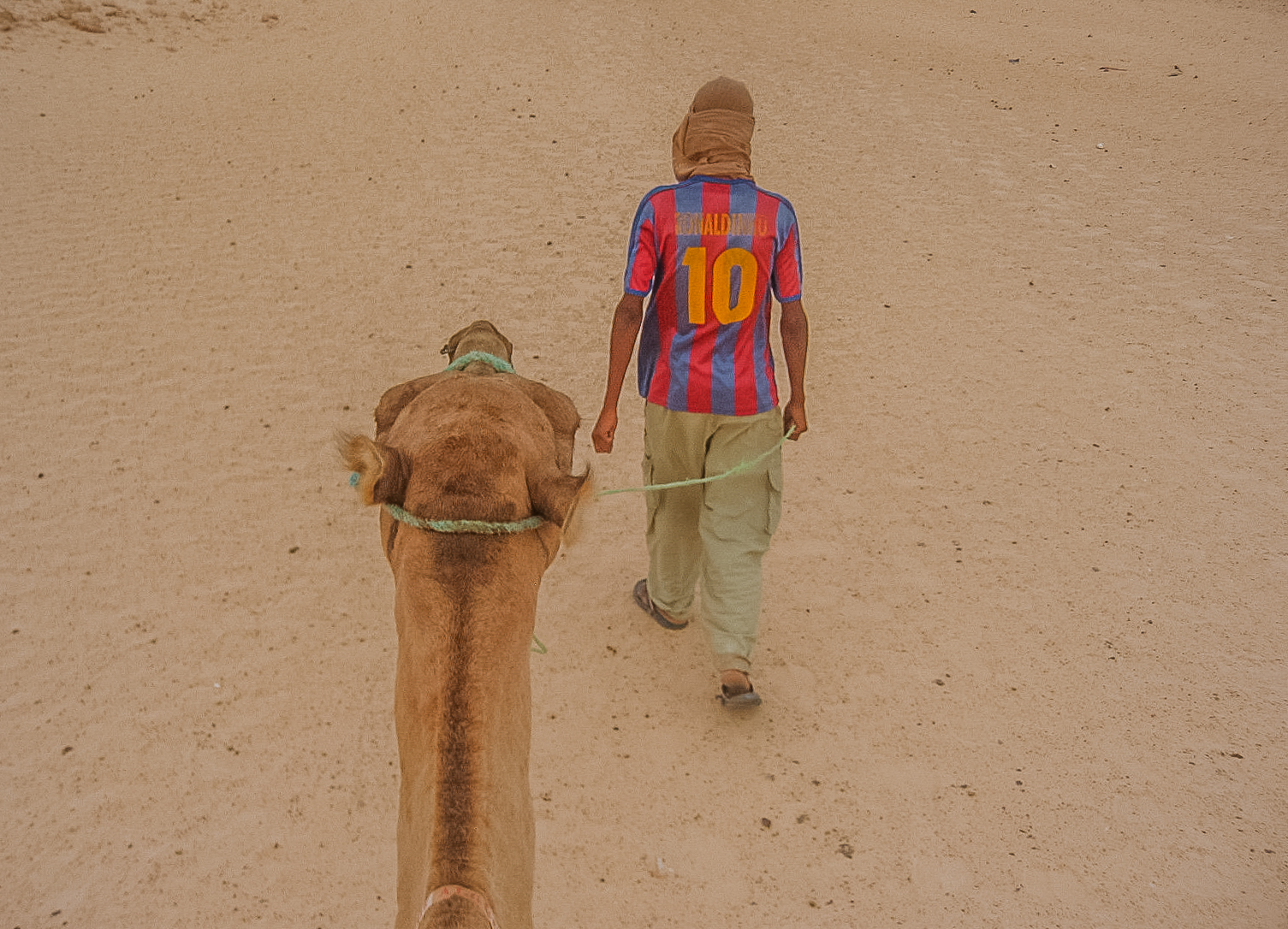
    Camels hold a special place in nomadic culture. A good camel is named, its genealogy remembered, and its personality understood. Camels can go days without water, carry loads of up to 200 kilograms, and navigate terrain that would defeat any vehicle. In many ways, the camel made Saharan civilization possible.

    Migration Patterns and Seasonal Rhythms

    Nomadic migration is not random wandering. It follows deeply established patterns governed by season, rainfall, and the availability of grazing land.

    The Annual Cycle

    In the Moroccan Sahara, the typical migration pattern involves moving between lower desert areas in winter and higher ground or oasis regions in summer. Winter rains, when they come, trigger the growth of desert grasses in the lower elevations. Families move their herds to these temporary pastures, sometimes traveling 30 to 50 kilometers over several days.

    As summer approaches and the lower pastures dry out, families move to areas near permanent water sources or into the shade of oasis palm groves. Some semi-nomadic families spend the hottest months in or near towns, returning to mobile life when the heat breaks.

    Reading the Land

    Nomads possess an intimate understanding of their environment that goes far beyond what any guidebook or GPS can offer. They read the sky for weather signs, identify plant species that indicate underground water, navigate by stars and dune patterns, and predict grazing conditions based on subtle changes in wind and temperature.

    This ecological knowledge is accumulated over lifetimes and transmitted through stories, songs, and direct teaching. A child growing up in a nomadic family absorbs an education in desert survival that begins at birth and never really ends.

    Territorial Agreements

    Nomadic territories are not defined by fences or formal boundaries, but they are real and respected. Different tribal groups have traditional rights to specific grazing areas, water sources, and migration routes. These rights are maintained through oral agreements, tribal councils, and a shared understanding of reciprocity. Conflicts over resources do arise, but they are typically resolved through negotiation and mediation rather than force.

    Children and Education

    One of the most common questions travelers ask about nomadic life concerns children. How do they learn? Do they go to school? Are they missing out?

    Traditional Education

    In the nomadic tradition, education is inseparable from daily life. Children learn by doing: herding animals, setting up camp, navigating the desert, preparing food, weaving, and managing water. They learn their community’s history, values, and practical skills through stories told around the fire and through direct participation in every aspect of camp life.

    This education produces remarkably capable young people. A teenager raised in a nomadic family can navigate the desert by stars, treat a sick animal, build a shelter, find water, and manage a herd. These are not trivial skills; they represent a sophisticated body of knowledge refined over millennia.

    Modern Schooling

    In recent decades, the Moroccan government has established mobile schools and boarding programs aimed at providing formal education to nomadic children. These initiatives have had mixed results. Mobile schools, which travel with or near nomadic communities, offer basic literacy and numeracy but often lack resources and consistent staffing.

    Boarding schools in nearby towns provide a more complete education but require children to leave their families for extended periods. This creates a painful tension: families want their children to succeed in the modern economy but are reluctant to give up the cultural transmission that happens when children grow up in the nomadic setting.

    Some families have found a middle ground, sending children to school during certain months and bringing them back to the desert during migration seasons. This compromise allows children to gain formal education while maintaining their connection to nomadic life.

    The Role of Women in Nomadic Society

    Women occupy a central role in Berber nomadic life, though their contributions are not always visible to outside observers.

    Domestic Authority

    The tent is the woman’s domain. Women are responsible for constructing and maintaining the khaima, and in many traditions, the tent is considered the woman’s property. A woman who leaves her marriage takes the tent with her. This gives women a form of material autonomy that contradicts the stereotypes outsiders sometimes project onto desert societies.

    Women also manage food preparation, water distribution, childcare, and much of the daily animal tending. They are the primary weavers, creating the textiles that serve as both practical objects and artistic expressions of cultural identity. Berber carpets and textiles from the Sahara region are recognized worldwide for their beauty and craftsmanship.

    Social Influence

    While men typically represent the family in external dealings, women wield significant influence within the family and the broader community. Important decisions about migration, marriages, and resource allocation often reflect women’s input. The matrilineal inheritance patterns among some Berber groups give women economic power that ensures their voices are heard.

    How Nomadic Life Is Changing

    Nomadic life in the Sahara is not a museum exhibit frozen in time. It is a living culture that has always adapted to changing circumstances, and the pace of change in recent decades has been dramatic.

    Sedentarization

    The single biggest change is the shift toward settled or semi-settled life. Drought, government policies that encourage permanent settlement, the appeal of modern amenities, and the desire for children’s formal education have all contributed to a steady decline in fully nomadic populations. Many families who were fully mobile a generation ago now maintain a permanent base (often a modest house in a desert town) and practice seasonal or partial nomadism.

    This transition is not entirely voluntary. Extended droughts, linked in part to climate change, have reduced grazing land and water availability, making purely nomadic life increasingly difficult. Government programs that provide health care, education, and subsidies are tied to permanent addresses, creating practical incentives for settlement.

    Technology

    Even families that maintain a nomadic lifestyle have adopted certain technologies. Mobile phones have transformed communication in the desert. Solar panels charge batteries for phones and lights. Motorcycles and pickup trucks supplement camel transport for some tasks. Plastic water containers have largely replaced traditional goatskin bags.

    These changes are practical adaptations, not cultural capitulations. Nomads have always adopted useful technologies when they encountered them. The adoption of the mobile phone is, in this sense, no different from the ancient adoption of the camel itself.

    Tourism

    Tourism has created new economic opportunities for nomadic and semi-nomadic families. Some families host visitors in their camps, offering tea, bread, and a glimpse of daily life. Others work as guides, camel handlers, or camp staff for tour operators. This income supplements traditional pastoralism and can help families maintain their desert lifestyle rather than abandoning it for urban employment.

    However, tourism also introduces complications. The commodification of culture, the pressure to perform rather than simply live, and the environmental impact of increased traffic in fragile desert ecosystems are all concerns that responsible travelers should be aware of.

    Visiting Nomad Families: How to Do It Respectfully

    Meeting a nomadic family is one of the most memorable experiences available on a Sahara tour. It is also one that requires sensitivity and respect.

    Go with a Guide

    The most important step is to visit nomadic families through a reputable guided tour. A knowledgeable local guide serves as a cultural bridge, ensuring that the visit is welcome, appropriate, and mutually rewarding. Guides typically have personal relationships with nomadic families and can facilitate introductions in a way that respects social norms.

    Showing up unannounced at a nomadic camp is not recommended. While nomadic hospitality is legendary, uninvited visits can be intrusive, especially if the family is in the middle of migrating or dealing with private matters.

    Accept Hospitality Graciously

    If a family offers you tea or food, accept with gratitude. Refusing hospitality is considered rude in nomadic culture. You do not need to eat or drink large quantities, but accepting what is offered, even symbolically, shows respect. Use your right hand when eating and receiving items.

    Remove your shoes before entering a tent if your host does the same. Sit where invited, and follow your guide’s lead on social etiquette.

    Ask Before Photographing

    Always ask permission before taking photographs of people, especially women and children. Some families are happy to be photographed; others prefer not to be. Your guide can help navigate this politely. If you take photos, offer to show the results on your camera screen, as this is usually appreciated.

    Bring Appropriate Gifts

    If you wish to bring a gift, practical items are appreciated: tea, sugar, cooking oil, school supplies for children, or fabric. Avoid giving money directly, as this can create an uncomfortable dynamic. Your tour operator can advise you on appropriate gifts.

    Respect Privacy and Boundaries

    Nomadic families are not tourist attractions. They are people living their lives. Do not wander into areas of the camp where you have not been invited. Do not handle personal belongings without permission. Keep your visit to a reasonable length unless your hosts clearly want you to stay longer.

    Consider the Economic Exchange

    If your visit includes purchasing handcrafted items such as woven textiles, jewelry, or leather goods, pay a fair price. These items represent hours of skilled labor and carry cultural significance. Bargaining is expected in Moroccan culture, but driving prices unreasonably low disrespects the artisan’s work.

    Some tours include visits to nomadic cooperatives where women sell their weavings and crafts. These cooperatives often provide economic independence for women and contribute to community projects. Purchasing from them is one of the most direct ways to support nomadic communities.

    The Future of Nomadic Life

    The question of whether nomadic life in the Sahara will survive is complicated. Pure nomadism, where a family lives entirely on the move with no permanent base, is becoming rare. But nomadic identity, knowledge, and cultural practices remain strong even among families who have adopted semi-settled lifestyles.

    Young Berbers in the Sahara region increasingly navigate two worlds: the traditional knowledge of their parents and the demands of a globalized economy. Some find ways to integrate both, using education and technology to create livelihoods that remain rooted in desert culture. Others move to cities and maintain connections to their nomadic heritage through family visits, cultural festivals, and the stories they tell their own children.

    Climate change poses the most serious long-term threat. As the Sahara’s margins shift and droughts become more frequent and severe, the ecological foundation of nomadic pastoralism is under strain. International attention to indigenous land rights and climate adaptation offers some hope, but the challenges are immense.

    What is clear is that nomadic Saharan culture, in whatever form it takes in the future, deserves understanding, respect, and support. Travelers who visit the desert with open hearts and minds, who listen more than they talk, and who engage with nomadic families as fellow humans rather than exotic curiosities contribute to this understanding in a meaningful way.

    Experience Nomadic Culture on Your Sahara Tour

    Many of our desert tours and activities include visits to nomadic families, offering you the chance to share tea, hear stories, and gain a deeper appreciation for a way of life that has endured for millennia. If spending time with nomadic communities is important to you, let us know when planning your trip, and we will design an itinerary that includes meaningful cultural encounters.

    The Sahara is more than sand and sunsets. It is home to people whose resilience, generosity, and knowledge of the natural world have much to teach all of us. Visiting with respect and curiosity is one of the greatest gifts you can give yourself and your hosts.

    Explore our tours or get in touch to start planning your journey into the heart of nomadic Saharan culture.

  • A Food Lover’s Guide to Moroccan Cuisine for Desert Travelers

    A Food Lover’s Guide to Moroccan Cuisine for Desert Travelers

    Moroccan cuisine is one of the most celebrated in the world, and for good reason. It is a kitchen built on centuries of cultural exchange, where Berber, Arab, Andalusian, and French influences have blended into something entirely unique. The flavors are bold yet balanced, the spices are aromatic without being overpowering, and every meal is prepared with a sense of care and tradition that elevates eating from a necessity to a ritual.

    For travelers heading into the Sahara Desert, food becomes an integral part of the journey. From the bustling food stalls of Marrakech to the candlelit dinners served at desert camps under a canopy of stars, what you eat in Morocco tells the story of the country as vividly as its landscapes and architecture. This guide will take you through the essential dishes, dining customs, and culinary experiences that every desert traveler should know.

    The Foundation: Spices That Define Moroccan Cooking

    Understanding Moroccan food begins with understanding its spice cabinet. Moroccan cooking relies on a carefully curated palette of spices that give its dishes their distinctive character.

    The Essential Spice Blend: Ras el Hanout

    Ras el hanout, which translates roughly as “head of the shop,” is Morocco’s signature spice blend. Every spice merchant has their own recipe, but the mix typically includes cumin, coriander, turmeric, cinnamon, black pepper, ginger, cardamom, nutmeg, clove, and sometimes rose petals or lavender. The result is a warm, complex, and deeply fragrant blend that forms the backbone of many Moroccan dishes.

    Other Key Spices and Ingredients

    Beyond ras el hanout, Moroccan cooks rely heavily on cumin (the single most commonly used spice in the country), saffron (particularly prized in the Taliouine region), paprika, ginger, and cinnamon. Preserved lemons and olives add brightness and depth to tagines and salads, while harissa, a fiery chili paste, provides heat for those who want it.

    Fresh herbs play an equally important role. Flat-leaf parsley and cilantro appear in virtually every savory dish, and fresh mint is the essential ingredient in Morocco’s beloved national drink.

    Iconic Moroccan Dishes Every Traveler Must Try

    Tagine: The Heart of Moroccan Cooking

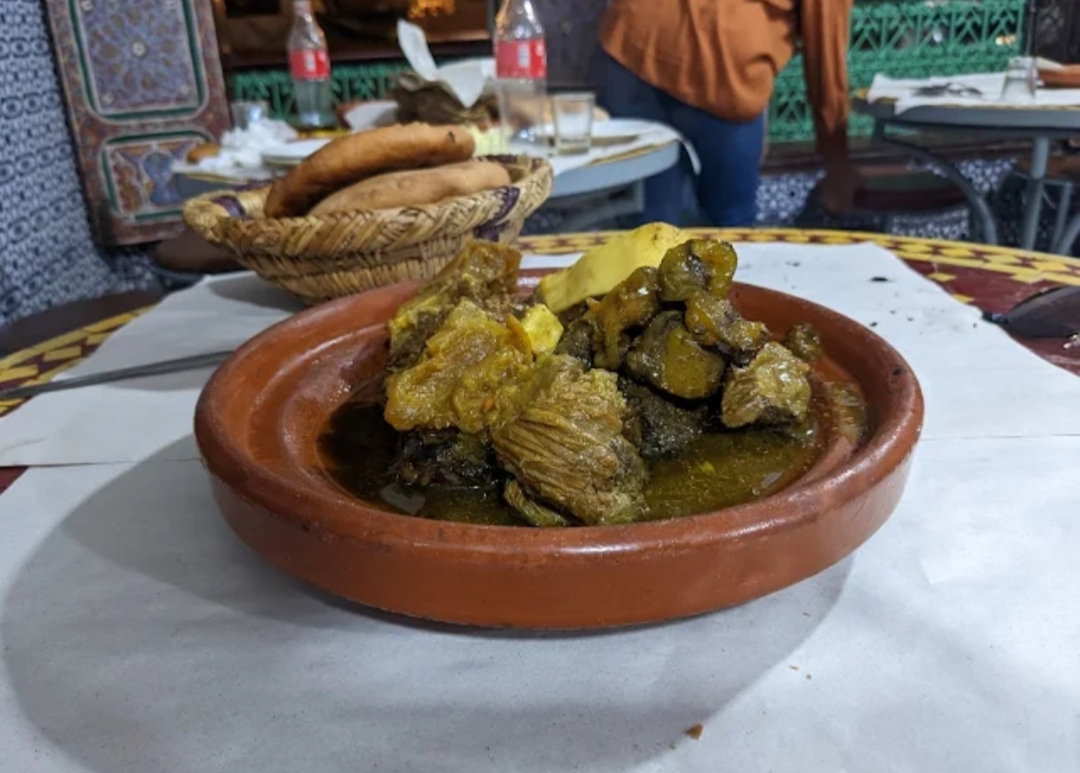
    The tagine is both a cooking vessel and the dish prepared within it. The conical clay pot traps steam and returns it to the ingredients, creating intensely flavored, slow-cooked stews that require no added water. The result is tender meat, perfectly cooked vegetables, and a concentrated sauce that demands to be mopped up with bread.

    The most popular tagine varieties include chicken with preserved lemons and olives, a bright and tangy combination that is perhaps the most iconic Moroccan dish. Lamb or beef with prunes and almonds offers a sweet and savory experience that perfectly illustrates the Moroccan love of combining fruit with meat. Kefta tagine features spiced meatballs simmered in a rich tomato sauce, often with eggs cracked on top during the final minutes of cooking. Vegetable tagines with seasonal produce, chickpeas, and aromatic spices provide excellent options for plant-based eaters.

    You will encounter tagine everywhere during your travels in Morocco, from roadside restaurants to luxury desert camps. Each region puts its own spin on the dish, making it worth ordering at every stop.

    Couscous: The Friday Tradition

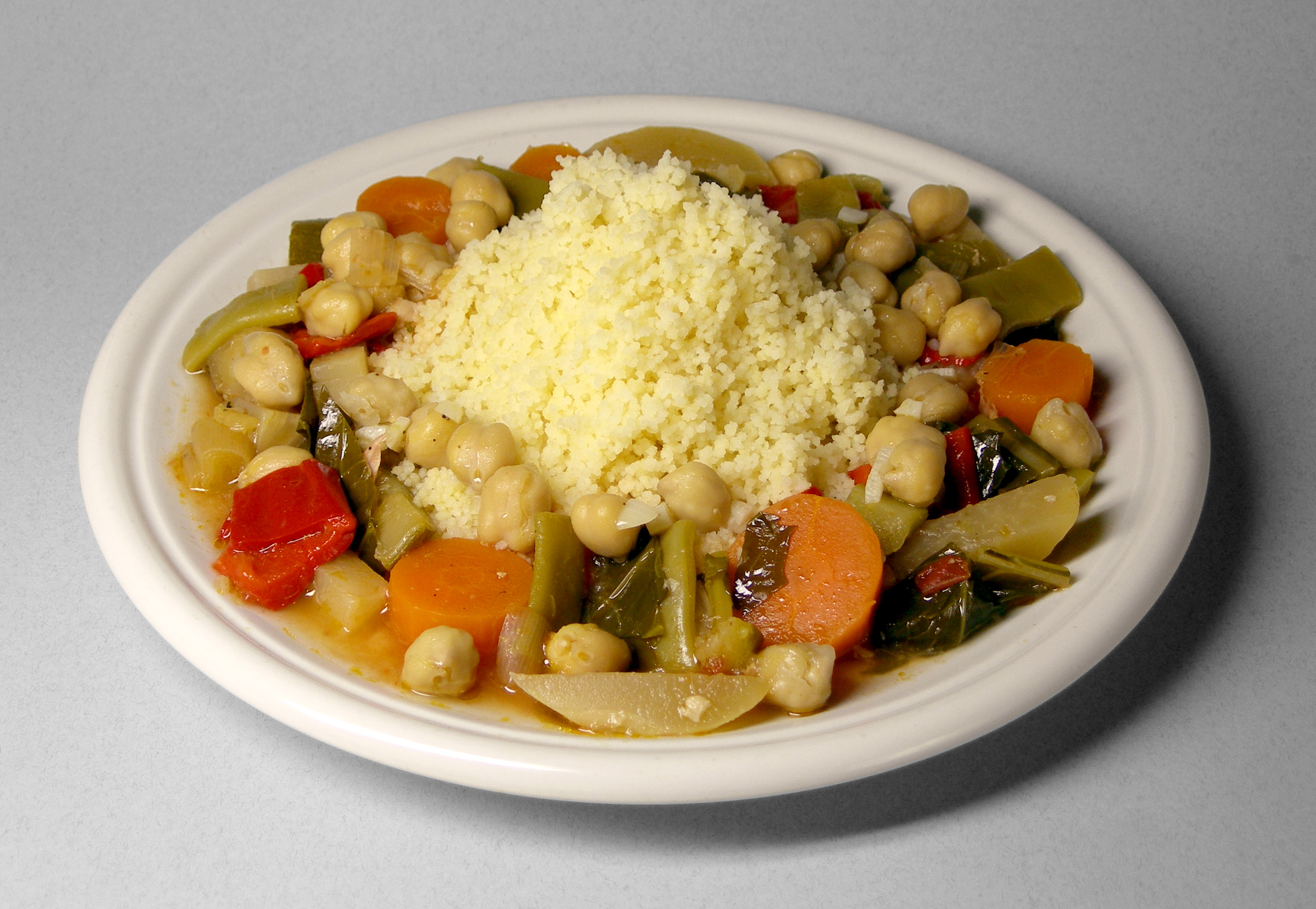
    Couscous holds a sacred place in Moroccan culture. Traditionally served on Fridays after midday prayers, it is a communal dish that brings families together around a single large platter. The tiny semolina granules are steamed multiple times until they achieve a light, fluffy texture, then mounded and topped with a stew of vegetables, chickpeas, and meat.

    The classic Moroccan couscous features seven vegetables, a combination that varies by region and season but often includes carrots, turnips, zucchini, cabbage, pumpkin, onions, and tomatoes. The dish is served family-style, with everyone eating from the shared platter using their right hand or a spoon.

    While you can find couscous on restaurant menus throughout the week, experiencing a traditional Friday couscous in a Moroccan home or a family-run guesthouse is one of the most authentic culinary experiences the country offers.

    Pastilla: The Festive Masterpiece

    Pastilla (also spelled bastilla or b’stilla) is a remarkable dish that encapsulates the Moroccan genius for combining sweet and savory flavors. Traditionally made with pigeon, though chicken is now more common, it consists of shredded meat mixed with a lemon-egg sauce and ground almonds, all wrapped in layers of paper-thin warqa pastry and dusted with powdered sugar and cinnamon.

    The contrast between the crispy, sweet exterior and the savory, aromatic filling is extraordinary. Pastilla is considered a celebratory dish and is typically served at weddings, festivals, and special occasions, but many restaurants in cities like Fez and Marrakech serve it regularly. A seafood version, popular in coastal cities like Essaouira, replaces the poultry with shrimp, fish, and Chinese noodles.

    Harira: The Comforting Soup

    Harira is a thick, hearty soup made from tomatoes, lentils, chickpeas, and small pasta or vermicelli, enriched with fresh herbs and spices. It is the traditional soup served to break the fast during Ramadan, but it is enjoyed year-round as a starter or light meal.

    For desert travelers, harira is often served as the first course at dinner in desert camps and roadside restaurants along the route to the Sahara. Its warming, nourishing quality makes it the perfect start to an evening meal after a day of travel or camel trekking.

    Mechoui: Whole Roasted Lamb

    Mechoui is a traditional Berber preparation in which a whole lamb is slow-roasted in an underground clay oven for several hours until the meat becomes impossibly tender and falls from the bone at the slightest touch. The exterior develops a crispy, golden crust seasoned with cumin and salt.

    This is a communal feast dish, often prepared for celebrations and large gatherings. In the desert, mechoui may be prepared for special occasions or larger group dinners at luxury camps. It is typically eaten with the hands, pulling tender pieces of meat directly from the bone.

    Desert Dining: What to Expect on Your Sahara Tour

    Meals during a desert tour are one of the most pleasantly surprising aspects of the experience. Despite being in one of the most remote environments on earth, the quality and variety of food served at desert camps is impressive.

    Meals at Desert Camps

    Dinner at a desert camp is a carefully orchestrated affair. A typical evening meal begins with Moroccan salad selections, small plates of cooked vegetables seasoned with cumin, olive oil, and fresh herbs. This is followed by harira or another soup, a main course tagine or grilled meat, bread, and a dessert of fresh fruit or Moroccan pastries.

    The food is prepared by camp cooks who work with fresh ingredients brought in from nearby towns. Despite the remote setting, the meals are authentic, flavorful, and generous. Most camps can accommodate dietary restrictions and allergies with advance notice.

    Breakfast in the desert is equally satisfying. Expect a spread of Moroccan pancakes including msemen (layered, flaky flatbread) and baghrir (spongy semolina pancakes with a thousand tiny holes), along with bread, butter, local honey, jams, cheese, olives, hard-boiled eggs, fresh orange juice, and plenty of mint tea and coffee.

    Roadside Restaurants Along the Desert Route

    The journey from Marrakech or Fez to the Sahara passes through towns and villages where roadside restaurants serve excellent, freshly prepared Moroccan food. These are not tourist traps but genuine local eateries where the tagines have been simmering since morning and the bread comes straight from the oven.

    Common stops include Ouarzazate, the Dades Valley, and Tinghir, all of which have restaurants offering panoramic views alongside their menus. The food is typically simple but superb: tagines, grilled meats, salads, and fresh bread, all at very reasonable prices.

    When you book a tour with Duna Daurada, meal stops are carefully selected to ensure you experience the best local cuisine at every stage of your journey.

    Moroccan Tea Culture: More Than a Drink

    No discussion of Moroccan food is complete without addressing the central role of mint tea. Known locally as atay or “Berber whiskey,” Moroccan mint tea is far more than a beverage. It is a symbol of hospitality, friendship, and social connection.

    The Preparation Ritual

    Moroccan mint tea is prepared with Chinese gunpowder green tea, large bunches of fresh spearmint, and a generous amount of sugar. The tea is brewed in a special teapot, then poured from a height into small glasses. This pouring technique, often from a distance of 30 centimeters or more, aerates the tea and creates a light froth on the surface.

    The tea is tasted and adjusted, then poured back and forth between the pot and glasses until the preparer is satisfied with the flavor. It is then served to guests, who are expected to accept at least one glass as a matter of courtesy. Refusing tea in Morocco is considered impolite, and the ritual of preparation and service is an important social gesture.

    Tea in the Desert

    In the Sahara, tea takes on even greater significance. Your Berber guides will prepare tea at virtually every pause in the journey, whether at a rest stop during a camel trek, on top of a dune at sunset, or around the campfire after dinner. The desert version is often stronger and sweeter than what you might find in cities.

    Watching your guide prepare tea over a small fire in the sand, using just a pot, some glasses, and a handful of ingredients, is one of those simple but profoundly memorable moments that define a Sahara experience.

    Street Food and Market Eating

    Morocco’s cities offer some of the most exciting street food scenes in the world. For travelers spending time in Marrakech, Fez, or other cities before or after their desert adventure, exploring the street food is essential.

    Marrakech: Jemaa el-Fna and Beyond

    The famous Jemaa el-Fna square in Marrakech transforms every evening into one of the world’s largest open-air dining experiences. Rows of stalls set up with benches and tables serve everything from grilled meats and fresh seafood to snail soup, sheep head, and Moroccan-style sandwiches.

    Beyond the square, the medina is filled with hole-in-the-wall eateries serving specific specialties. Look for tangia, a slow-cooked meat dish unique to Marrakech that is prepared in a special urn-shaped clay pot and traditionally cooked in the embers of a hammam furnace. Street vendors selling freshly squeezed orange juice, roasted almonds, and chebakia (sesame and honey cookies) are found on nearly every corner.

    Fez: The Culinary Capital

    Many Moroccans consider Fez to be the true culinary capital of the country. The ancient medina is home to restaurants and food stalls that have been operating for generations. Fez is particularly known for its refined pastilla, its slow-cooked trid (a dish of shredded msemen layered with chicken and lentils), and its exceptional pastries.

    The food markets in Fez are also more traditional and less tourist-oriented than those in Marrakech, offering a more authentic glimpse into Moroccan food culture.

    Cooking Classes: Taking the Flavors Home

    For food lovers who want to go deeper, taking a Moroccan cooking class is one of the best ways to engage with the cuisine. Many riads and cooking schools in Marrakech and Fez offer half-day or full-day classes that typically include a visit to a local market to buy ingredients, followed by hands-on instruction in preparing several dishes.

    These classes cover the fundamentals of Moroccan cooking, including tagine preparation, bread baking, pastry making, and spice blending. They are a wonderful way to gain skills and knowledge that you can bring home, allowing you to recreate the flavors of Morocco in your own kitchen long after your trip has ended.

    Dietary Considerations for Travelers

    Morocco is generally accommodating to various dietary needs, though it helps to know what to expect.

    Vegetarian and Vegan Travelers

    While Moroccan cuisine is heavily meat-focused, vegetarian options are widely available. Vegetable tagines, couscous with vegetables, lentil soup, and salads are standard menu items. Vegan travelers may find dairy harder to avoid, as butter and cheese feature in many dishes, but with clear communication most restaurants and camp kitchens can prepare vegan meals.

    Gluten-Free Dining

    Bread is central to Moroccan meals and is used as a utensil for eating tagines and scooping up sauces. Gluten-free travelers should communicate their needs clearly, as wheat-based couscous, bread, and pastries are served at nearly every meal. Rice and potato-based dishes are available as alternatives.

    Food Safety Tips

    Moroccan food is generally safe, but travelers should follow basic precautions. Drink bottled water rather than tap water, avoid uncooked vegetables at places where hygiene seems questionable, and choose restaurants and stalls that are busy with local customers, as high turnover means fresher food.

    Planning Your Culinary Desert Adventure

    The best way to experience Moroccan cuisine is as part of a thoughtfully planned journey that balances city exploration with desert adventure. Starting in Marrakech or Fez gives you access to the full range of Moroccan culinary culture, while the journey to the Sahara introduces you to regional specialties and the unique joy of desert dining.

    At Duna Daurada, we understand that food is an essential part of the travel experience. Our desert tours include carefully selected meal stops, authentic camp dining, and opportunities to engage with local food culture at every stage. If you have specific dietary needs or culinary interests, we can customize your tour to include cooking classes, market visits, and food-focused experiences.

    A Taste That Stays With You

    Moroccan cuisine has a way of lingering in the memory long after the trip is over. The warmth of a perfectly spiced tagine, the sweetness of mint tea shared with new friends in the desert, the satisfaction of tearing fresh bread and dipping it into a rich sauce under a sky full of stars: these are experiences that nourish more than just the body.

    Food in Morocco is an act of generosity, a way of welcoming strangers and celebrating life. For desert travelers, it adds a layer of richness to an already extraordinary journey, transforming meals into memories and flavors into stories worth telling.

    Explore our desert tours and discover a journey where every meal is an adventure in itself. Or get in touch with our team to start planning a trip that feeds your appetite for both adventure and exceptional food.

  • Berber Culture and Traditions: Everything You Need to Know Before Your Desert Trip

    Berber Culture and Traditions: Everything You Need to Know Before Your Desert Trip

    When you travel to the Moroccan Sahara, you are not simply visiting a landscape of sand and sky. You are stepping into the homeland of the Amazigh people, commonly known as the Berbers, whose culture stretches back thousands of years and whose traditions continue to shape life in the desert today.

    Understanding Berber culture before your trip transforms the experience from a scenic excursion into a genuine cultural encounter. The hospitality you receive, the music that fills the evening air, the tea that is poured with ceremony and care — all of these carry meaning that deepens when you know the stories behind them.

    This guide offers an honest and respectful introduction to the people who will be your hosts, guides, and companions during your time in the Sahara.

    Who Are the Berbers?

    The Berbers, or more accurately the Amazigh (meaning “free people”), are the indigenous inhabitants of North Africa. Their presence on the continent predates the Arab conquests of the 7th century by thousands of years. Archaeological evidence suggests that Amazigh-speaking peoples have lived in North Africa for at least 5,000 years, and possibly much longer.

    Today, the Amazigh population is estimated at around 30 to 40 million across North Africa, with the largest communities in Morocco and Algeria. In Morocco alone, roughly 40 percent of the population identifies as Amazigh, and Tamazight (the Berber language family) was recognized as an official language of Morocco alongside Arabic in the 2011 constitution.

    The Name Question: Berber or Amazigh?

    The word “Berber” has complex origins. Many scholars trace it to the Greek “barbaros,” used to describe anyone who did not speak Greek. Over the centuries, the term was adopted by Romans, Arabs, and Europeans to refer to the indigenous peoples of North Africa.

    Many Amazigh people today prefer to be called by their own name, “Amazigh” (singular) or “Imazighen” (plural), which carries connotations of freedom, nobility, and independence. However, “Berber” remains widely used internationally and within Morocco itself, including by many Amazigh people in casual conversation.

    In this article, we use both terms interchangeably, following the common usage you will encounter during your travels.

    A Brief History of the Amazigh People

    The history of the Amazigh is a story of resilience and adaptation. Across millennia, they have maintained their cultural identity while absorbing influences from Phoenicians, Romans, Vandals, Byzantines, Arabs, and French and Spanish colonizers.

    Ancient Roots

    The earliest Amazigh communities were settled farmers and pastoralists in the fertile regions of the Atlas Mountains and the Mediterranean coast. They developed sophisticated agricultural techniques, built fortified granaries (igoudar) that still stand today, and created a writing system called Tifinagh that is among the oldest in the world.

    The Islamic Period

    The arrival of Islam in the 7th century brought profound changes but did not erase Amazigh identity. The Amazigh adopted Islam but retained their languages, customs, and social structures. In fact, several of the most powerful dynasties in Moroccan history, including the Almoravids and Almohads, were Amazigh in origin. These empires extended their rule across North Africa and into the Iberian Peninsula.

    The Saharan Nomads

    In the desert regions, a distinct Amazigh way of life developed around nomadic pastoralism. The Ait Atta, the Ait Khebbach, and other Saharan Berber confederations adapted to the harsh environment by moving with their herds of camels, goats, and sheep, following seasonal patterns of water and pasture.

    This nomadic tradition is the direct ancestor of the desert culture you will encounter during your Sahara tour. Many of the guides, camp hosts, and musicians you will meet come from families that were fully nomadic only a generation or two ago.

    The Pillars of Berber Hospitality

    Berber hospitality is not performative or transactional. It is a deeply held cultural value rooted in the practical realities of desert life, where survival depends on mutual generosity and trust.

    The Sacred Duty of the Host

    In Amazigh culture, a guest is considered a blessing from God. The host is obligated to provide food, shelter, and protection to any traveler who arrives at their door, regardless of whether they know the person. This tradition dates back to the era when desert travel was perilous and a traveler’s life could depend on the kindness of strangers.

    When you visit a Berber home or camp, you will be welcomed with a warmth that feels both genuine and effortless. This is not an act for tourists. It is simply how things are done.

    The Three Glasses of Tea

    No discussion of Berber hospitality is complete without the tea ceremony. Moroccan mint tea, known locally as “atay,” is prepared with green tea leaves, fresh mint, and a generous amount of sugar. The preparation and pouring of tea is a ritual that carries symbolic meaning.

    Traditionally, three glasses are served, and a well-known proverb describes their significance: the first glass is gentle like life, the second is strong like love, and the third is bitter like death. Whether this exact saying is observed in every household varies, but the practice of serving multiple glasses is nearly universal.

    The tea is poured from a height to create a froth on the surface, and the host typically tastes the first cup to ensure quality before serving guests. Accepting tea is an important gesture of respect. To decline is not considered rude in most situations, but accepting at least one glass is a way of honoring the relationship between host and guest.

    Communal Meals

    Berber meals are almost always communal. Food is served in shared dishes, and everyone eats together. In traditional settings, you eat with your right hand (the left hand is considered unclean in Islamic culture), using bread as a utensil to scoop couscous, tagine, or other dishes.

    During your desert tour, you will likely share meals with your guides and fellow travelers around a low table or on blankets spread on the sand. This communal style is not about saving dishes. It is about reinforcing bonds of community and equality.

    Music and Oral Tradition

    The Amazigh have a rich musical tradition that serves as both entertainment and cultural memory. In a society where writing was not widely used for everyday communication, music and poetry carried history, moral lessons, love stories, and spiritual devotion from generation to generation.

    Traditional Instruments

    Several instruments are central to Berber music:

    • The bendir: A large frame drum made of goat skin stretched over a wooden hoop. It produces a deep, resonant sound that forms the rhythmic foundation of most Berber music.
    • The guembri (also sentir): A three-stringed bass lute used primarily in Gnawa music. Its deep, hypnotic tones are associated with spiritual and healing ceremonies.
    • The rabab: A one-stringed fiddle played with a bow, used in Amazigh music of the Atlas Mountains and desert regions.
    • The taarija: A smaller, goblet-shaped drum that produces higher-pitched rhythms.

    Desert Music Traditions

    In the Sahara, the musical tradition is intimately connected to nomadic life. Songs tell of long journeys across the dunes, the search for water, the beauty of the desert at different times of day, and the relationships between people and their camels.

    During your desert camp experience, you will almost certainly hear live music around the campfire. Your guides and camp staff may play drums, sing call-and-response songs, and invite you to join in. This is one of the highlights of any desert tour, and the music sounds entirely different when experienced under a canopy of stars with the dunes rising silently behind you.

    Explore our activities page to see which tours include dedicated music and cultural experiences.

    Daily Life in the Desert

    Understanding how people live in the Sahara helps you appreciate the landscape and the culture on a deeper level.

    Nomadic and Semi-Nomadic Life

    While fully nomadic families are now rare, many Saharan Berbers maintain a semi-nomadic lifestyle, moving between settlements seasonally. They may live in a village during the winter months and move to desert grazing areas with their herds during spring and autumn.

    Traditional desert dwellings include the khaima, a tent made from woven goat and camel hair that is remarkably effective at regulating temperature. These dark tents absorb heat during the day and retain warmth at night, and their structure allows air to circulate freely. You may sleep in a modern version of the khaima during your desert camp stay.

    Water and Survival

    Water is the most precious resource in the Sahara. Traditional knowledge of well locations, seasonal water sources, and underground streams (khettara) has been passed down through generations and remains vital for desert communities.

    The traditional irrigation system known as the khettara, a network of underground channels that brings water from mountain aquifers to the surface, is an engineering achievement that dates back at least a thousand years. Some of these systems are still in use today near Merzouga and throughout southeastern Morocco.

    Craftsmanship and Art

    Amazigh craftsmanship reflects both practical necessity and artistic expression. Key traditions include:

    • Carpet weaving: Each region has its own distinctive patterns and techniques. Berber carpets are not merely decorative; the symbols woven into them carry meaning related to fertility, protection, and identity. Buying a carpet directly from a weaving family during your trip supports this living tradition.
    • Jewelry making: Silver jewelry is a hallmark of Amazigh culture. Traditional pieces often feature geometric patterns, coral, amber, and enamel work. Jewelry serves as both adornment and portable wealth, especially important for nomadic families.
    • Pottery: In the Rif Mountains and other regions, Berber pottery features distinctive geometric patterns painted in natural pigments.
    • Leather work: Tanning and leather crafting have been practiced for centuries, producing bags, sandals, and decorative items.

    What to Expect During a Berber Homestay

    Many desert tours include an overnight stay in a Berber village or family home. This is one of the most rewarding parts of the journey, but it helps to know what to expect.

    The Welcome

    You will be greeted at the door, often by the women of the household, and shown to a sitting area furnished with cushions and low tables. Tea will appear almost immediately. You may be offered dates, almonds, or amlou (a paste made from argan oil, almonds, and honey).

    The Meal

    Dinner in a Berber home is typically a tagine, slow-cooked over charcoal in the iconic conical clay pot. Lamb, chicken, or vegetables are stewed with preserved lemons, olives, saffron, and other spices. Couscous is served on Fridays, as is traditional across Morocco.

    The meal is a communal affair. You will sit on the floor around a shared dish and eat with your hands (or a spoon if you prefer). Your hosts will ensure you eat well, often encouraging second and third helpings.

    Sleeping Arrangements

    Accommodation in a family home is typically a room with mattresses or thick blankets on the floor, piled with woven textiles. It is simple but comfortable and warm. In some homes, you may sleep on a rooftop terrace under the stars, which is an unforgettable experience in its own right.

    Etiquette Tips

    • Remove your shoes before entering the living areas.
    • Accept food and tea graciously. You do not need to finish everything, but refusing outright can be perceived as impolite.
    • Ask before photographing people, especially women. Most families are happy to be photographed, but consent matters.
    • Dress modestly, particularly in rural areas. Loose, long clothing is respectful and practical.
    • A small gift is appreciated but not expected. Useful items for the household or school supplies for children are more thoughtful than cash.

    The Role of Women in Berber Society

    Amazigh society has historically afforded women a more prominent role than many neighboring cultures. In traditional Berber communities, women are the keepers of the home, the primary weavers, and the custodians of oral tradition. The mother’s lineage carries significant weight in some Amazigh groups, and women have historically held influence over family decisions.

    In the desert regions, women’s roles have been shaped by the demands of nomadic life. While men traditionally managed the herds and external trade, women managed the camp, raised children, and produced the textiles, butter, and other goods essential for daily survival.

    Today, Amazigh women in Morocco are active in education, business, and the arts, while many also maintain traditional practices. Women’s weaving cooperatives, in particular, have become important economic drivers in rural communities, producing carpets and textiles for domestic and international markets.

    Language: A Living Connection

    The Amazigh language family, collectively called Tamazight, encompasses several dialects across Morocco:

    • Tarifit: Spoken in the Rif Mountains of northern Morocco.
    • Tamazight: The Middle Atlas dialect, which lends its name to the broader language family.
    • Tashelhit (Tashilheet): Spoken in the High Atlas and Souss regions, it is the most widely spoken Berber dialect in Morocco.
    • Hassaniya: While technically an Arabic dialect, it is spoken by the desert communities of southern Morocco and reflects centuries of cultural blending.

    In the Saharan regions around Merzouga, you will hear a mix of Tamazight and Arabic, along with French and increasingly English among younger people. Learning a few Amazigh phrases before your trip is a wonderful way to show respect and will earn you warm smiles.

    Useful phrases:

    • Azul (Hello)
    • Tanmirt (Thank you)
    • Is labas? (How are you?)
    • Labas (I am fine)
    • Ar tufat (Goodbye / See you tomorrow)

    Responsible Cultural Tourism

    Visiting Berber communities comes with a responsibility to engage respectfully and contribute positively.

    Support Local

    Buy handicrafts directly from artisans, eat at family-run restaurants, and choose tour operators that employ local guides and invest in community development. At Duna Daurada, our guides are local Berbers who share their own culture and heritage with genuine pride.

    Be a Guest, Not a Spectator

    Engage with the people you meet. Ask questions. Share stories about your own life. The exchange goes both ways, and your hosts are often as curious about you as you are about them.

    Respect Boundaries

    Some aspects of Berber life are private. Religious practices, family dynamics, and certain customs are not for tourist consumption. Follow your guide’s lead on when to observe and when to participate.

    Preserve the Environment

    The desert is a fragile ecosystem. Take all rubbish with you, avoid disturbing wildlife, and respect water sources. The Berber relationship with the land is one of careful stewardship, and visitors should follow the same principle.

    Experiencing Berber Culture with Duna Daurada

    Our desert tours are designed to immerse you in Berber culture rather than simply showing it to you from a distance. Our local Berber guides share their personal stories, teach traditional skills, and welcome you into their communities as genuine guests.

    Whether you want a brief cultural encounter or a deep, multi-day immersion, we can design a custom tour that matches your interests. From learning to prepare traditional bread baked in desert sand to spending an evening learning drum rhythms around a campfire, the cultural dimension of a Sahara tour is often what travelers remember most vividly.

    Have questions about cultural experiences or want to discuss your ideal itinerary? Get in touch with our team. We are happy to help you plan a trip that is both adventurous and culturally meaningful.

    Final Thoughts

    The Berber people of the Sahara are not a relic of the past. They are a living, evolving culture that has adapted to profound changes over millennia while maintaining a core identity rooted in hospitality, community, and a deep connection to the land.

    When you sit around a campfire in the Sahara, sharing tea with your Berber hosts, listening to music that has echoed across these dunes for centuries, you are participating in one of the oldest and most generous traditions of human hospitality. That experience, more than any dune or sunset, is the true treasure of the Moroccan Sahara.