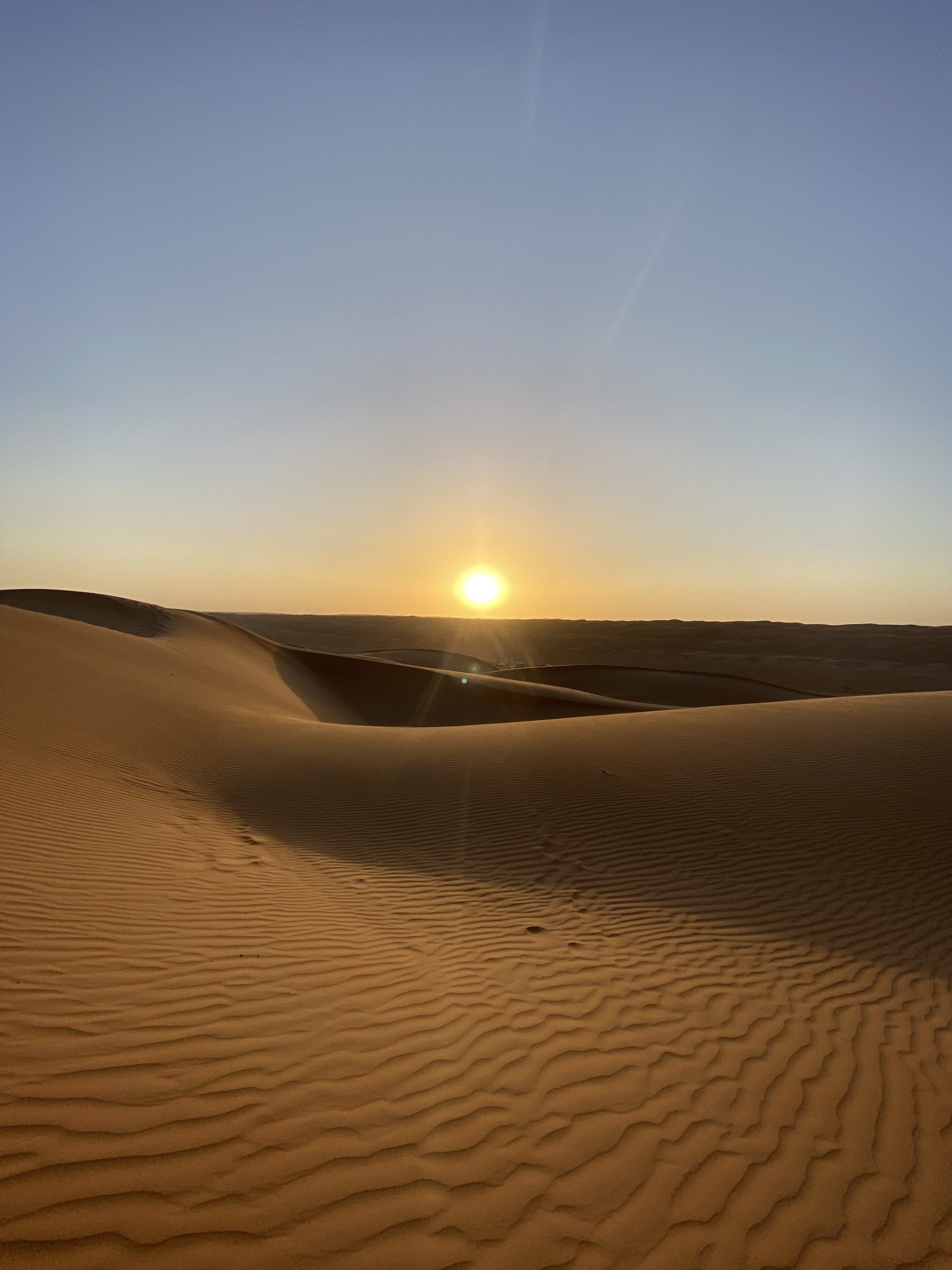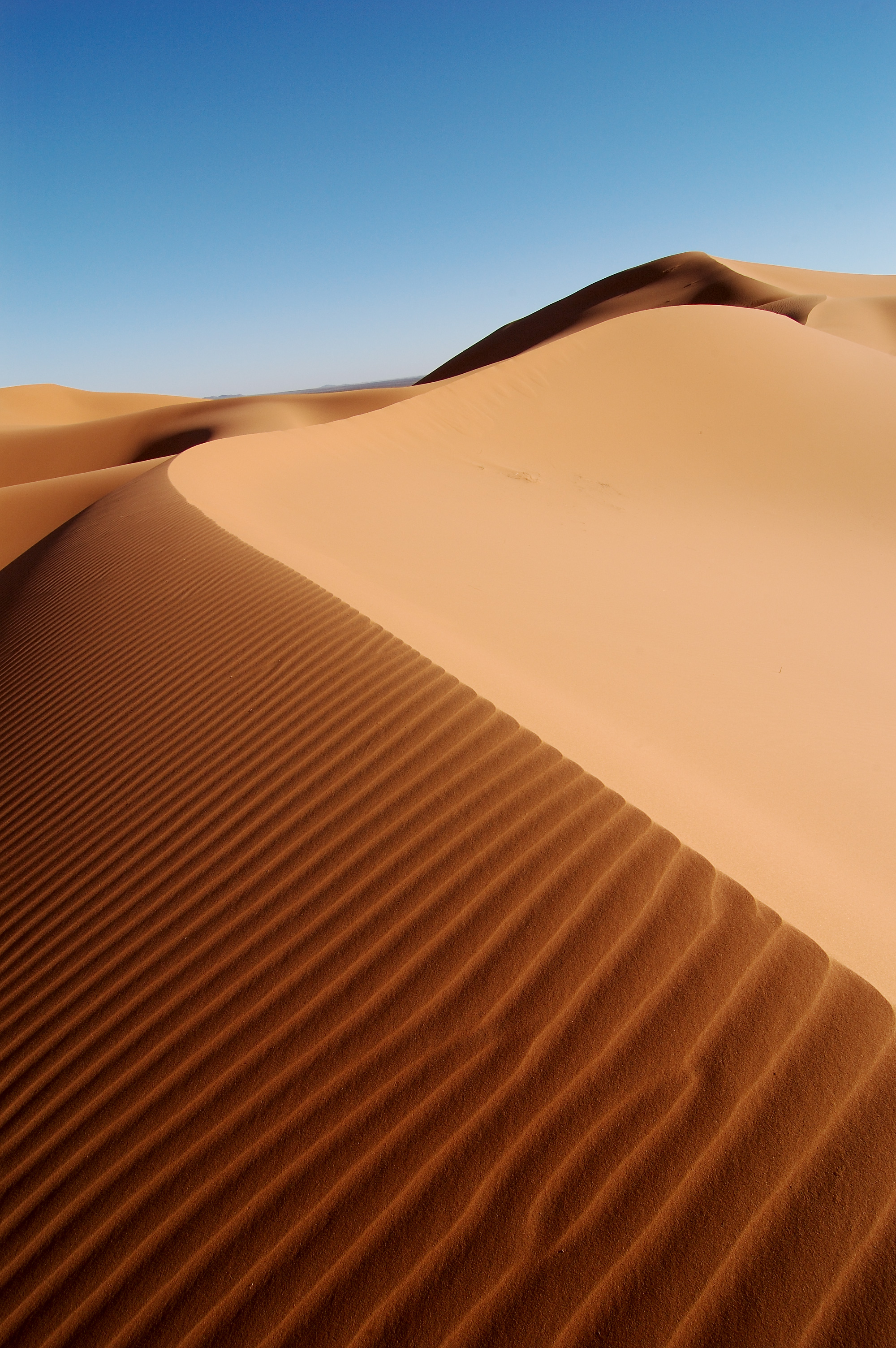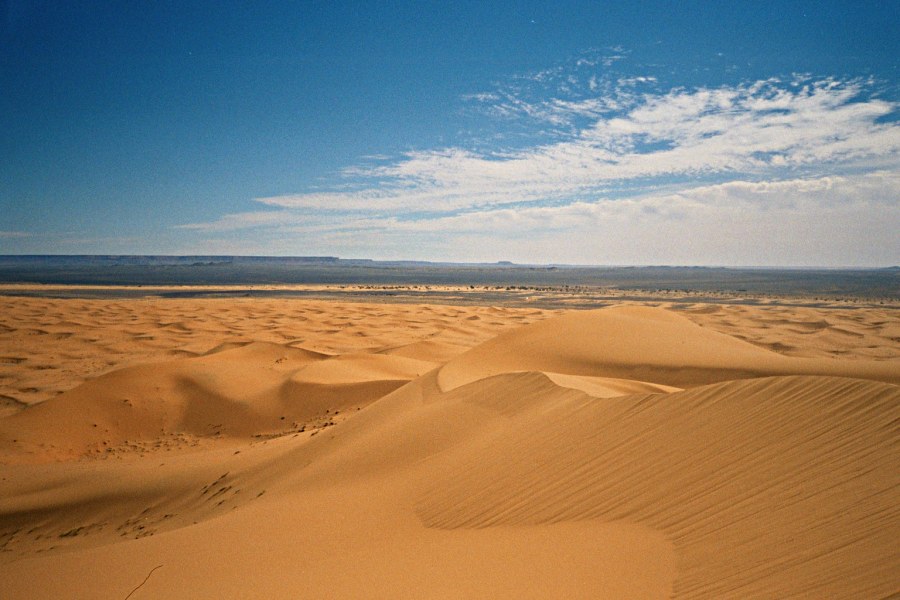
If you have ever seen a photograph of Morocco’s Sahara Desert — soaring orange dunes glowing against a deep blue sky, a line of camels silhouetted at sunset, an endless sea of sand stretching to the horizon — there is a good chance you were looking at Erg Chebbi. Located near the small town of Merzouga in southeastern Morocco, Erg Chebbi is the country’s most iconic desert landscape and one of the most accessible major sand seas in the entire Sahara.
This guide covers everything you need to know to plan your visit: how to get there, where to stay, what to do, and the practical details that will make your trip smooth and memorable.
Understanding Merzouga and Erg Chebbi
What Is Erg Chebbi?
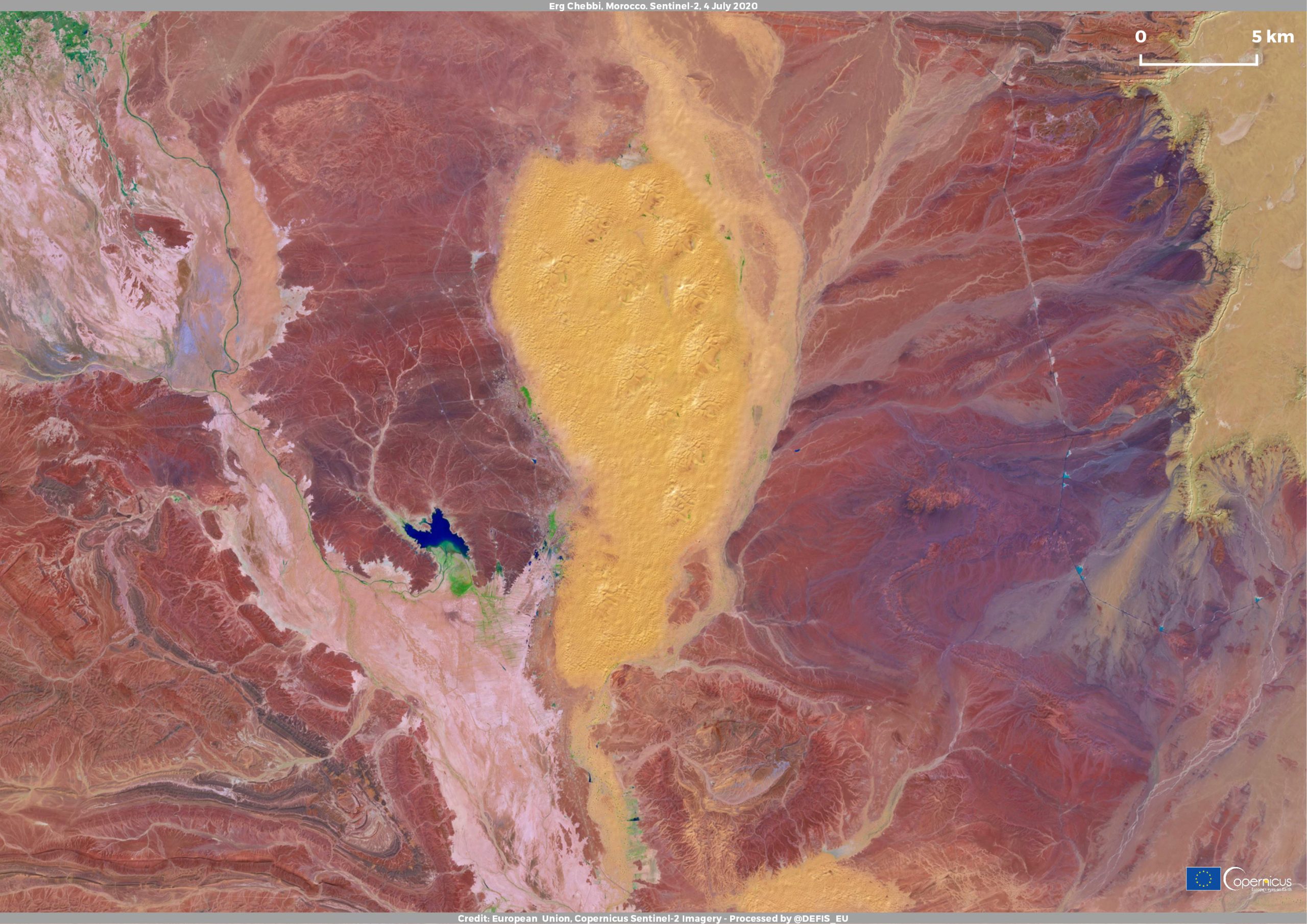
An “erg” is a large area of wind-swept sand dunes in the Sahara. Erg Chebbi is one of only two major ergs in Morocco (the other being Erg Chigaga near M’Hamid). It stretches approximately 22 kilometers from north to south and about 5 kilometers from east to west, with dunes reaching heights of up to 150 meters.
The sand at Erg Chebbi has a distinctive warm orange-gold color that intensifies dramatically during the golden hour. This is not uniform desert sand but a complex, living landscape of crescent dunes, star dunes, linear ridges, and flat interdune corridors that shift and reshape with the wind.
What Is Merzouga?
Merzouga is the small town that serves as the gateway to Erg Chebbi. With a permanent population of roughly 3,000 to 4,000 people, it sits right at the western edge of the dunes. You can literally walk from your hotel into the Sahara in minutes.
The town itself is functional rather than scenic, consisting mainly of guesthouses, hotels, restaurants, and tour agencies that have grown up around the tourism industry. The real attraction is what lies immediately to the east: the magnificent wall of dunes that rises from the flat desert floor like a golden mountain range.
How to Get to Merzouga
Merzouga is remote by Moroccan standards, but it is well-connected by road and reachable from all major cities.
From Marrakech (Approximately 550 km)
The most popular route follows the N10 highway over the High Atlas Mountains via the Tizi n’Tichka pass (2,260 meters elevation), passing through Ouarzazate, the Dades Valley, and Tinghir before turning south toward Errachidia and Merzouga. The drive takes 9 to 10 hours without stops, which is why most desert tours split it into two days with an overnight in the Dades or Todra Gorge area.
The journey itself is one of the highlights of any Sahara tour. You pass through some of Morocco’s most dramatic scenery: the lush Ourika Valley, the barren Tichka plateau, the pink kasbah of Ait Benhaddou, the Valley of Roses, and the deep red canyon walls of Todra Gorge.
From Fes (Approximately 470 km)
The route from Fes heads south through the Middle Atlas Mountains, passing through Ifrane (sometimes called the Switzerland of Morocco for its alpine architecture), the cedar forests of Azrou, the garrison town of Midelt, and the stunning Ziz Valley gorge before reaching Errachidia and continuing to Merzouga. The drive takes approximately 8 hours.
This route offers a different perspective on Morocco, showcasing dense cedar forests, volcanic plateaus, and the dramatic descent through the Ziz Gorge, where thousands of palm trees line a river canyon carved into red rock.
From Errachidia (Approximately 130 km)
Errachidia is the nearest city with an airport and is about 2 hours from Merzouga by road. The road is fully paved and passes through the town of Erfoud, the last significant settlement before Merzouga.
From Rissani (Approximately 35 km)
Rissani, just 35 kilometers from Merzouga, is an important market town and the historical birthplace of Morocco’s current ruling dynasty. Many travelers stop here for the lively souk (market), which takes place on Tuesdays, Thursdays, and Sundays.
By Bus
Supratours and CTM buses run from Marrakech, Fes, and other cities to Errachidia or Rissani. From there, local taxis or prearranged transfers can take you to Merzouga. The bus journey is long but affordable, and both companies operate comfortable coaches with air conditioning.
By Private Transfer or Tour
The most comfortable and popular option is to arrive in Merzouga as part of an organized desert tour that includes transport, guide, accommodations, and activities. This eliminates the logistics of navigating remote roads and allows you to enjoy the scenic route without the stress of driving.
Where to Stay in Merzouga
Accommodation in Merzouga falls into several categories, each offering a different experience.
In-Town Hotels and Guesthouses
Merzouga has dozens of hotels and riads (traditional Moroccan houses) ranging from basic to mid-range. These offer the convenience of town amenities (restaurants, shops, internet) with the dunes visible from rooftop terraces. Many have swimming pools, which are especially welcome if you visit during warmer months.
Staying in town is a good option if you want a comfortable base for multiple days of exploration and prefer to have easy access to restaurants and services.
Desert-Edge Hotels
Some of the best accommodation options in Merzouga are situated right at the edge of the dunes, offering direct access to the sand from your door. These range from comfortable mid-range properties to upscale boutique hotels with pools, spas, and panoramic dune views.
Waking up in a desert-edge hotel and watching the sunrise paint the dunes from your terrace is an experience that rivals any luxury resort in the world.
Desert Camps (Bivouacs)
Desert camps are the quintessential Merzouga experience. Located within the dunes themselves, reached by camel or 4×4, these camps range from basic shared Berber tents to lavish private suites with en-suite bathrooms, hot showers, and gourmet dining.
Basic camps offer a communal sleeping tent, shared bathroom facilities, and simple meals. They are affordable and provide an authentic experience of sleeping in the desert.
Standard camps typically feature individual tents with real beds, shared or semi-private bathroom blocks, and more varied meals with multiple courses.
Luxury camps are a category unto themselves. Private tented suites with king-size beds, electricity, en-suite bathrooms with flushing toilets and hot showers, and dining under the stars with candlelight and white linen. Some even offer swimming pools built among the dunes.
The type of camp you choose depends on your budget and comfort preferences. Our tour finder lets you filter by accommodation level to find the right match.
Things to Do in Merzouga and Erg Chebbi
The dunes themselves are the main attraction, but Merzouga offers a surprising variety of activities beyond sand and sunsets.
Camel Trekking
The classic Merzouga experience. You mount a dromedary (one-humped camel) at the edge of the dunes and ride into the Sahara, watching the town shrink behind you as the dunes grow larger. Treks range from a short 1-hour sunset ride to multi-day expeditions deep into the erg.
Most visitors opt for an overnight trek: riding to camp in the afternoon, watching the sunset from a dune summit, spending the night, and riding back at sunrise. It is the perfect introduction to desert travel.
Sunrise and Sunset Dune Viewing
Even if you do not ride a camel, you must watch at least one sunrise or sunset from the top of a dune. The play of light on the sand creates an ever-changing canvas of gold, orange, red, and purple. The silence at these moments is profound.
The highest dunes in Erg Chebbi are near the center of the erg, but you can get excellent views from the smaller dunes at the edges, which are much easier to climb.
Sandboarding
Erg Chebbi’s tall dunes make it an excellent spot for sandboarding. Standing or sitting on a board, you surf down the steep face of a dune in a rush of sand and laughter. No experience is necessary, and the soft sand provides a forgiving surface for beginners.
4×4 Desert Tours
A 4×4 excursion takes you beyond the dunes to explore the broader Merzouga region. Common stops include abandoned mines, fossil-rich sites, nomadic encampments, and the seasonal lake Dayet Srji (when it has water). The driving itself, over dunes and across rocky desert, is part of the fun.
Quad Biking and Buggy Rides
For adrenaline seekers, quad bikes and dune buggies offer a high-energy way to explore the desert. Routes typically follow established trails through the dunes and surrounding hamada (rocky desert), with stops for photography and rest.
Visiting Khamlia Village
About 7 kilometers south of Merzouga, the village of Khamlia is home to a community of Gnawa musicians descended from sub-Saharan Africans. Visitors are welcomed with live Gnawa music performances and can learn about the community’s history and traditions. This is one of the most culturally enriching experiences in the area.
Dayet Srji (Seasonal Lake)
In years with sufficient rainfall, a seasonal lake forms just west of the dunes, attracting flamingos and other migratory birds. Seeing pink flamingos with Sahara dunes in the background is a surreal and memorable sight. The lake is most likely to have water between late autumn and spring.
Fossil Hunting
The Merzouga region is famous for its fossils, particularly trilobites, ammonites, and orthoceras dating back hundreds of millions of years to when the Sahara was an ancient sea. Fossil workshops in Erfoud and Rissani offer tours of their facilities, and you can find fossils embedded in the local stone everywhere you look.
Stargazing
With virtually zero light pollution, the skies above Erg Chebbi offer some of the best stargazing in the world. On a clear, moonless night, you can see the Milky Way arching overhead in vivid detail. Many desert camps include a stargazing session with a guide who can point out constellations and planets.
Check out our full list of desert activities to see what you can include in your trip.
Sand Bathing
A unique tradition in Merzouga involves burying yourself in the hot desert sand during summer months (June to September). Locals have practiced sand bathing for centuries, believing it helps with joint pain, rheumatism, and other conditions. Whether or not you believe in the therapeutic claims, it is a distinctive cultural experience.
Nearby Attractions Worth Visiting
Merzouga makes an excellent base for exploring the broader southeastern Morocco region.
Rissani
The closest market town (35 km), Rissani was historically an important stop on the trans-Saharan caravan routes and the birthplace of the Alaouite dynasty that rules Morocco today. Its souk is vibrant and less tourist-oriented than those in Marrakech or Fes, offering an authentic Moroccan market experience.
Erfoud
About 80 kilometers from Merzouga, Erfoud is known for its date palms and fossil industry. The annual Date Festival in October draws visitors from across the region, and the fossil workshops offer a fascinating look at the area’s geological history.
Todra Gorge
Approximately 200 kilometers west of Merzouga, Todra Gorge is a dramatic canyon with walls rising 300 meters high and narrowing to just 10 meters wide at its most constricted point. It is one of Morocco’s most spectacular natural landmarks and a paradise for rock climbers.
Dades Valley and Valley of Roses
West of Todra, the Dades Valley offers dramatic cliff roads, crumbling kasbahs, and in the Kelaat M’Gouna area, vast rose plantations that bloom spectacularly in April and May. The annual Rose Festival is a major cultural event.
Practical Tips for Visiting Merzouga
Money and Banking
Merzouga has limited banking facilities. There are a couple of ATMs, but they can run out of cash, especially during busy periods. Bring sufficient cash (Moroccan dirhams) from a larger city. Some hotels and tour operators accept credit cards, but cash is king in this region.
Internet and Phone Coverage
Mobile phone coverage exists in Merzouga town but fades quickly once you enter the dunes. Most hotels and some camps offer Wi-Fi, though it tends to be slow. Embrace the disconnection — it is part of the experience.
Language
The local population speaks Tamazight (Berber), Darija (Moroccan Arabic), and French. English is increasingly common among younger people and those working in tourism. Your guides will speak English if you book through a reputable operator.
Health Considerations
The nearest significant medical facilities are in Errachidia (130 km). Bring any medications you need, along with sunscreen, lip balm, and hand sanitizer. Stay hydrated, protect yourself from the sun, and inform your guide of any medical conditions before setting out.
Best Time to Visit
October through April offers the most comfortable temperatures. March and April and October and November are particularly recommended. Summer visits are possible but require preparation for extreme heat. For a detailed monthly breakdown, see our guide to the best time to visit the Moroccan Sahara.
How Many Days Do You Need?
A minimum of two days (one night in the desert) is needed for a worthwhile Erg Chebbi experience. Three days allows you to explore more thoroughly, and four or more days lets you combine the dunes with nearby attractions like Todra Gorge and Rissani.
Planning Your Merzouga Trip with Duna Daurada
We have been taking travelers into the Erg Chebbi dunes for years, and our local Berber guides know every ridge, valley, and hidden corner of this extraordinary landscape. Whether you want a romantic overnight camel trek, an adrenaline-fueled 4×4 adventure, or a multi-day exploration of southeastern Morocco, we can build the perfect itinerary for you.
Browse our available desert tours to see ready-made itineraries, or build a custom tour tailored to your group’s interests, schedule, and budget. If you have questions or want personal recommendations, reach out to our team — we love talking about the desert and helping travelers plan their dream trip.
Final Thoughts
Merzouga and Erg Chebbi offer something that is increasingly rare in the modern world: a landscape of such scale and beauty that it silences the noise in your head. Standing on top of a 150-meter dune, with nothing but sand in every direction and a sky so vast it feels like you could fall upward into it, you understand why the desert has inspired poets, mystics, and adventurers for thousands of years.
This is not a destination you merely visit. It is a place that changes you. And when you leave, you carry the silence and the light of the Sahara with you, long after the sand has been shaken from your shoes.